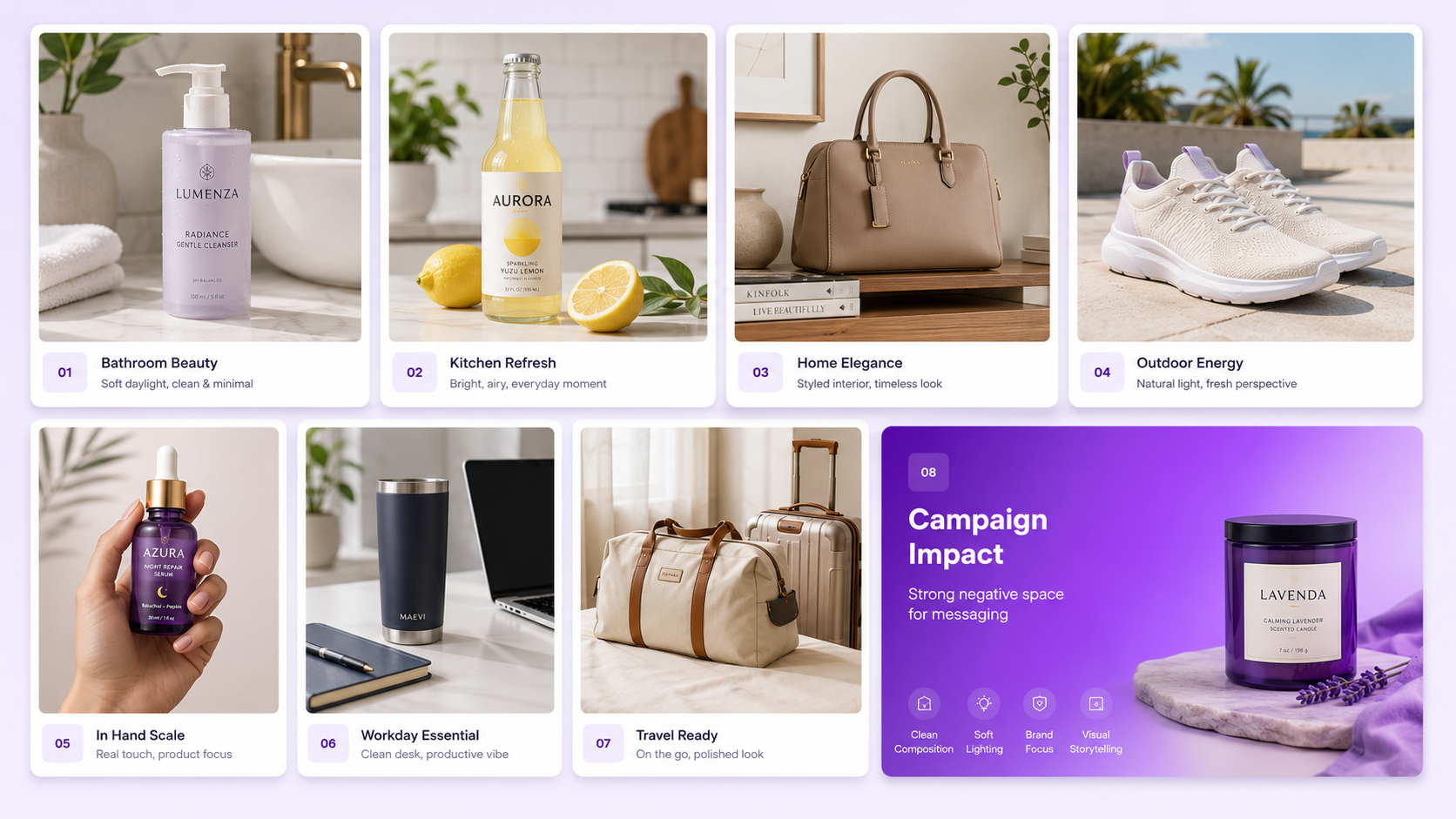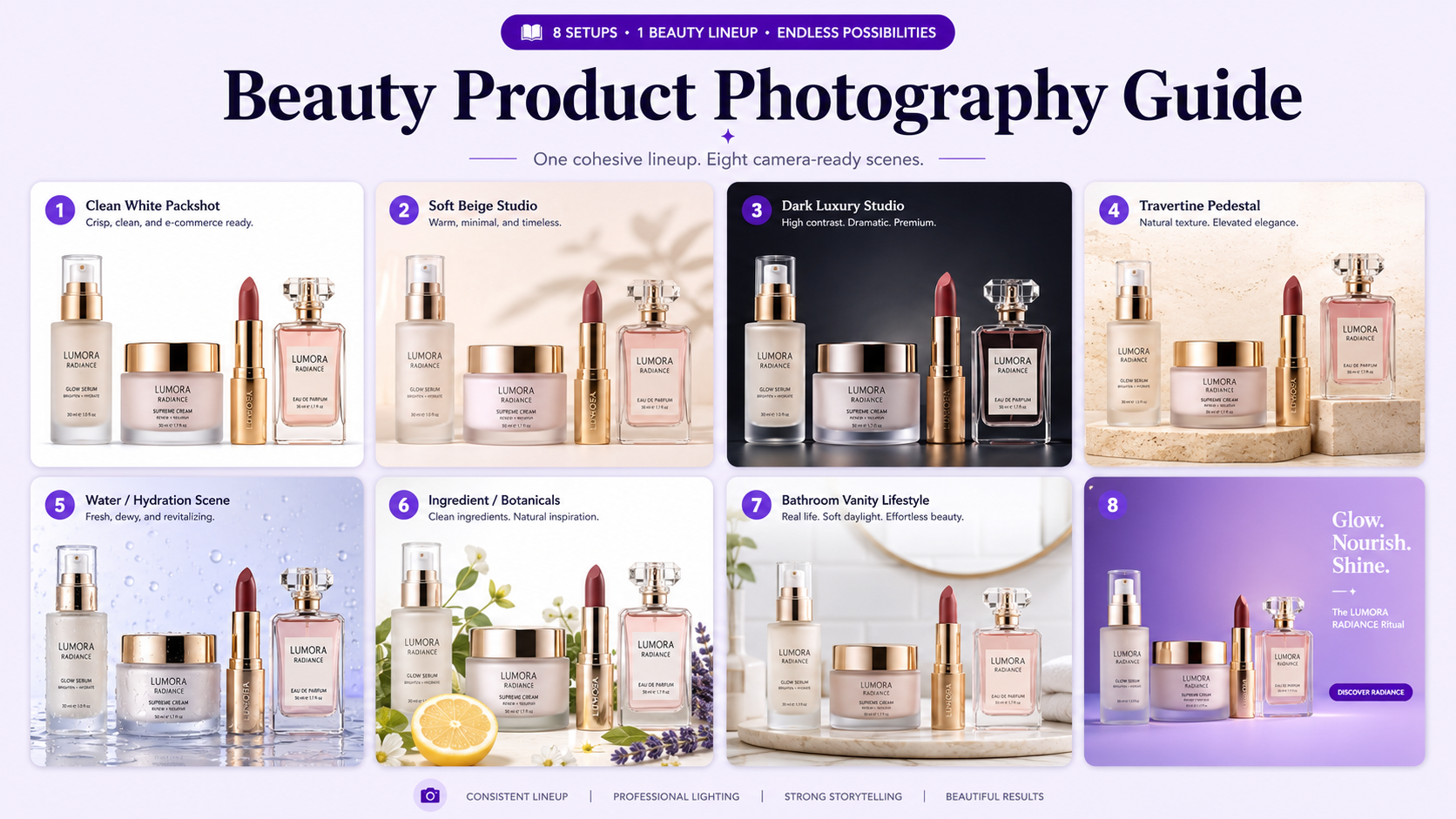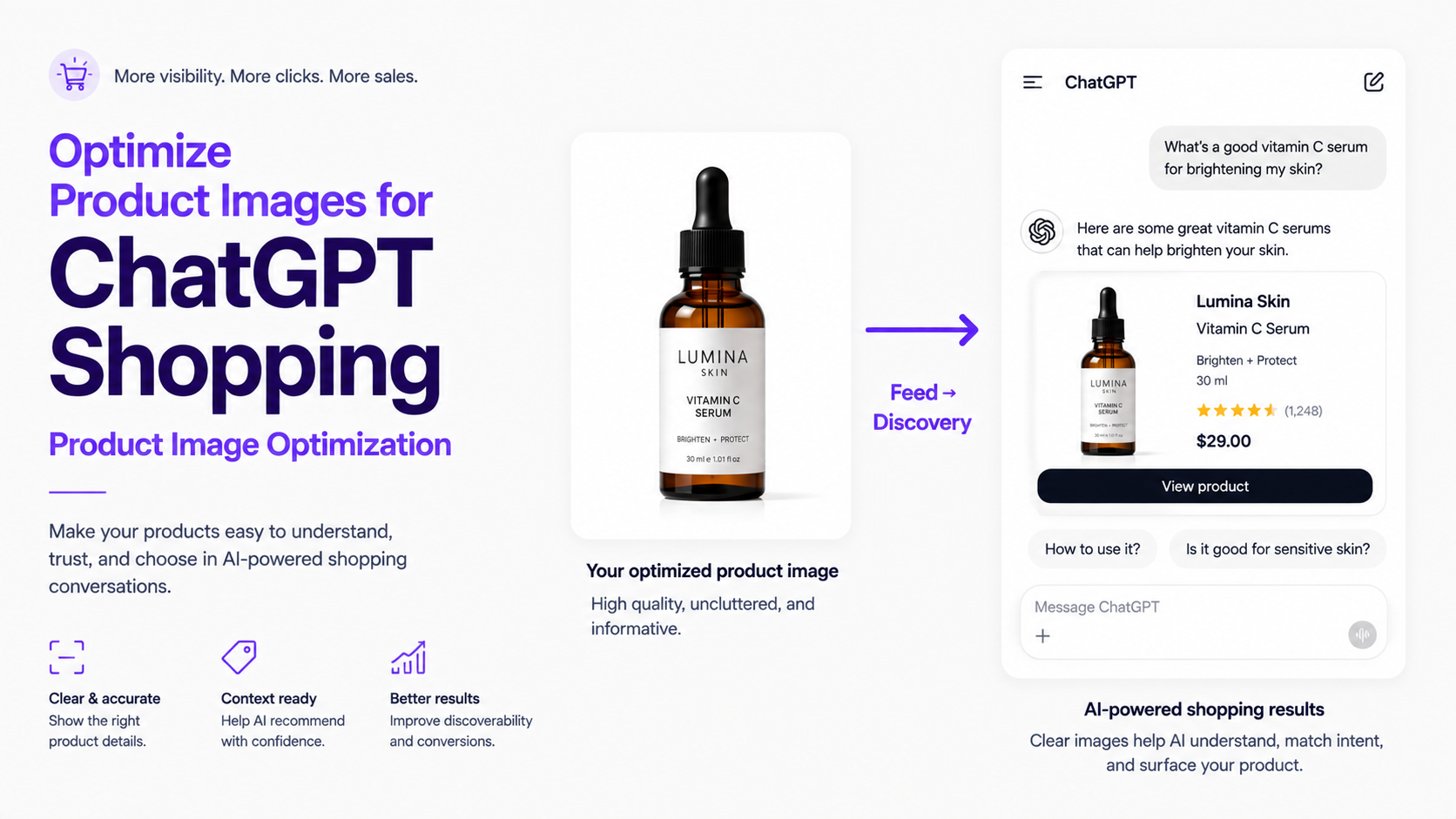
Shopping discovery is becoming more conversational. Shoppers can ask ChatGPT for something specific—a travel backpack under $150, a leather bag that fits a laptop, or a serum for a routine—then compare visual results and refine preferences in chat.
How should product images be prepared for ChatGPT Shopping? OpenAI has not published a secret image-ranking formula—or rules that white backgrounds, square crops, resolution, or AI lifestyle photos raise organic rank.
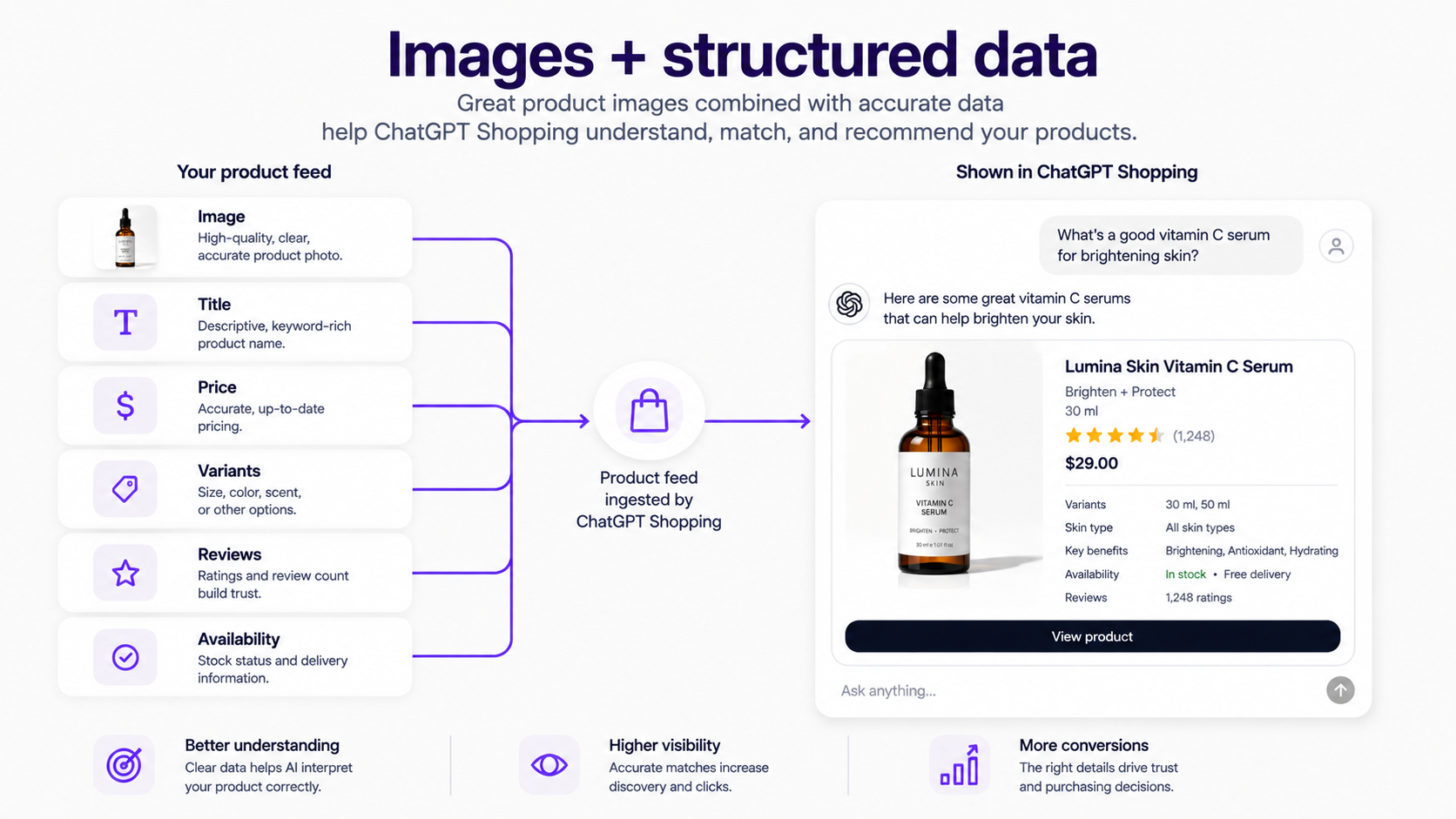
What OpenAI has published is more useful: feeds require a main image, support additional images, and treat high-quality media as important for trust and engagement. Discovery also depends on structured data—title, description, brand, category, variants, price, availability, and reviews.
Quick Answer
Use a clear, accurate main image. Add views for angles, details, scale, materials, and real-world use. Sync variants with the correct color or configuration. Serve stable public image URLs and make sure the feed describes what the image shows.
Prioritize product fidelity over dramatic art direction. Lifestyle and AI campaign images can strengthen the set, but they should supplement—not replace—images that show what the customer will receive.
How ChatGPT Shopping Finds and Presents Products
ChatGPT can show products when a conversation suggests shopping intent—with imagery, price, merchant options, reviews, and links. Selection is based on relevance and can consider structured metadata, public information, price, reviews, availability, and other factors.
Image optimization should not happen separately from catalog optimization. A beautiful image cannot fix a vague title, wrong variants, stale availability, or a mismatched description.
ChatGPT Shopping Is Becoming More Visual
In 2026 OpenAI expanded visual browsing and side-by-side comparison—including image-inspired shopping. Media quality matters even if image quality is not a published standalone ranking factor.
1. Use an Accurate Main Product Image
The direct product-feed specification requires a main image URL—the asset most likely to represent the item when surfaced. Shoppers should identify category, shape, design traits, and variant at a glance.
What a Strong Primary Image Usually Looks Like
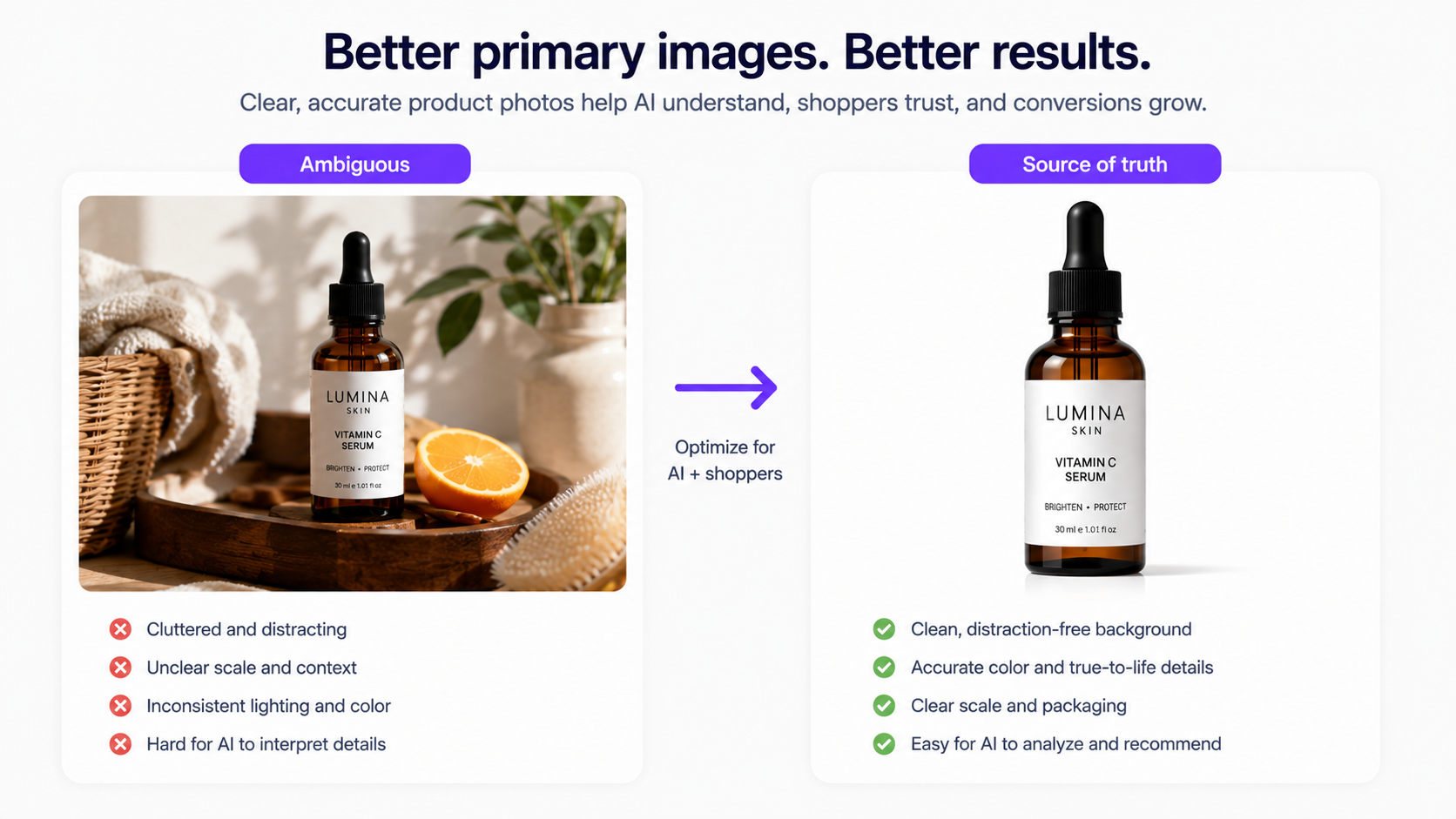
Use a sharp image with the product filling a meaningful part of the frame. Minimize props, keep edges visible, and preserve proportions, colors, packaging, logos, patterns, and materials. White backgrounds are optional—clarity is not.
2. Do Not Make the Main Image Too Artistic
Campaign photography and primary ecommerce imagery have different jobs. Dramatic creative can work as secondary media—but if shape, label, color, and packaging are unclear, it is a weak source-of-truth image.
3. Add Multiple Product Images
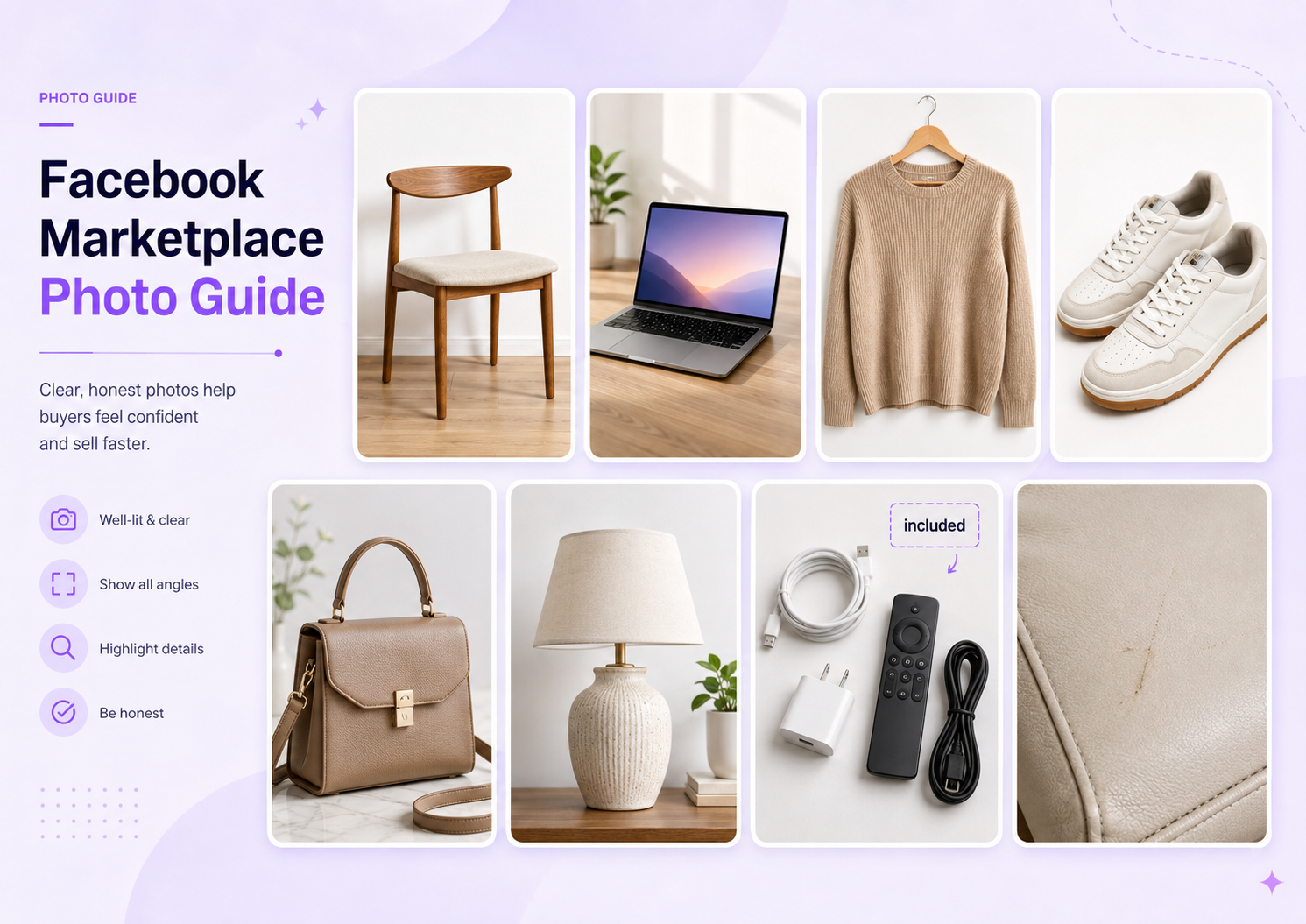
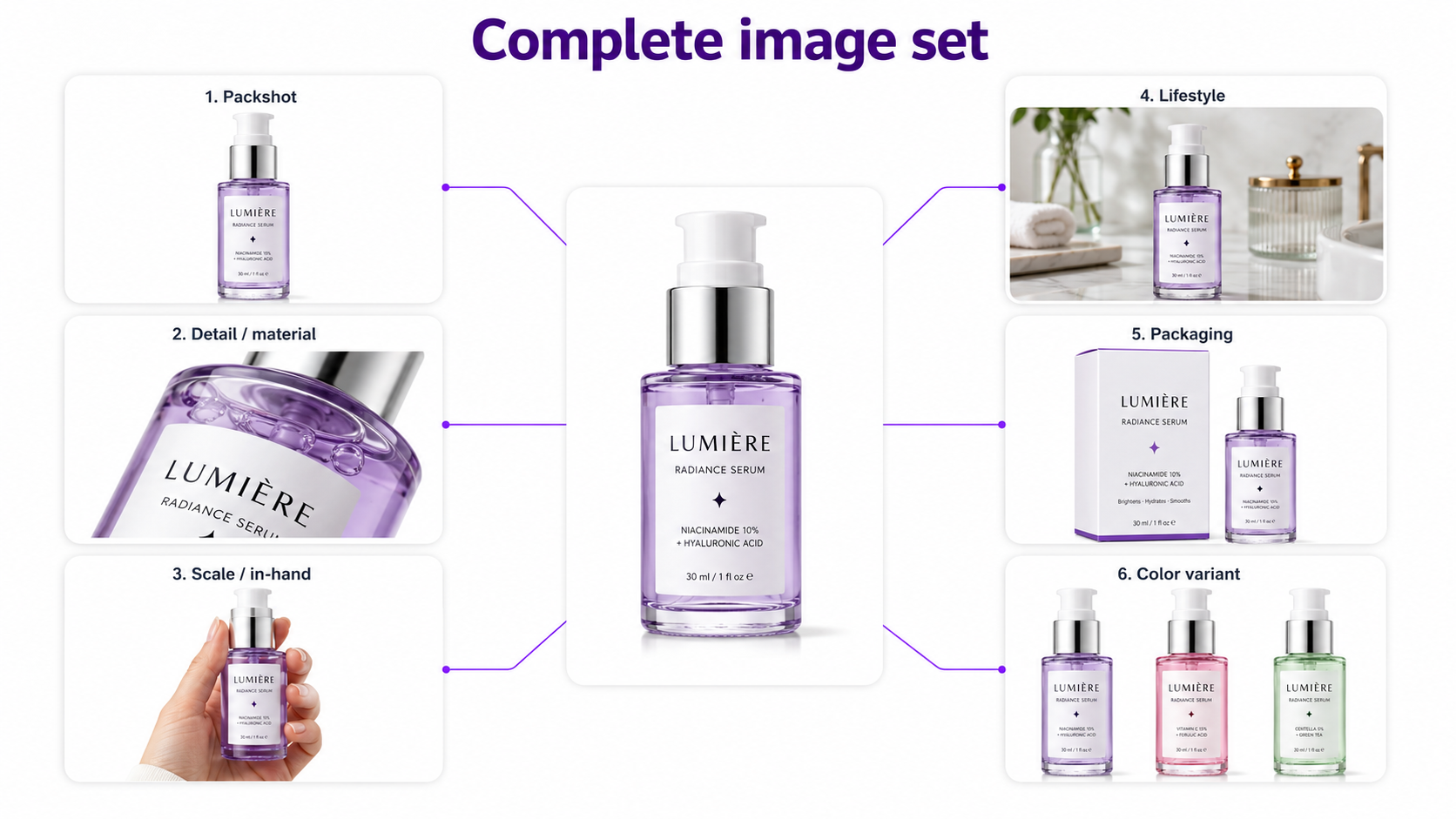
Use additional image URLs. Second angles, rear/side views, close-ups, packaging, scale, in-hand, lifestyle, material detail, open-versus-closed, or interior views answer questions before shoppers ask—e.g. backpack compartments and straps, or serum bottle, texture, and packaging.
4. Match Images to the Correct Product Variant
Variants matter because users specify color, size, material, or configuration. If the record says burgundy but the image shows black, signals conflict. Visual assets must agree with variant attributes.
For Color and Material Variants
Show each major color variant in that actual color—not only a swatch. When materials differ (leather, canvas, metal, wood, fabric), make the difference obvious in imagery.
5. Keep Product Colors Accurate
Aggressive grading can misrepresent the product—especially in fashion, cosmetics, home, jewelry, and furniture. Keep white balance consistent and at least one neutral representation alongside styled lighting.
6. Show Scale Clearly
Dimensions belong in structured data, but shoppers often grasp scale faster visually—worn bags, furniture in rooms, items in hand. Scale images complement dimension fields; they do not replace them.
7. Show Materials and Texture
Queries often include materials. Describe them in metadata and reinforce with close-ups of grain, weave, stitching, finish, wood, glass, or stone.
8. Use Lifestyle Images to Explain Use Cases
Shoppers ask whether an item fits a situation—commute, small apartment, travel, office. Lifestyle images add context a packshot cannot; keep them supporting media so a clear product view remains available.
9. Make the Product Easy to Separate From the Background
Avoid backgrounds that hide the silhouette. White is optional—a contrasting neutral or controlled lifestyle setup works if the product stays the focal point.
10. Avoid Important Information Existing Only Inside the Image
Do not rely on image text for size, material, compatibility, ingredients, capacity, or specs—put them in metadata and page content so ChatGPT Shopping can use them reliably.
11–13. Accessibility, Stable URLs, and OAI-SearchBot
Images must load publicly. The stable feed requires a public main image URL (JPEG/PNG; HTTPS preferred). Avoid temporary signed URLs and auth walls. Keep URLs stable and update the feed when media changes.
Allow OAI-SearchBot for public pages and check CDN, firewall, and bot mitigation so crawler traffic does not return 403s.
14–15. Optimize Product Data Around the Image
Weak catalog data cannot be fixed with pretty photos. Keep titles, descriptions, attributes, price, availability, and variants aligned with what the image shows.
Bad vs Better Title Example
The improved version gives ChatGPT more to match. Keep title, color, description, and image consistent.
16–18. Real Product Images, AI Context, and Careful Lifestyle Use
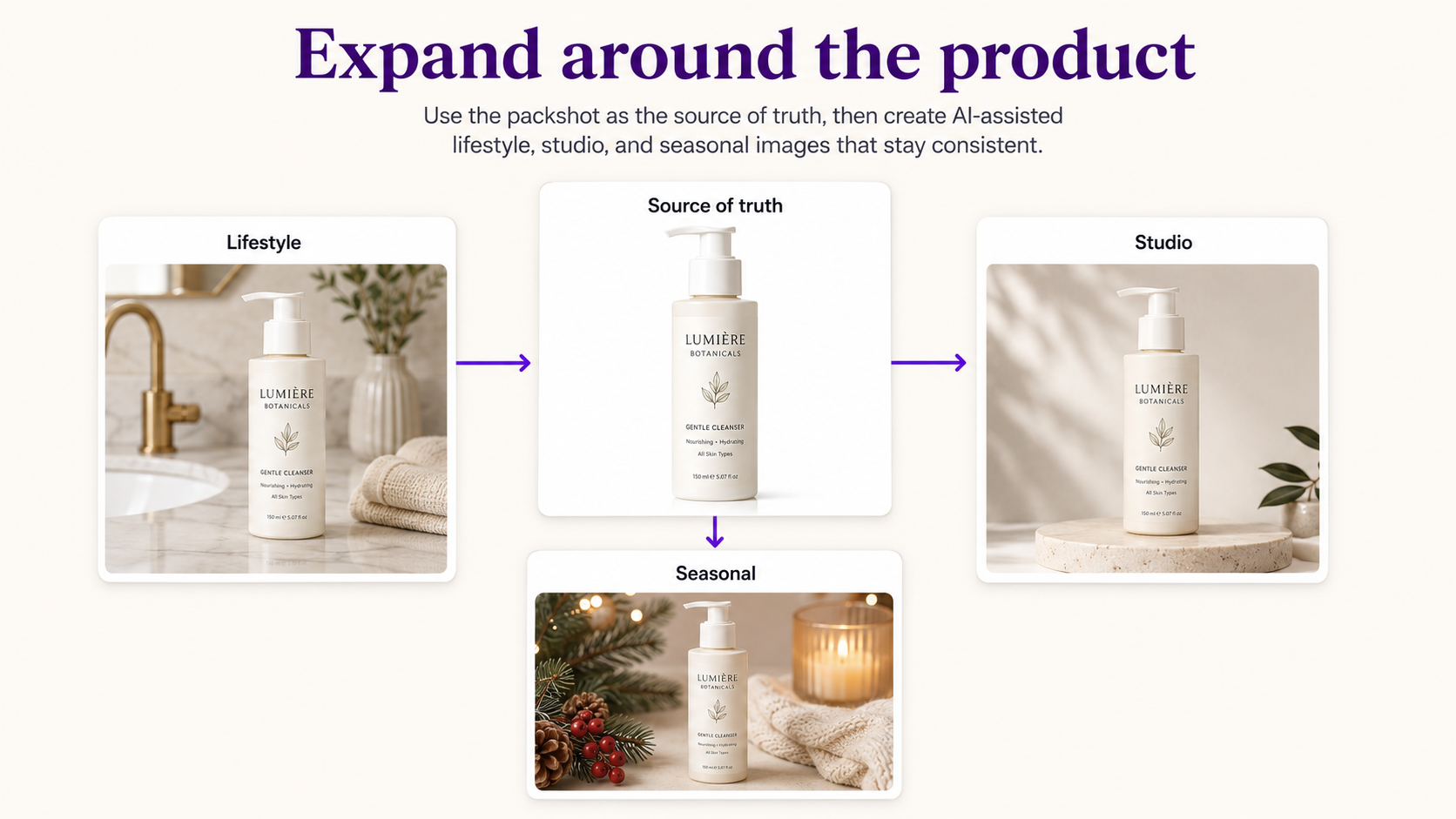
Keep at least one reliable genuine product image as the source of truth. AI can expand scenes around it—lifestyle, holiday, studio, outdoor—without redesigning the product.
What Must Stay Accurate in AI Product Images
Preserve shape, packaging, label, logo, colors, materials, and other delivery-critical traits. Do not inflate capacity, change fit, mis-scale furniture, or show accessories that are not included.
19–20. Relevant Contexts and Purchase-Question Images
Supporting images can mirror customer situations—airport travel, trails, small apartments, workspaces, rain. Metadata should still state those traits explicitly.
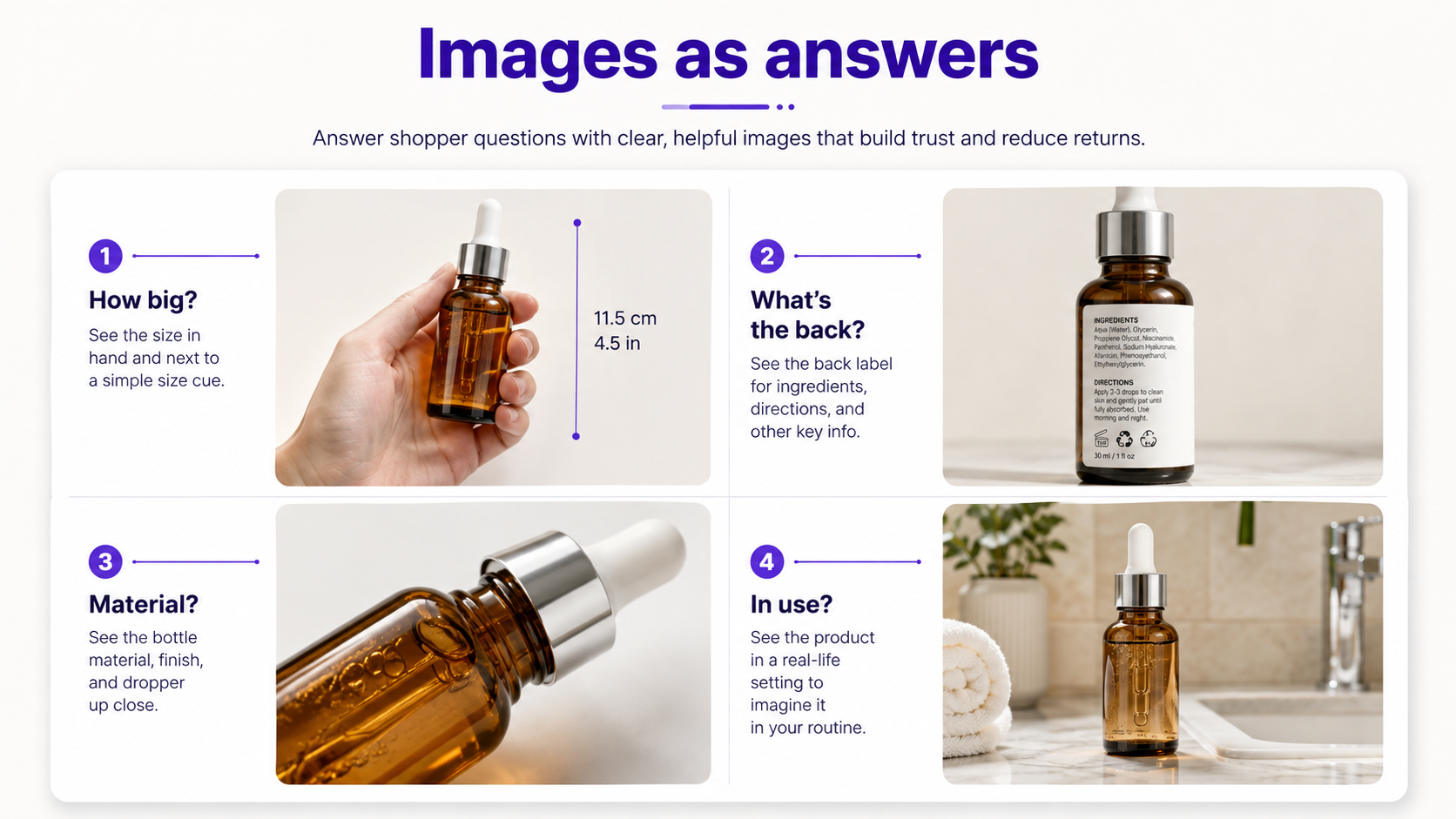
Turn recurring purchase questions into an image checklist: size, back view, closures, texture, compartments, side profiles, and other category-specific details.
21–24. Video, Badges, Overlays, and Availability Sync
Optional video and 3D URLs are supported—think media set, not one thumbnail. Avoid fake badges on primary photos and limit text overlays; put searchable attributes in structured data.
Keep availability and media synced. Do not show discontinued-variant imagery under a different live SKU.
25. Optimize for Humans, Not an Imaginary ChatGPT Image Algorithm
Avoid reverse-engineered myths about mandatory 1:1 crops, white backgrounds, or whitespace rules. Focus on documented needs: complete product information, accessible feeds and pages, current price and availability, accurate variants, useful media, and genuine match to intent.
Official OpenAI Product Image Requirements
Stable direct feed: required main image URL (JPEG/PNG; HTTPS preferred); optional additional images, video, and 3D. High-quality media is said to help trust and engagement. No published required square ratio, minimum resolution, background color, whitespace rule, or image-quality ranking score.
Shopify, Google-Compatible Feeds, and Non-Shopify Merchants
Google-compatible feeds map image_link and additional_image_link to OpenAI's main and additional image fields—useful if you already maintain structured feeds.
Shopify Catalog is already integrated; most Shopify merchants do not need a separate direct OpenAI feed. Focus on clean titles, descriptions, variants, prices, availability, and images.
Non-Shopify merchants can appear via public pages, third-party data, and supported integrations—or apply for direct feed access to keep catalogs current.
Do Better Photos Rank Higher? Can AI Images Be Used?
OpenAI has not said prettier images raise organic rank. Selection is mainly relevance plus structured data, price, reviews, availability, and constraints. Imagery still matters after discovery for trust and engagement—treat it as data quality and conversion, not a ranking hack.
AI involvement does not invalidate feed images; accuracy does. Prefer reference-based workflows: start from a real photo and change scene, background, lighting, or composition around the product.
Where GenImagePro Fits
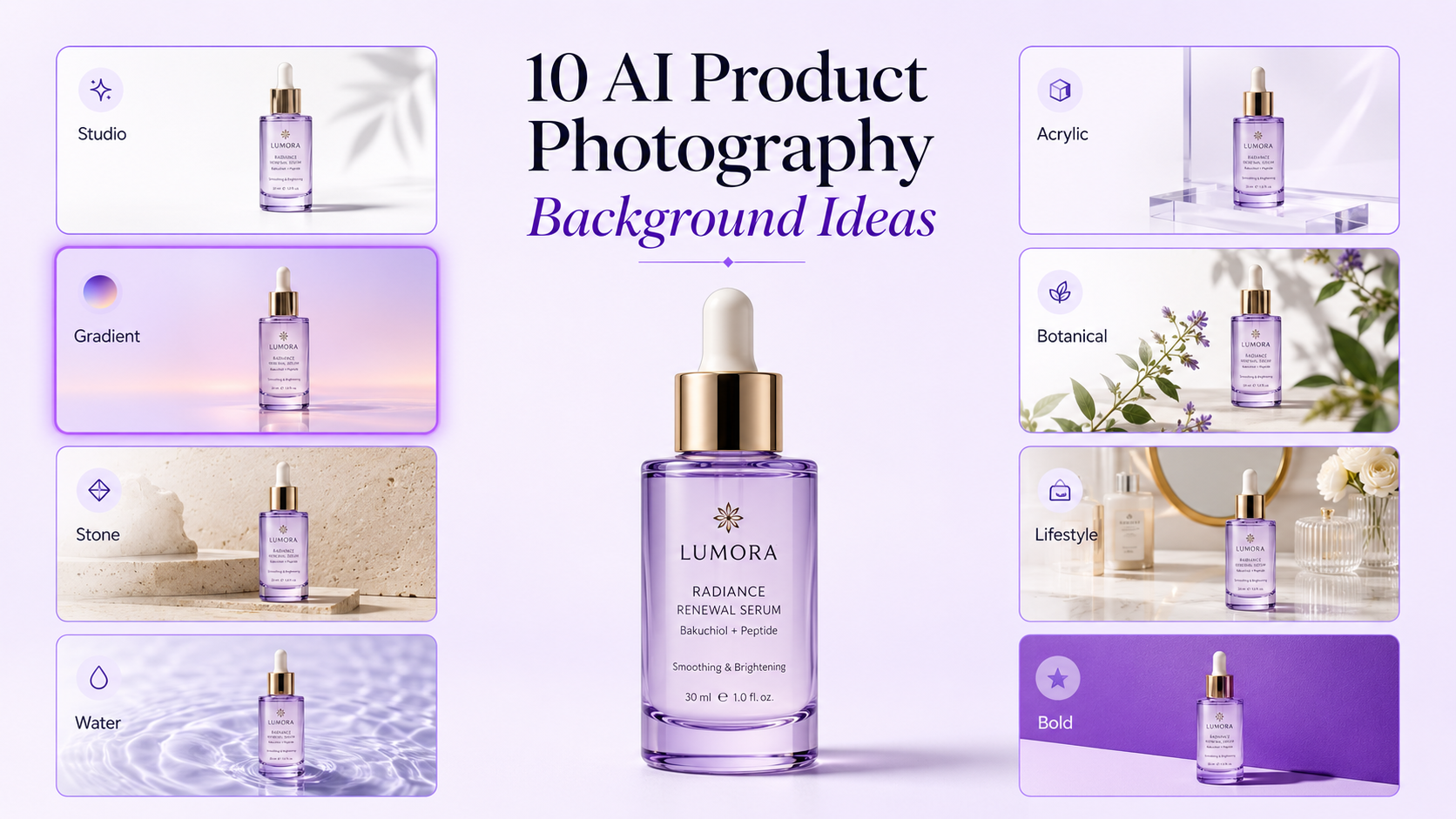
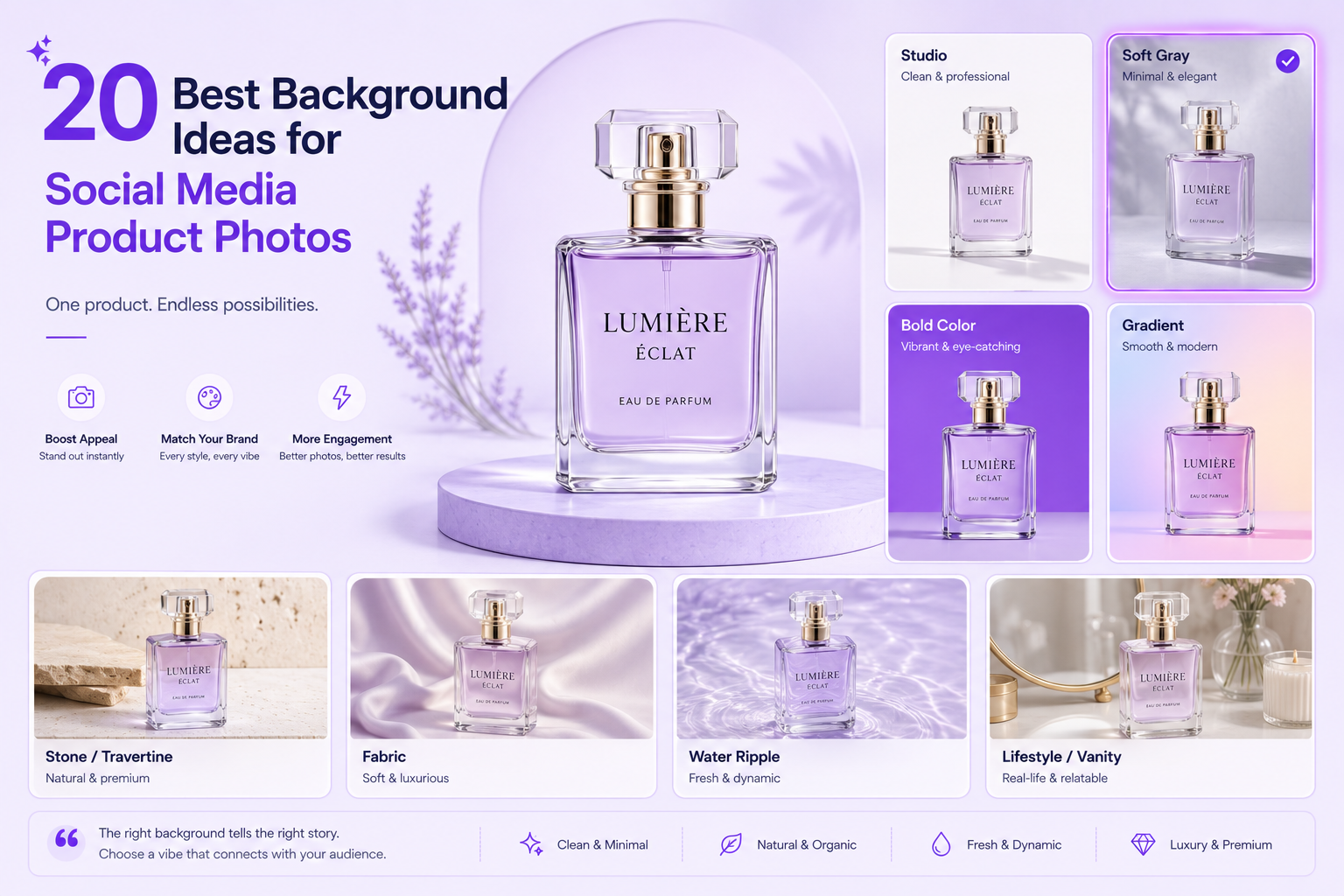
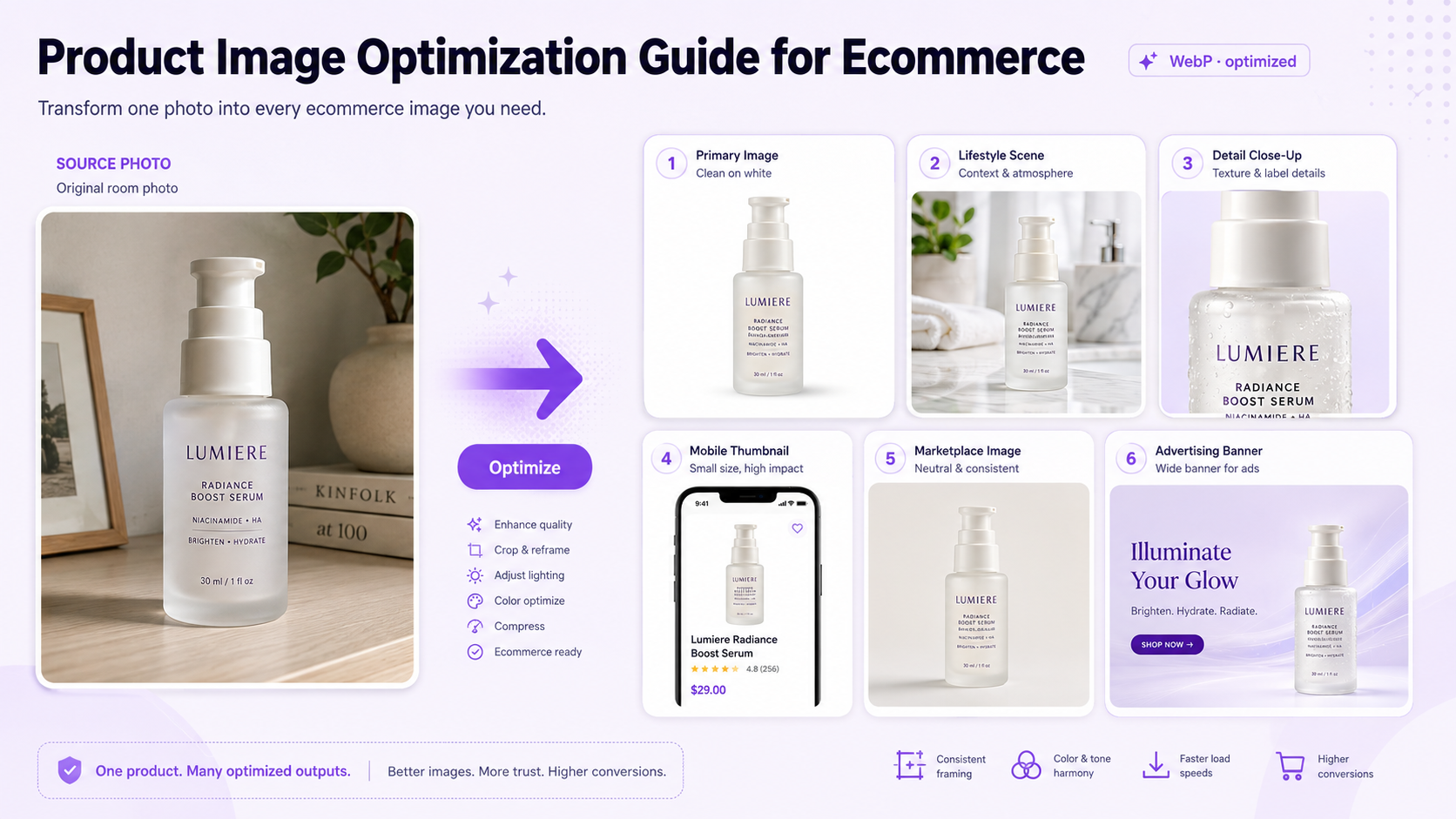
AI product photo generators can expand an ecommerce image set from an existing source photo: keep an accurate packshot as the main image and generate studio, lifestyle, campaign, seasonal, and social visuals around the same product reference.
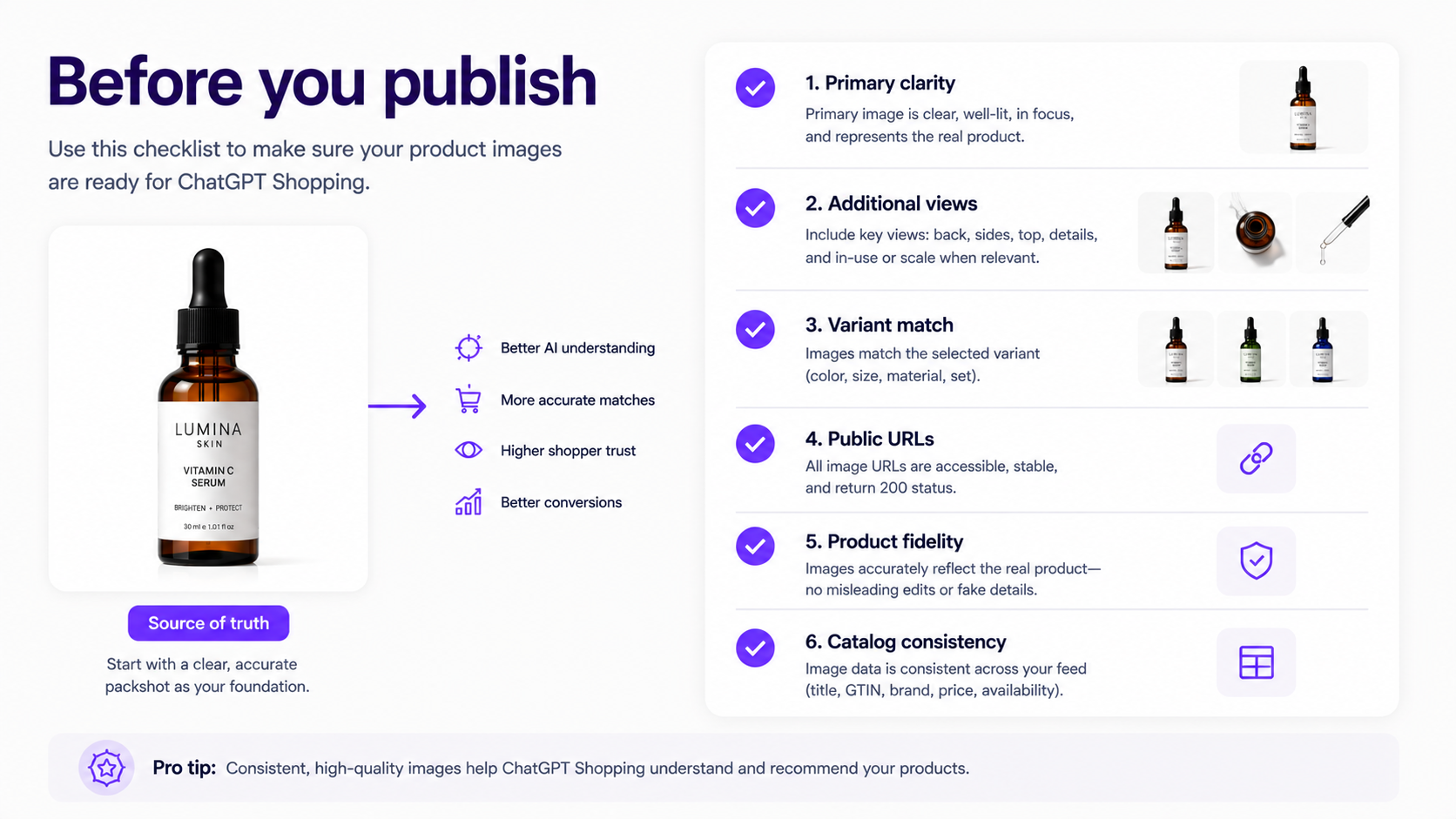
A Product Image Checklist for ChatGPT Shopping
Primary: clear, sharp, correct variant, readable details. Additional: angles, scale, materials, lifestyle, packaging when relevant. Variants and attributes agree. Technical: public stable JPEG/PNG URLs. Fidelity: no AI or grading drift on shape, color, label, material, or fit. Catalog fields and images describe the same item.
A Better Strategy: Optimize for the Shopper's Question
Do not chase one special thumbnail. Build a complete media system—packshot, angles, details, scale, lifestyle, variant alignment, strong metadata, accessible pages—then use AI selectively without compromising accuracy.
Conversational commerce starts with the shopper's constraints—not the catalog. Structured data helps ChatGPT match the request; images help the shopper evaluate the result.
FAQ
How do I optimize product images for ChatGPT Shopping?
Use a clear primary image, useful additional views, variant-synced visuals, public stable URLs, and metadata that matches the images.
Does ChatGPT Shopping require product images?
OpenAI's current direct product-feed specification requires a main image URL. Additional image URLs are optional but supported.
What image formats does OpenAI support?
The stable direct-feed spec lists JPEG and PNG for the required main image, via a valid public URL with HTTPS preferred.
Does a white background help products rank?
OpenAI has not published white backgrounds as an organic ranking factor. Simple backgrounds can still help shoppers see the product clearly.
Do better product images make products rank higher?
OpenAI has not published a direct image-quality ranking factor. High-quality media is said to improve trust and engagement after discovery.
Can AI-generated product images appear in ChatGPT Shopping?
The feed does not state images are ineligible because AI was used. Ensure AI-assisted images still accurately represent the product.
Should my main product image be AI-generated?
For most physical products, keep at least one accurate source-of-truth photograph. Use AI-assisted images as additional lifestyle, campaign, and creative variations.
How do Shopify products appear in ChatGPT?
OpenAI states Shopify Catalog is integrated into ChatGPT product discovery. Individual Shopify merchants generally do not need a separate direct OpenAI feed solely for that integration.
Should I allow OAI-SearchBot?
Yes if you want public pages eligible for ChatGPT search. Ensure CDN, firewall, and bot-protection systems do not block published OpenAI crawler traffic.
Can GenImagePro help create product images for ChatGPT Shopping?
Yes. GenImagePro can turn an existing product photo into studio, lifestyle, campaign, and background variations while preserving important details—review before commercial use.