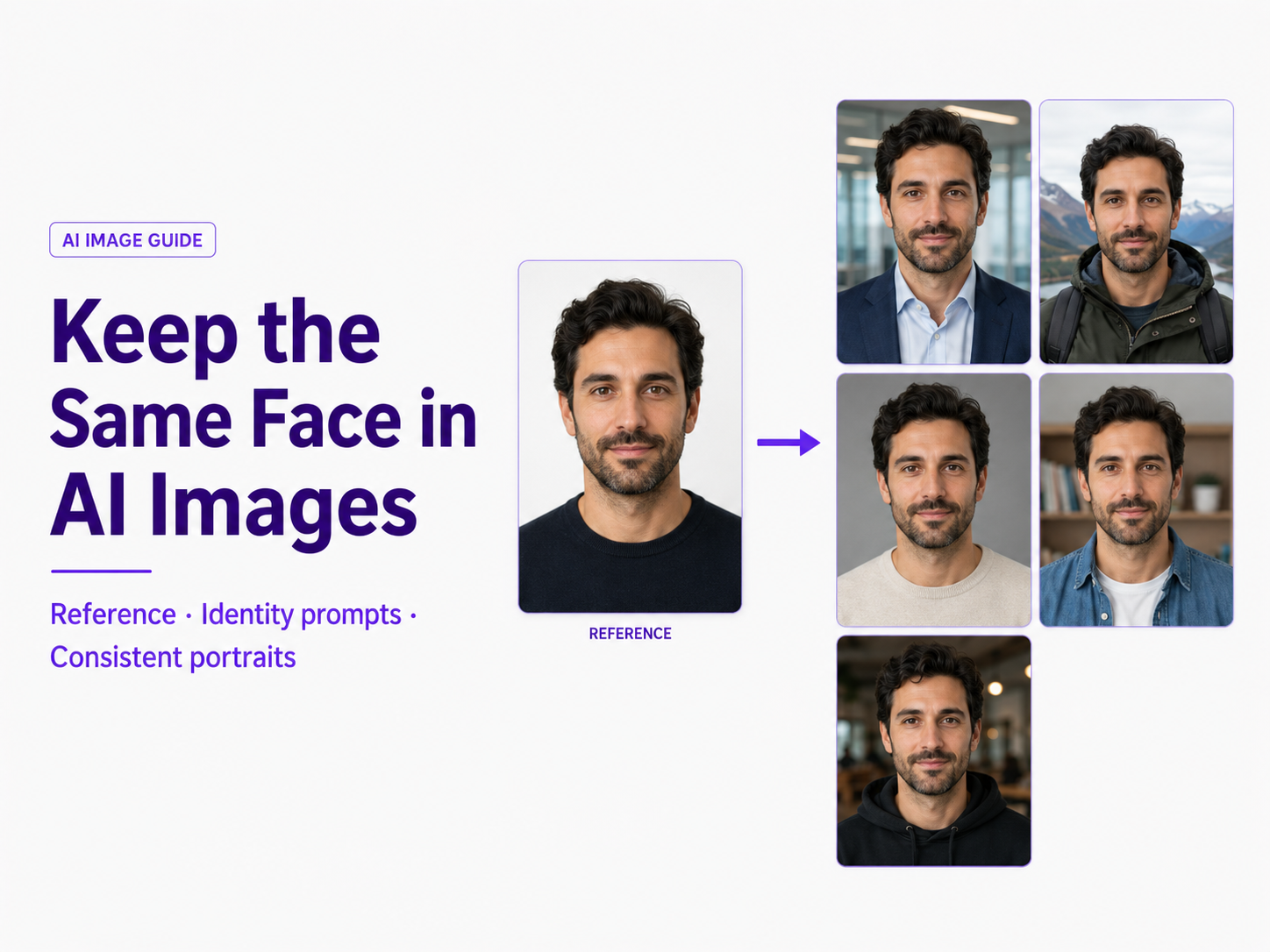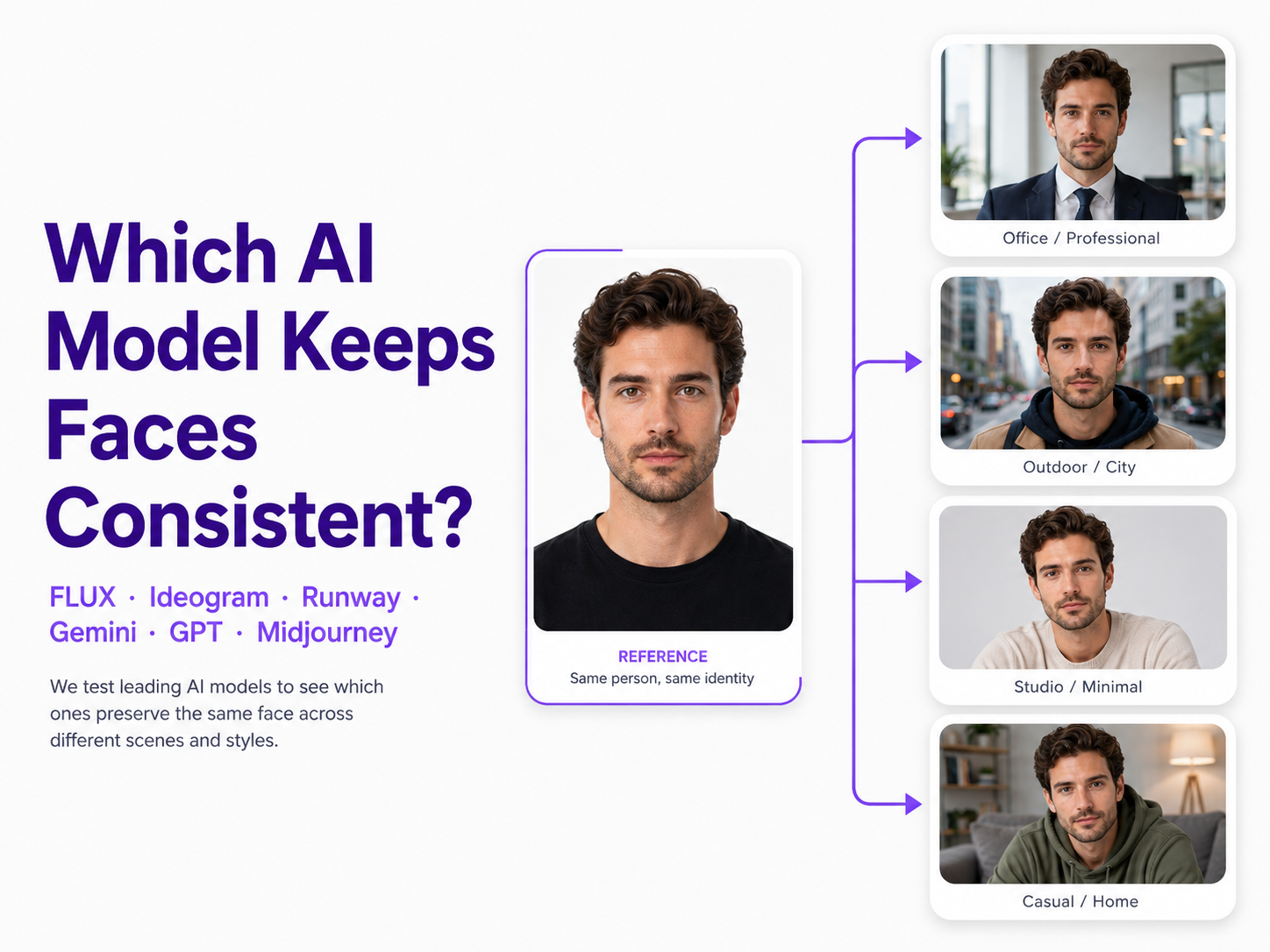
Generating one convincing AI portrait is relatively easy. Generating the same recognizable person again in a different outfit, location, pose, or lighting setup is much harder.
Some models treat an uploaded photo mainly as inspiration. Others support character references, multi-reference inputs, or identity-preserving editing. If face consistency is your priority in 2026, FLUX.2, Ideogram Character, Runway Gen-4 References, Gemini, GPT-Image-2, and Midjourney Omni Reference are among the most relevant options.
Quick Answer
FLUX.2 is one of the strongest overall choices for production workflows that need the same person across many images, especially when several reference views help. Ideogram Character is particularly strong for single-portrait character consistency with mask controls. Runway Gen-4 References fits cinematic scene changes. Gemini is flexible for multi-character and multi-reference editing. GPT-Image-2 is strong for conversational identity-preserving edits. Midjourney remains excellent for stylized recurring characters, but Omni Reference is guidance rather than a guarantee of exact real-person reproduction.
Best AI Models for Face Consistency at a Glance
1. FLUX.2 — best overall for multi-reference character consistency. 2. Ideogram Character — best for single-reference face consistency. 3. Runway Gen-4 References — best for cinematic character continuity. 4. Gemini — best for multi-character and multi-reference editing. 5. GPT-Image-2 — best for conversational identity-preserving editing. 6. Midjourney — best for stylized consistent characters.
1. FLUX.2 — Best Overall for Multi-Reference Character Consistency
Black Forest Labs built multi-reference control into FLUX.2. The model can use several images at once to preserve characters, products, styles, and poses while generating a new scene. One portrait only shows so much; extra angles can provide profile, hair, and body information instead of forcing the model to invent it.
Use FLUX.2 for campaign variations, photorealistic recurring models, and production sets where identity must survive outfit, pose, and environment changes. Limitation: conflicting references (heavy filters, different hair, strong shadows) give the model inconsistent identity cues—multi-reference works best when the sources agree.
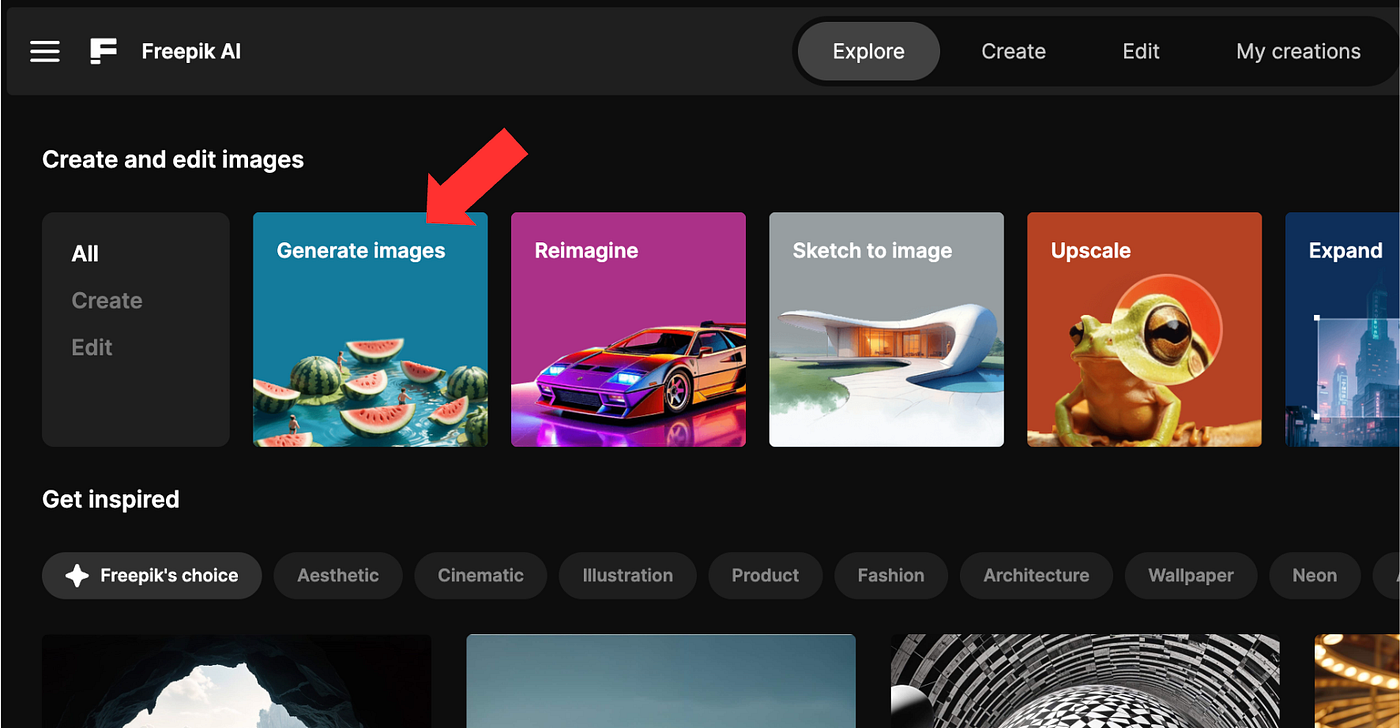
2. Ideogram Character — Best for Single-Reference Face Consistency
Ideogram Character treats consistency as a dedicated character problem. Upload one clear portrait and reuse that person across scenes, outfits, and styles while preserving facial features and hairstyle. The editable character mask lets you protect the face while changing hair, or keep accessories that define the character.
Best starting reference: a well-lit front or moderate three-quarter portrait. Limitation: FLUX.2 or Gemini may be more flexible when one generation must reconcile many different image references, objects, and scene components at once.
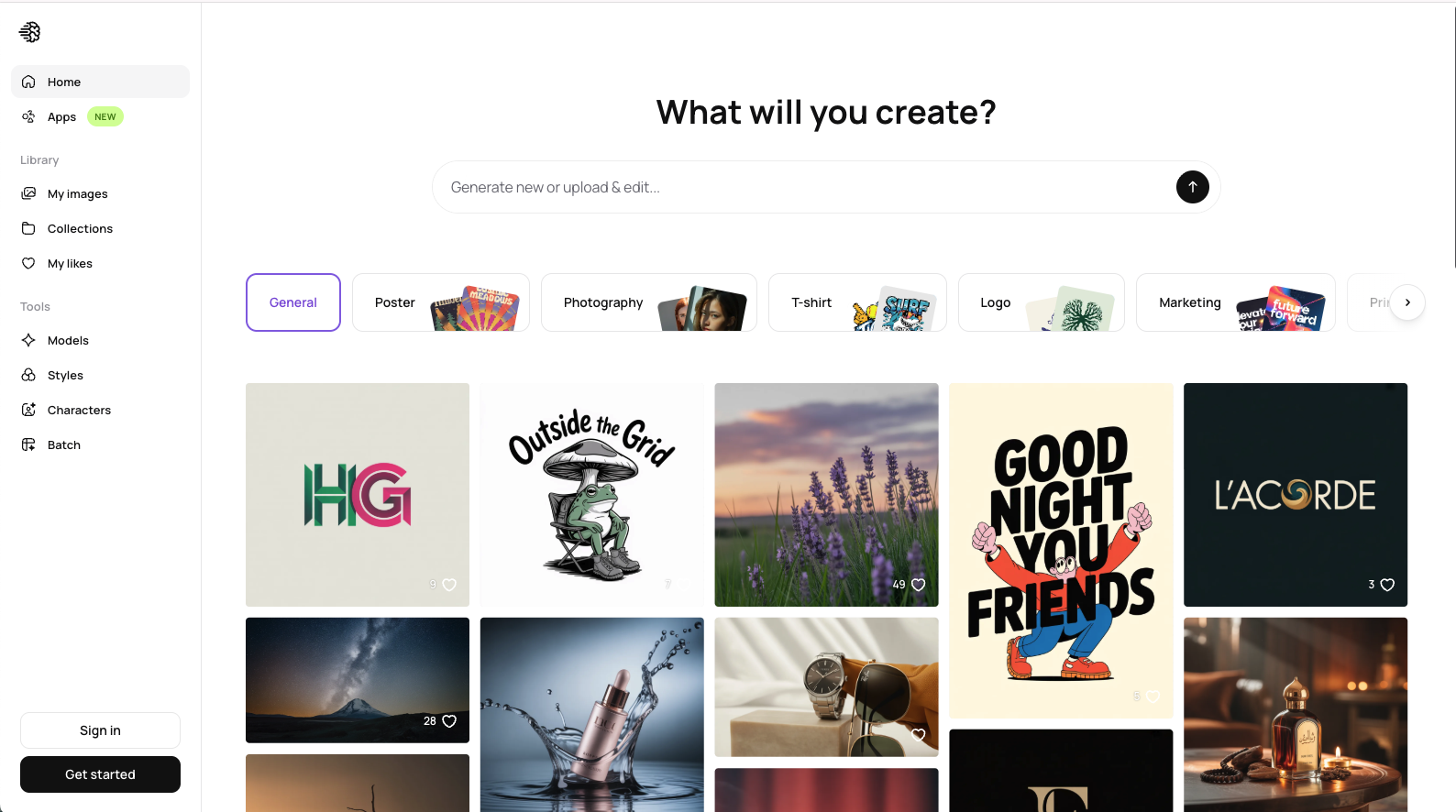
3. Runway Gen-4 References — Best for Cinematic Character Continuity
Runway Gen-4 References carries characters into new environments, lighting, and creative treatments—often from a single reference, with optional additional references. That makes it useful for storyboards, ads, and recurring cinematic characters that move far beyond a simple outfit swap.
Runway recommends even natural lighting and a neutral expression as a clean identity baseline. Limitation: extreme simultaneous changes to pose, costume, environment, and camera still increase the chance of drift.

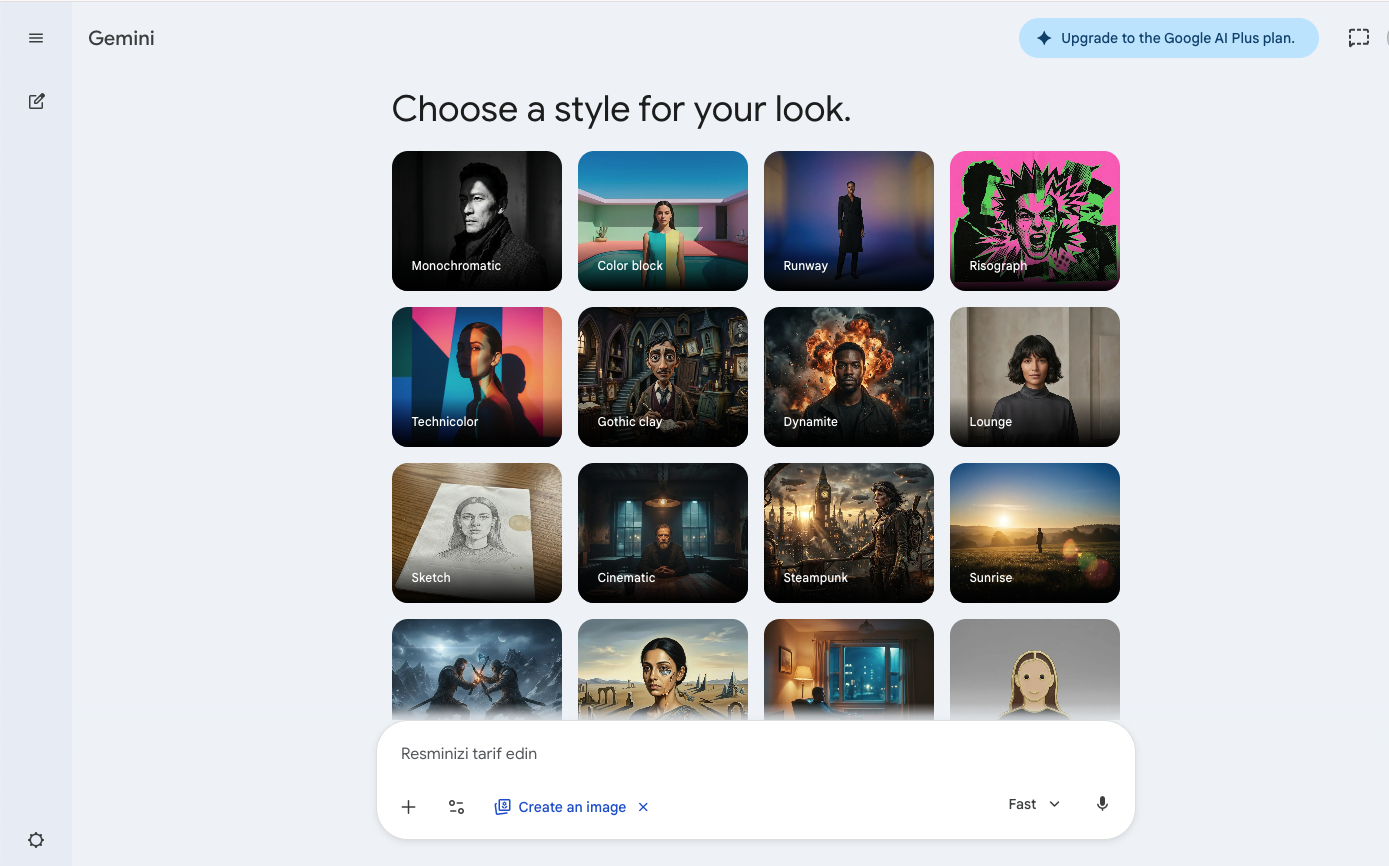
4. Gemini Image Models — Best for Multi-Character and Multi-Reference Editing
Google’s current Gemini image models support identity-preserving edits and multiple references for characters, objects, and poses. That is especially useful when several recurring people must appear in one scene, or when you iterate with multi-turn edits instead of regenerating from scratch.
Limitation: preserving a person across a modest edit is easier than perfect identity across extreme head rotations, heavy stylization, aging, and dramatic expression changes.
5. GPT-Image-2 — Best for Conversational Identity-Preserving Editing
GPT-Image-2 supports high-fidelity image inputs and natural-language editing. Start from an existing portrait and request controlled changes—clothing, background, hairstyle, lighting—while keeping the subject anchored to the source image. Follow-ups make it easy to restore details that drifted.
Limitation: for long sequences of many independent generations of one character, dedicated character-reference or multi-reference systems may offer a more explicit consistency workflow.
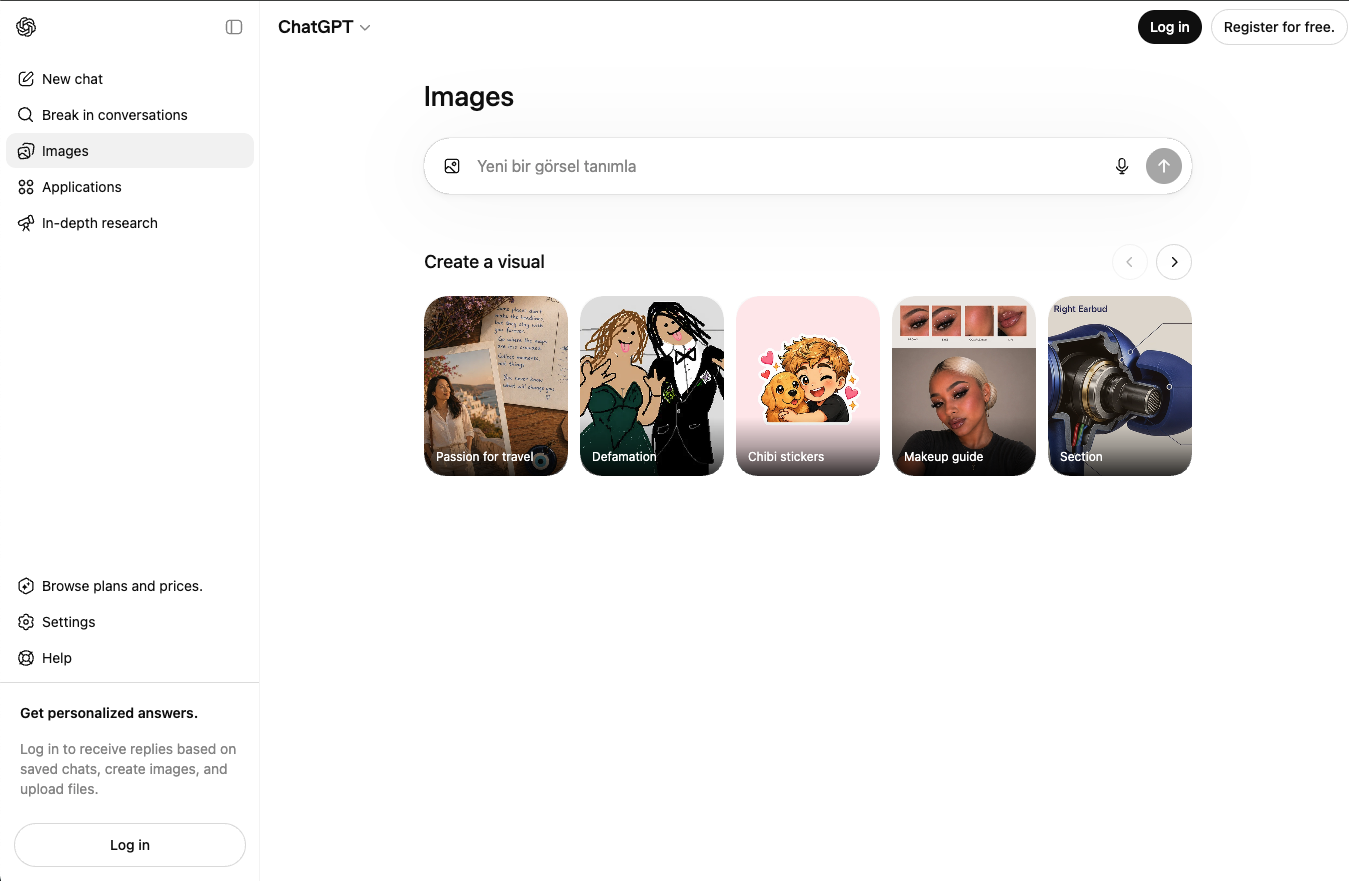
6. Midjourney — Best for Stylized Consistent Characters
Midjourney V7 Omni Reference carries a person, character, or object into new generations, with weight controls for how strongly the reference influences the result. It is excellent for fictional characters, editorial concepts, fashion imagery, and illustration where recognizable continuity matters.
Limitation: Midjourney describes references as guidance rather than exact copying. Treat it as creative character continuity, not biometric identity locking for real-person likeness.
Seeds Are Not Face References
A seed influences generation randomness. It does not encode a person’s identity. Slight prompt, model, or parameter changes can still produce different faces with the same seed. Use character or image references for identity; use seeds only as an extra repeatability control.
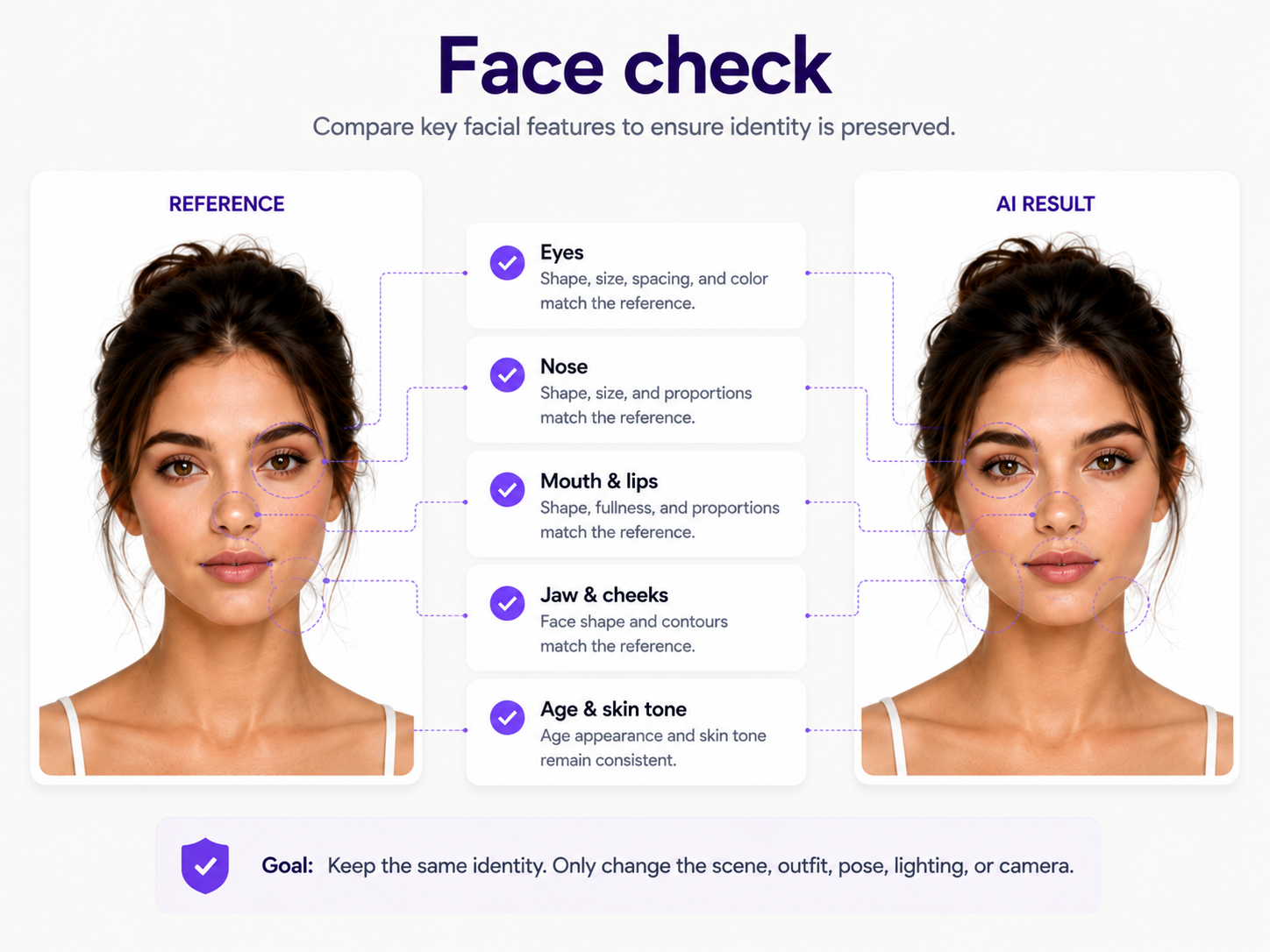
What Face Consistency Actually Means
Similar hair, eye color, age, and gender are not enough. Strong consistency means eye shape and spacing, nose structure, mouth proportions, jaw and cheek structure, and age/skin cues stay recognizable even when outfit, scene, and lighting change.
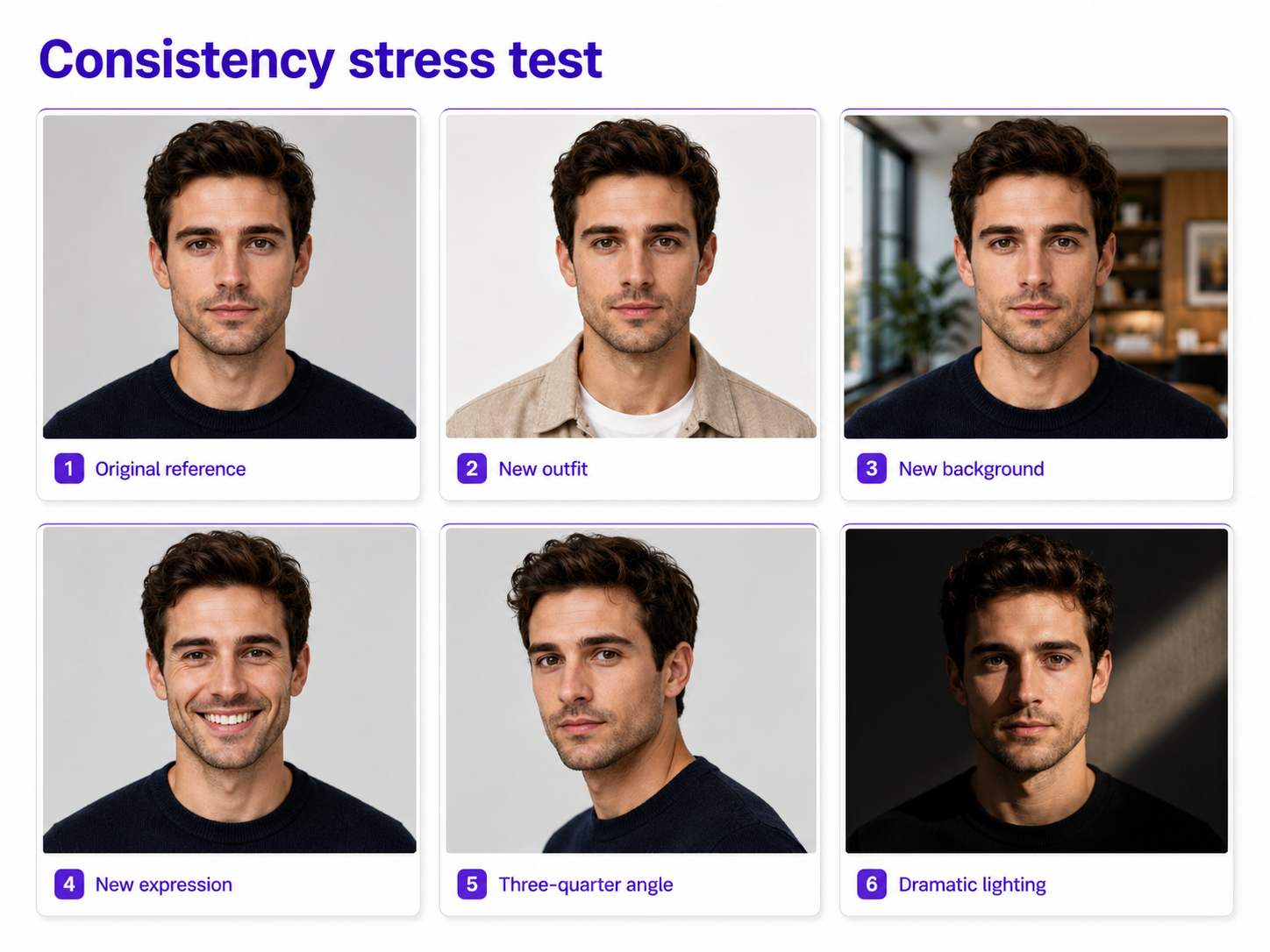
How to Stress-Test Face Consistency
Give every model the same source portrait, then increase difficulty: simple background change, outfit change, new environment, new expression, new camera angle, strong lighting change, style change, and finally a full stress test that changes several variables at once. A model that only succeeds on background replacement is not the same as one that survives the full test.
One Reference vs. Multiple References
One sharp, well-lit portrait is enough for background swaps, modest outfit changes, and near-front viewpoints. Add front, three-quarter, profile, and wider body references when you need extreme poses, profiles, full-body shots, or many campaign angles. Do not add bad references just for quantity—three conflicting photos can be worse than one excellent portrait.
Which Model Should You Choose?
Choose FLUX.2 for photorealistic multi-reference production sets. Choose Ideogram Character for the simplest one-portrait character workflow. Choose Runway for cinematic scene jumps. Choose Gemini for multi-character compositions. Choose GPT-Image-2 for conversational iterative edits. Choose Midjourney for stylized or fictional character continuity.
How to Improve Face Consistency With Any Model
Keep one approved portrait as the primary anchor. Explicitly preserve facial identity and proportions. Change fewer variables at once. Add extra angles when the tool supports them. Separate identity references from style references when possible. Avoid prompt language that redesigns the face. Compare new outputs to the original reference, not only to the previous generation.
Can Any Model Guarantee the Exact Same Face?
No. Character references improve consistency, but the model still generates new pixels. Extreme angles, aging, stylization, difficult lighting, and weak source photos can all introduce variation. For commercial work, review every output before approving it.
FAQ
Which AI image model is best for keeping the same face?
FLUX.2 is one of the strongest all-around options, especially with multiple references. Ideogram Character is especially strong from a single clear portrait. Runway Gen-4 References is another strong option for recurring characters across different scenes.
Does using the same seed keep the same face?
No. A seed influences randomness but does not define identity. Character references or image inputs are the right tools for face consistency.
Is one reference photo enough?
Often yes for moderate variations. Multiple consistent angles help for profiles, extreme poses, full-body shots, and large campaign sets.
Is Ideogram good at keeping the same face?
Yes. Ideogram Character is built for character consistency from a reference image, with mask controls for which identity features stay fixed.
Is FLUX good for character consistency?
Yes. FLUX.2 supports multi-reference generation and editing for character consistency, style transfer, product consistency, and pose control.
Does Midjourney keep the same face?
Omni Reference can carry a character into new V7 generations. Treat it as creative guidance rather than a guarantee of exact real-person reproduction.
Does Gemini keep faces consistent?
Current Gemini image models support identity-preserving edits and multi-reference generation, including multiple character references for more complex scenes.
Is GPT-Image-2 good for keeping the same person?
Yes for controlled conversational edits of an existing portrait. Dedicated character-reference systems may be better for long series of many independent generations.
What reference photo works best?
Use a sharp, evenly lit portrait with a clearly visible face and natural proportions. Front-facing or moderate three-quarter views are strong starting points.
Why does AI still change the face with a reference?
The model must reinterpret the reference as pose, lighting, hair, age, style, or camera angle change. Stronger references and more controlled edits usually improve consistency.