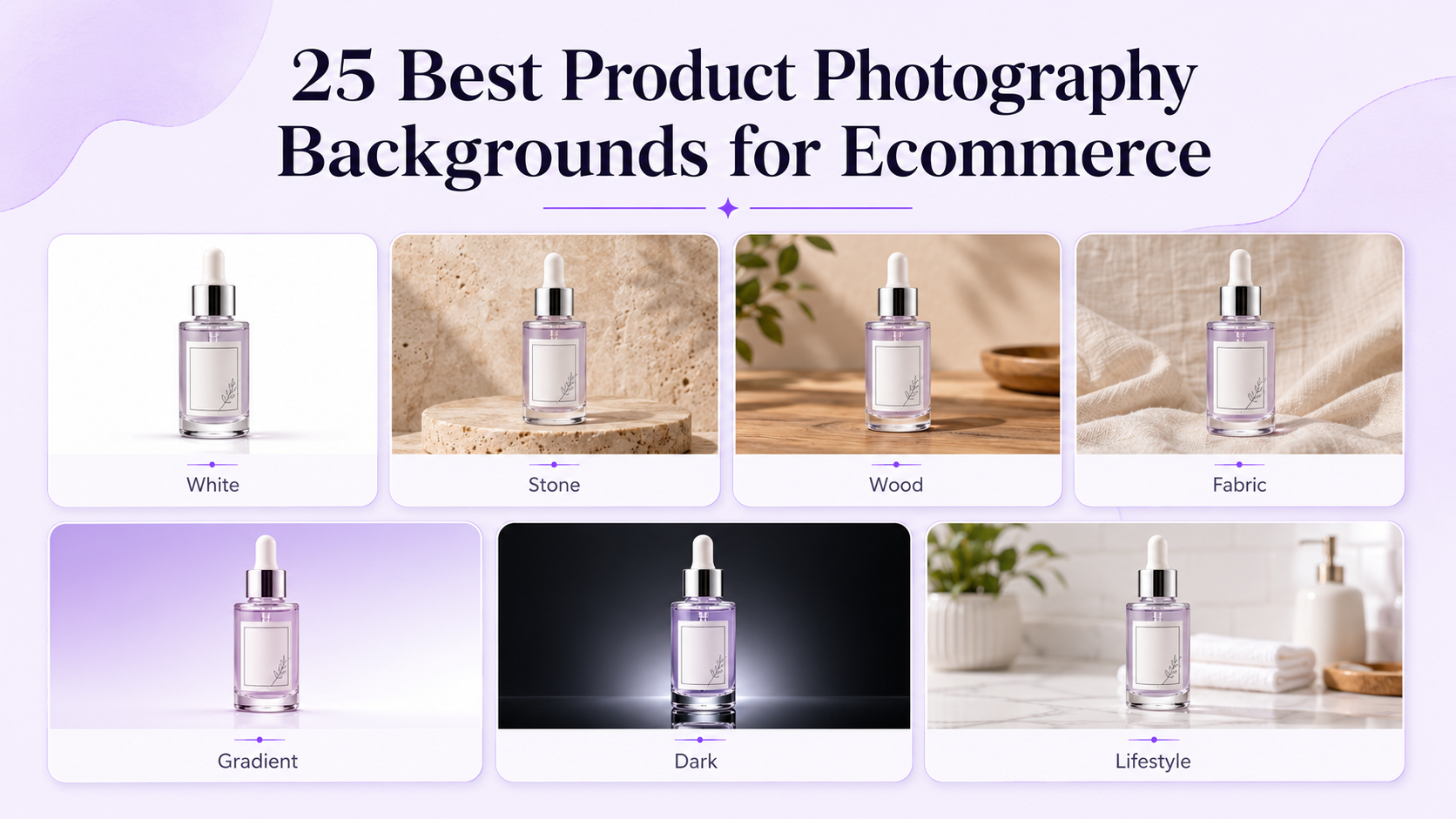
Product photography backgrounds affect how customers understand the item, its quality, and its intended use. A clean white background makes inspection easier. A lifestyle scene adds context. Stone, fabric, gradients, and dark studio settings can communicate a more premium or distinctive brand position.
The best background is not necessarily the most decorative. It should create clear separation around the product, support accurate color, match the sales channel, and remain less visually important than the item being sold.
Most ecommerce stores need more than one background style. The main listing image may use white or light gray, while secondary images can use lifestyle scenes, brand colors, materials, or seasonal campaign settings.
This guide covers 25 product photography background ideas, how to select the right one, which products suit each style, how to create backgrounds at home, and how AI can turn one clear product photo into several commercial variations.
How to Choose a Product Photography Background
Choose the background according to the image's job. A marketplace main image should help customers inspect the product. A lifestyle image should explain where or how it is used. An advertisement should create attention and support brand messaging.
Consider the product color, material, finish, size, audience, price point, and channel. A clear glass bottle, black watch, pale cosmetic jar, reflective appliance, and handmade candle each need different contrast and lighting.
The background should also support the brand. Minimal beauty brands may prefer cream stone and soft gradients. Outdoor products may benefit from natural textures. Technology products often work with clean white, gray, dark blue, or controlled reflective surfaces.
25 Best Product Photography Backgrounds
1. Pure White Background
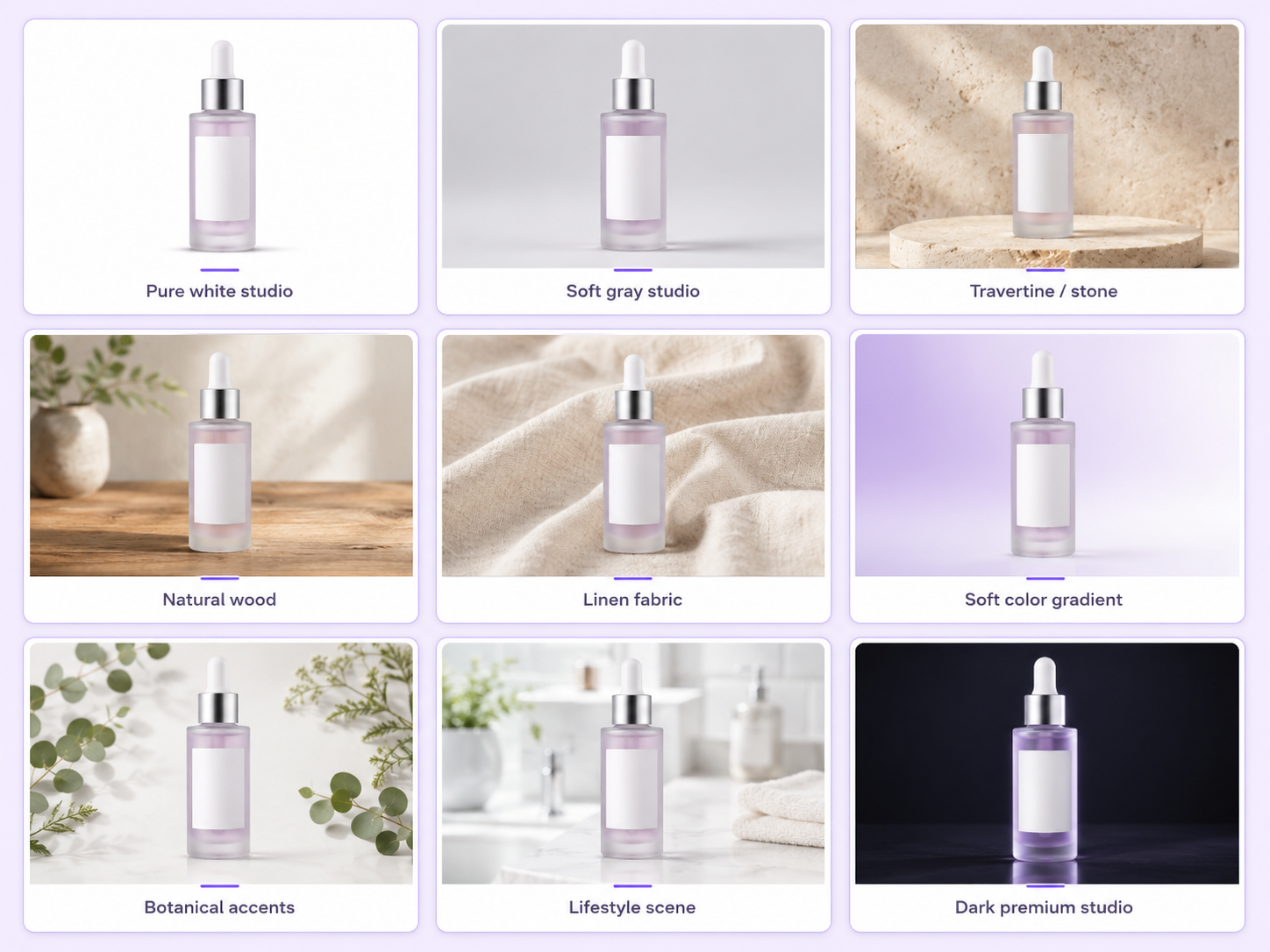
A pure white background is the standard choice for clean ecommerce and many marketplace listings. It removes visual distraction, makes products easy to compare, and works with almost any store design. Use soft, even lighting and preserve edge detail so white or transparent products do not disappear.
2. Soft Off-White Background
Cream, ivory, or warm off-white creates a softer and more premium alternative to pure white. It works well for skincare, candles, jewelry, home goods, fashion accessories, and natural products. The slight warmth can make the image feel less clinical.
3. Light Gray Studio Background
Light gray creates clear separation around white products while remaining neutral. It is useful for electronics, packaging, home goods, tools, and catalog photography. A soft gradient from light to slightly darker gray adds depth without introducing a strong color.
4. Dark Gray or Black Background
Dark backgrounds create contrast, drama, and a premium mood. They suit watches, perfume, electronics, automotive products, beverages, jewelry, and luxury packaging. Use edge lighting so dark products remain visible.
5. Brand-Color Background
A solid background in a brand color creates recognizable social and advertising content. Choose a tone that contrasts with the product rather than matching it too closely. Brand-color backgrounds are effective for launch campaigns, product collections, and carousel posts.
6. Soft Color Gradient
A smooth gradient adds depth while keeping the scene minimal. Gradients work well for beauty, technology, fashion accessories, beverages, and digital advertisements. Use colors from the product or brand palette for a coordinated result.
7. Travertine Stone
Warm travertine is widely suited to skincare, perfume, cosmetics, candles, jewelry, and premium home products. Its natural texture communicates refinement without becoming too visually busy. Pair it with cream, beige, or warm gray backgrounds.
8. Marble Surface
Marble works for beauty, jewelry, kitchen products, food packaging, home accessories, and luxury goods. Choose restrained veining and avoid patterns that compete with small labels or detailed products.
9. Concrete Background
Concrete creates a modern, industrial, and neutral setting. It works well for electronics, tools, men's grooming, streetwear accessories, fitness products, and minimalist home goods. Soft side lighting reveals the surface texture.
10. Natural Wood
Wood adds warmth and familiarity. It suits food products, kitchenware, candles, handmade goods, coffee, stationery, toys, and rustic brands. Choose the wood tone carefully so the product does not blend into the surface.
11. Painted Wood
Painted wood offers texture with more color control than natural timber. Whitewashed, pale blue, sage, black, or muted pastel boards can support handmade, coastal, children's, and lifestyle products.
12. Linen Fabric
Linen creates a soft, natural, and tactile background for skincare, jewelry, candles, ceramics, food, clothing accessories, and wellness products. Keep folds controlled so the fabric supports rather than hides the item.
13. Velvet Fabric
Velvet adds depth and luxury through soft highlights and rich shadows. It is especially suitable for jewelry, watches, perfume, cosmetics, gift products, and premium accessories. Dark velvet requires careful dust removal.
14. Silk or Satin
Silk and satin create flowing highlights and a polished beauty or fashion mood. They work with perfume, makeup, jewelry, handbags, and gift products. Control folds and reflections so the surface does not overwhelm the product.
15. Colored Paper Sweep
A curved paper sweep creates a seamless studio background at low cost. Colored paper is useful for cosmetics, stationery, toys, packaged food, accessories, and social campaigns. Use one tone or combine two coordinated sheets for a graphic look.
16. Acrylic Reflective Surface
Acrylic creates a controlled reflection beneath the product. It suits perfume, beverages, cosmetics, electronics, watches, and premium packaging. Keep the reflection subtle so it adds polish without duplicating the product too strongly.
17. Water and Ripple Background
Water ripples, droplets, and reflective blue surfaces communicate hydration, freshness, and cleanliness. They work well for skincare, beverages, fragrance, swim products, and waterproof items. Effects should remain controlled and physically believable.
18. Botanical Background
Leaves, flowers, stems, or natural greenery can support beauty, wellness, tea, food, eco-friendly, and handmade products. Use only a few elements and ensure the plants do not hide the product or imply ingredients that are not present.
19. Sand and Coastal Background
Sand, pale stone, ocean color, and warm daylight create a summer or travel mood. This background suits sunscreen, fragrance, beverages, swimwear, sunglasses, travel accessories, and seasonal products.
20. Kitchen Lifestyle Background
A kitchen background adds context for cookware, food, beverages, containers, appliances, cleaning products, and home goods. Keep the environment clean and softly focused so the product remains dominant.
21. Bathroom Lifestyle Background
Bathrooms work naturally for skincare, haircare, makeup, towels, fragrance, grooming, and wellness products. Use stone, tile, glass, soft towels, and controlled greenery to create a believable setting.
22. Living Room Background
A living room can support candles, lighting, furniture, textiles, décor, electronics, books, and lifestyle goods. Match the interior style to the target customer and product price point.
23. Desk and Office Background
A desk scene works for stationery, electronics, productivity products, notebooks, bags, glasses, office accessories, and software-related hardware. Keep cables, papers, and props organized.
24. Seasonal Holiday Background
Seasonal backgrounds can include restrained ribbon, warm lights, leaves, snow textures, flowers, or gift packaging. The product should remain fully visible, and seasonal props should not dominate the frame.
25. Minimal Geometric Background
Blocks, arches, cylinders, platforms, and simple geometric panels create a modern editorial scene. This approach works for beauty, accessories, electronics, home goods, and advertising. Use controlled shapes and a limited color palette.
Best Backgrounds by Product Type
Skincare and Cosmetics
Use off-white, travertine, marble, bathroom interiors, water, soft gradients, botanical elements, or monochromatic brand colors. Keep labels and packaging readable.
Jewelry and Watches
Use velvet, stone, dark studio, acrylic reflection, silk, or minimal white. Precise reflections and metal color are more important than decorative props.
Food and Beverages
Use wood, stone, kitchen settings, ingredient-led scenes, white studio, colored paper, or controlled splash backgrounds. Do not add ingredients that misrepresent the product.
Fashion and Accessories
Use neutral paper, fabric, boutique interiors, bedroom or closet scenes, minimal architecture, and brand-color backgrounds. Preserve material, fit, print, and texture.
Electronics and Technology
Use white, gray, black, gradients, desk scenes, reflective acrylic, or geometric environments. Keep ports, controls, screens, and physical proportions accurate.
Candles and Home Décor
Use warm wood, linen, stone, living rooms, shelves, bedside settings, or seasonal scenes. The environment should communicate scale and atmosphere.
Handmade and Etsy Products
Use natural wood, linen, paper, simple lifestyle scenes, botanical details, or neutral brand colors. Backgrounds should support the handmade character without looking cluttered.
Best Backgrounds by Ecommerce Channel
Marketplace Main Images
Use white or another background permitted by the platform's current image rules. The product should fill the frame appropriately, remain fully visible, and avoid unrelated props.
Shopify Product Pages
Use a consistent main background across the catalog, then add lifestyle, detail, scale, and campaign images as a fully optimized product gallery.
Etsy Listings
Combine clean product visibility with handmade context. Neutral wood, linen, paper, light stone, and controlled lifestyle settings often work well.
Use stronger colors, gradients, lifestyle scenes, geometric shapes, seasonal setups, and vertical compositions. Keep the product large enough for mobile viewing.
Paid Advertisements
Choose a background with clear visual hierarchy and negative space for copy, price, logo, or call to action. Avoid details that compete with the message.
Use a wide composition with the product positioned to one side. The background should create atmosphere while leaving clean space for a headline and button.
How to Create Product Photography Backgrounds at Home
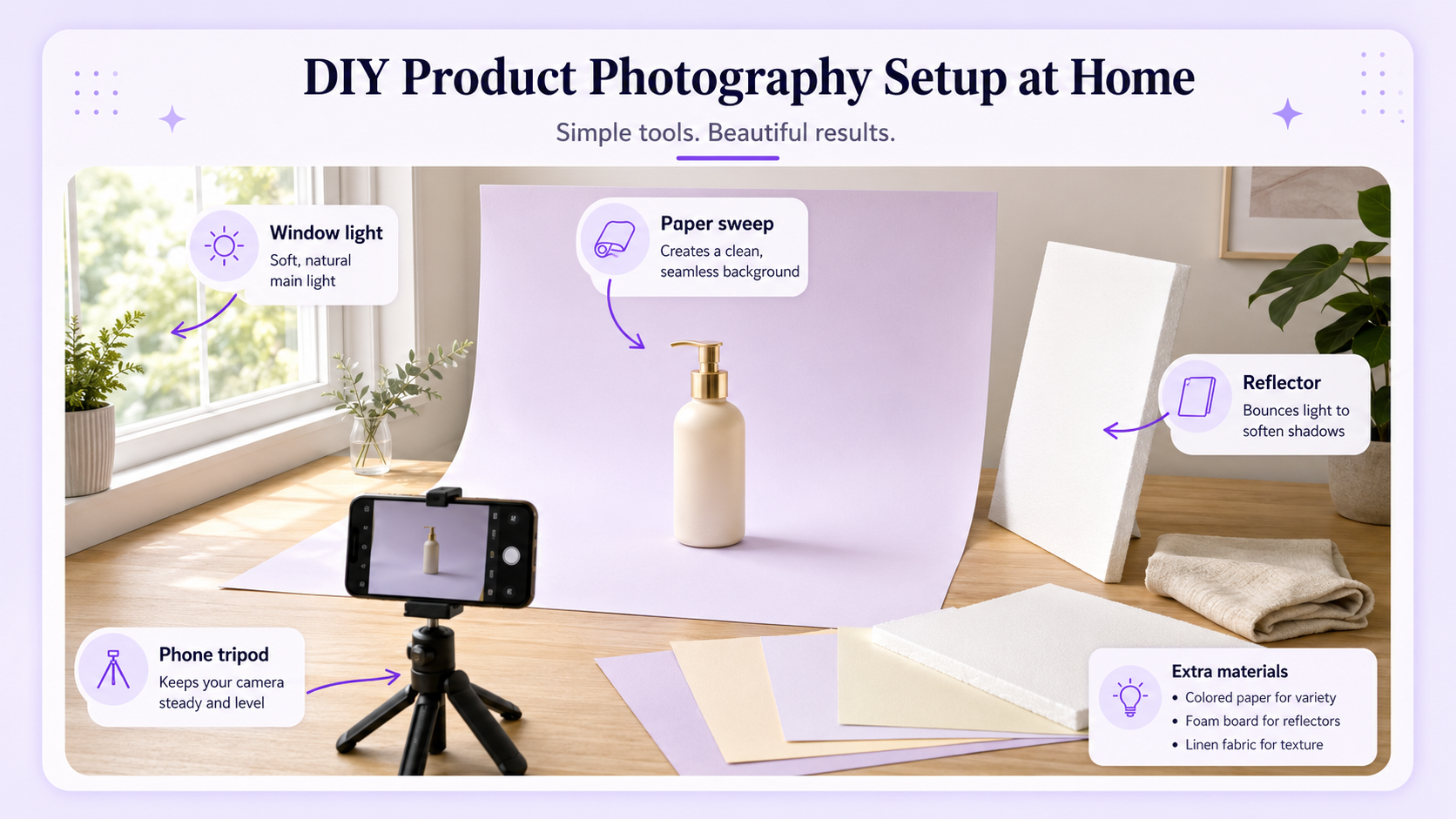
Many backgrounds can be created with poster board, seamless paper, foam board, fabric, tiles, wood panels, stone samples, colored card, or household surfaces.
Use a curved paper sweep for clean studio images. Place the product several centimeters in front of the background to create separation and smoother light.
Photograph beside a large window or use one diffused artificial light. Add a white reflector on the opposite side to reduce harsh shadows.
Clean every surface before shooting. Dust, fingerprints, wrinkles, scratches, and stains become more visible in product photography.
How to Match the Product and Background
Create Edge Contrast
The product outline should remain easy to see. Avoid placing a white product on pure white without shadow or a black product on black without edge lighting.
Protect Product Color
Strongly colored surfaces can reflect onto white, metallic, transparent, or glossy products. Use neutral reflectors and correct color carefully.
Match the Price Position
A luxury product may benefit from refined stone, controlled reflection, velvet, or a dark studio. A practical household product may perform better in a clean kitchen, white studio, or realistic home environment.
Match the Material
Reflective products need controlled light and surroundings. Transparent products require visible edge definition. Textured products benefit from directional light that reveals surface detail.
Match the Final Crop
Leave the correct amount of space for the destination. Marketplace listings require clear product scale, while banners and advertisements need negative space.
Using AI to Change Product Photography Backgrounds
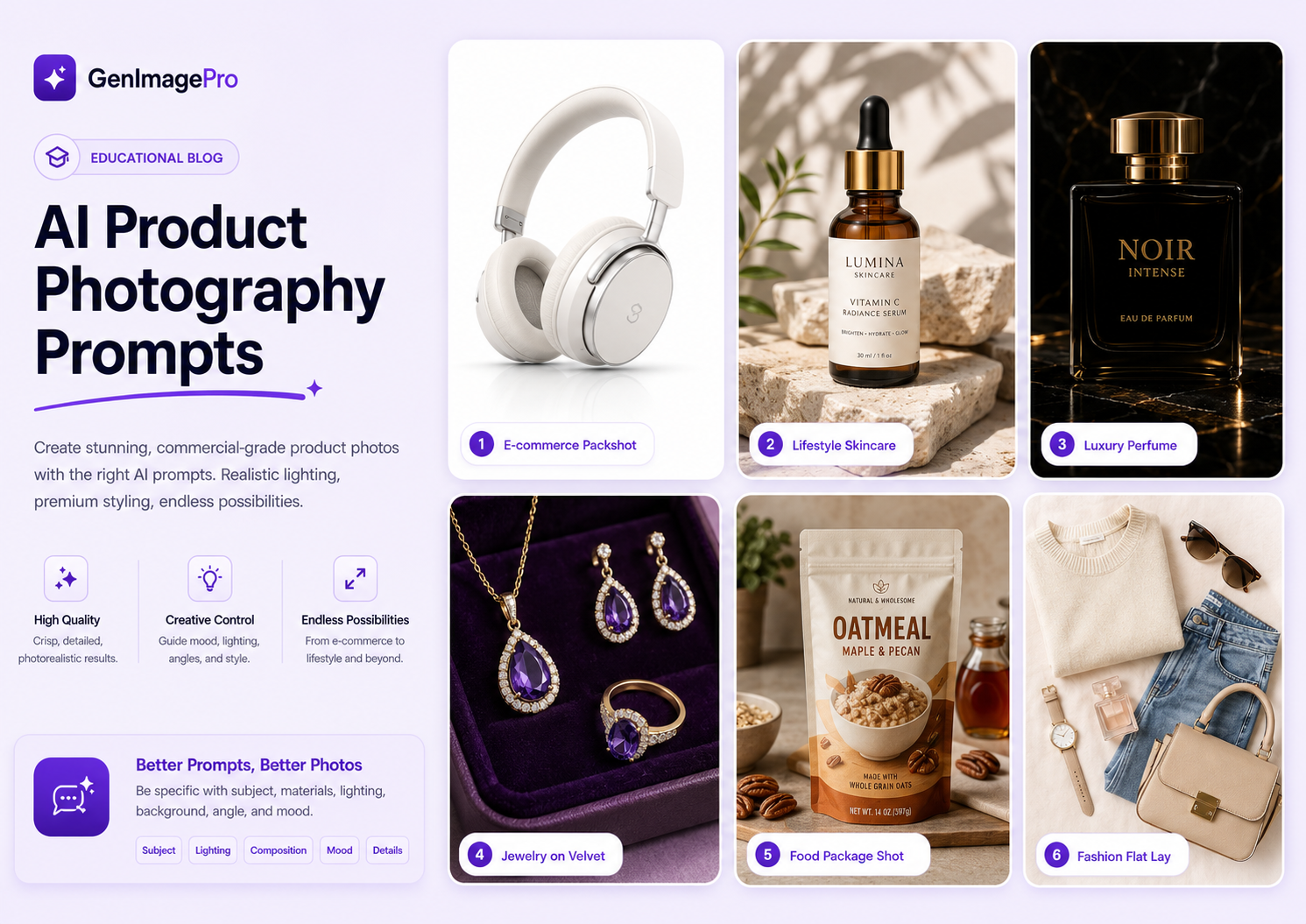
AI background tools can turn one clean product image into white-background listings, lifestyle scenes, luxury campaigns, seasonal visuals, and social advertisements.
Use the real product as the exact reference. Clearly protect its shape, label, logo, material, color, packaging, proportions, and camera angle.
White Background AI Prompt
Replace only the background with a pure white seamless studio, using soft high-key lighting, clean edges, realistic contact shadow, and centered ecommerce composition. Keep the exact product, label, logo, material, color, packaging, and proportions unchanged.
Luxury Stone AI Prompt
Place the product on warm travertine stone in a soft cream studio with diffused side lighting, subtle shadows, refined negative space, and premium campaign styling. Keep all product and packaging details unchanged.
Lifestyle AI Prompt
Place the product naturally in a bright modern bathroom with warm stone, soft towels, subtle greenery, realistic morning light, and gentle depth of field. Preserve the exact product shape, label, logo, color, scale, and proportions.
Dark Studio AI Prompt
Replace the background with a deep navy-black studio using controlled rim light, subtle floor reflection, realistic shadow, and cinematic premium composition. Keep the product fully accurate and unchanged.
Common Product Background Mistakes
The first mistake is choosing a background that is more visually interesting than the product. Decorative scenes should never hide labels, shapes, or important details.
- The second is poor contrast. Products need clear separation from the surface and background.
- The third is using unrelated props or ingredients that create false product associations.
- The fourth is allowing different products in the same catalog to use inconsistent lighting, scale, margins, and background styles.
- The fifth is accepting unrealistic AI shadows, reflections, architecture, text, or altered packaging.
Product Background Checklist
- Confirm that the product remains the clear focal point and that its edges are easy to identify.
- Check label readability, logo accuracy, product color, material, reflections, transparency, shape, and proportions.
- Review the background for distracting props, repeated AI textures, warped objects, inconsistent perspective, and color reflections.
- Check that the surface contact, shadow direction, lighting, crop, and aspect ratio match the intended platform.
Final Recommendation
The best product photography background depends on what the image needs to accomplish. Use white or neutral studio backgrounds for clarity, lifestyle scenes for context, materials such as stone or fabric for brand mood, and gradients or geometric sets for advertising.
Build a consistent background system rather than selecting a completely different style for every product. A coordinated catalog is easier to browse and more recognizable.
AI product photography tools help ecommerce sellers create multiple background variations from one real product photo. Upload the item, choose a ready-made background template, and generate clean listings, lifestyle scenes, luxury campaigns, seasonal visuals, and social content.
FAQ
What is the best background for product photography?
The best background depends on the image's purpose. White and light gray are useful for clean listings, while stone, wood, fabric, gradients, and lifestyle scenes support secondary images and campaigns.
What background should I use for ecommerce product photos?
Use a clean, consistent background that keeps the product easy to inspect. White or light neutral backgrounds are common for main images.
What backgrounds make products look more premium?
Travertine, marble, velvet, silk, reflective acrylic, dark studios, geometric sets, and refined lifestyle interiors can create a premium mood.
Can I create product photography backgrounds at home?
Yes. Use paper, poster board, fabric, foam board, tiles, wood panels, stone samples, or clean household surfaces with soft lighting.
How do I choose a background color?
Choose a color that supports the brand and creates clear contrast around the product. Avoid strong reflected color on white, metallic, transparent, or glossy items.
Can AI replace a product photo background?
Yes. AI can generate white, lifestyle, studio, seasonal, and advertising backgrounds while using the real product image as a reference.
How do I keep the product accurate when changing the background?
Protect the product shape, label, logo, color, material, packaging, proportions, text, and functional details, then compare the generated result with the original.
Does GenImagePro require background prompts?
Not always. GenImagePro provides ready-made background templates, allowing users to upload a product photo and choose a visual direction.


Social Media