Two AI images can share the same subject and feel completely different. A corporate headshot is not a fashion editorial; a catalog bottle is not a luxury campaign. Photography style is lighting, composition, camera position, color, environment, depth of field, polish, and purpose.
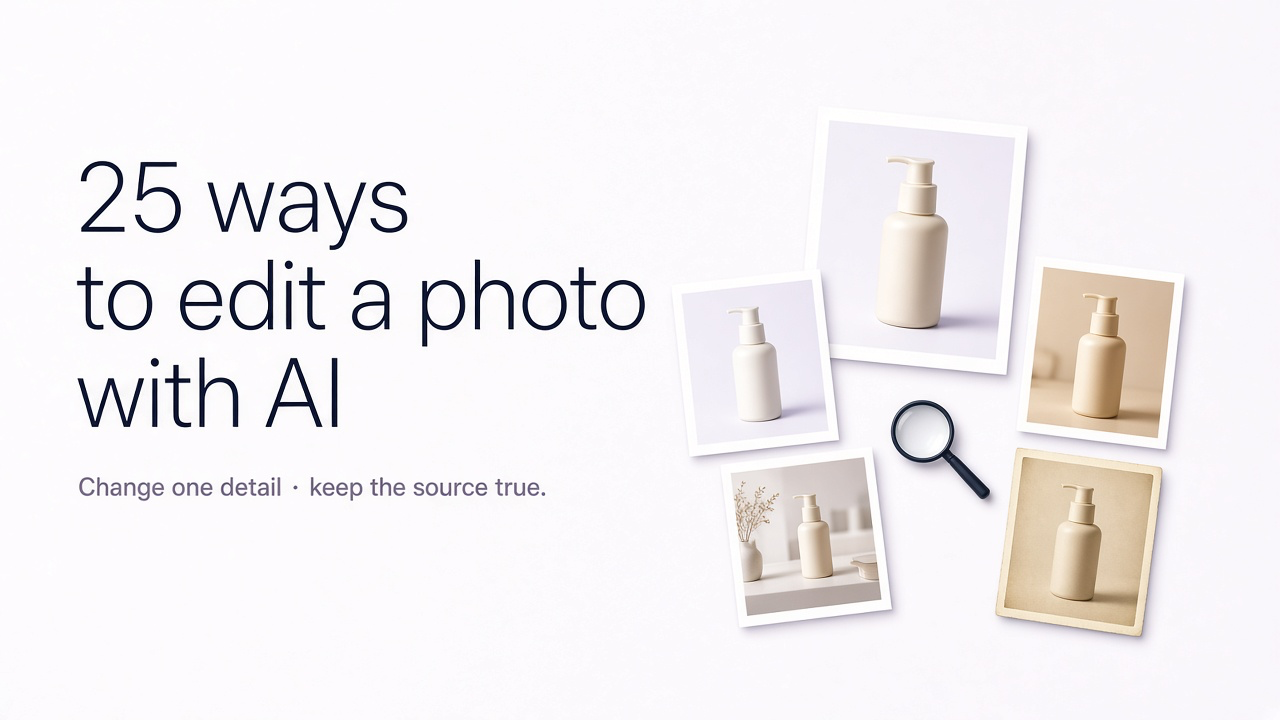
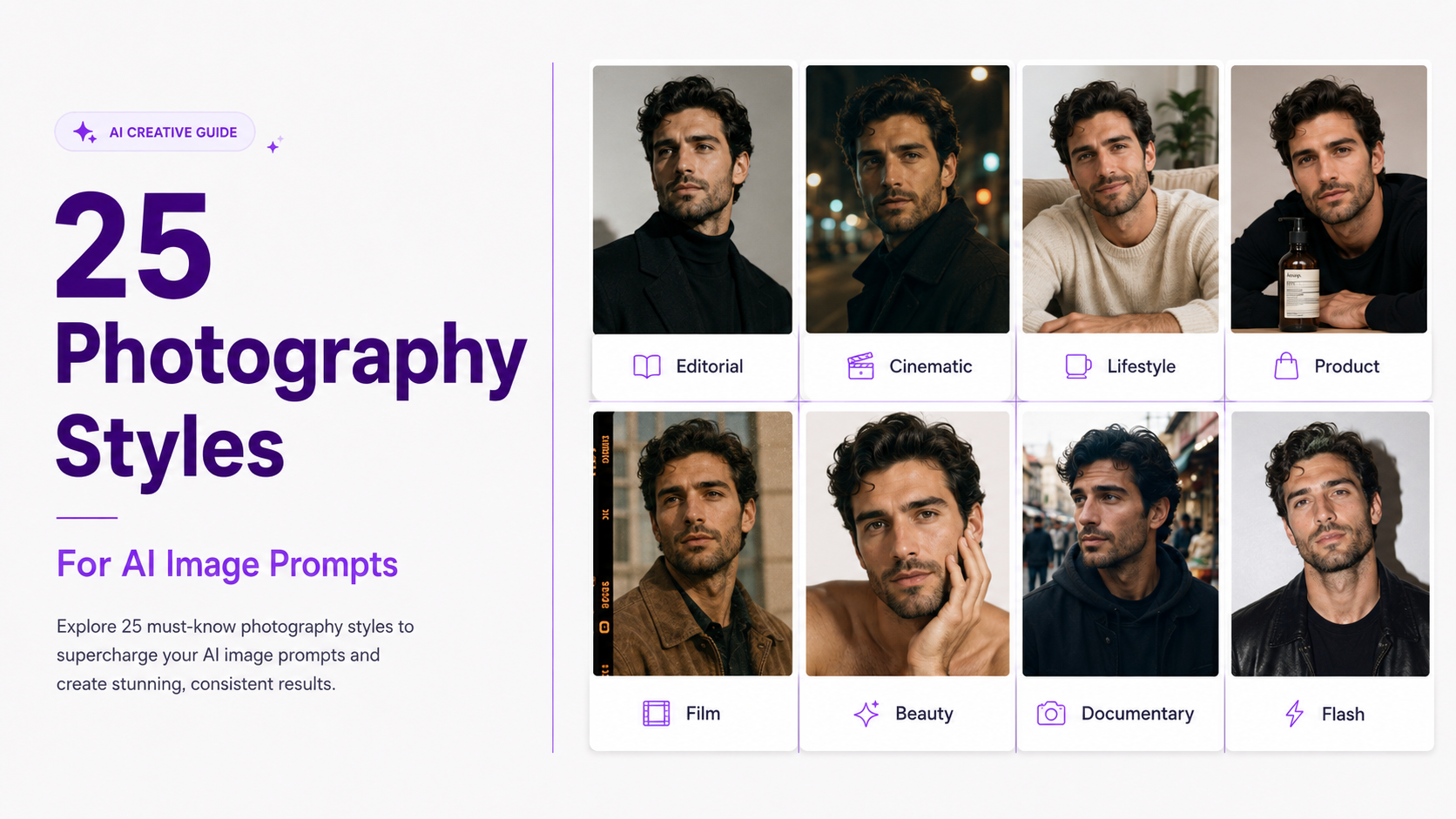
This guide covers 25 styles for AI generation and editing—with characteristics, use cases, and reusable prompts for portraits, products, fashion, food, and more.
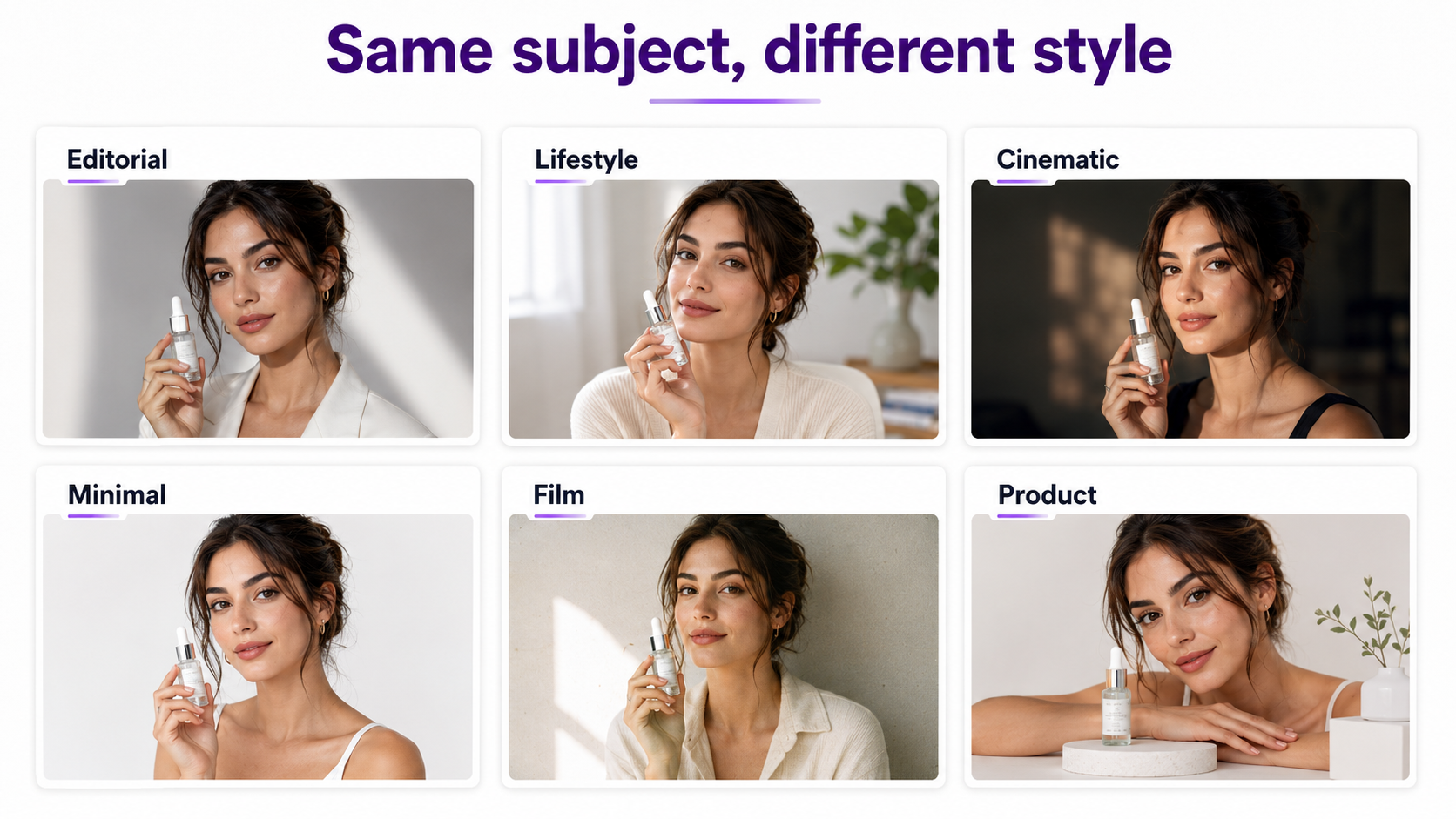
What Is an AI Photography Style?
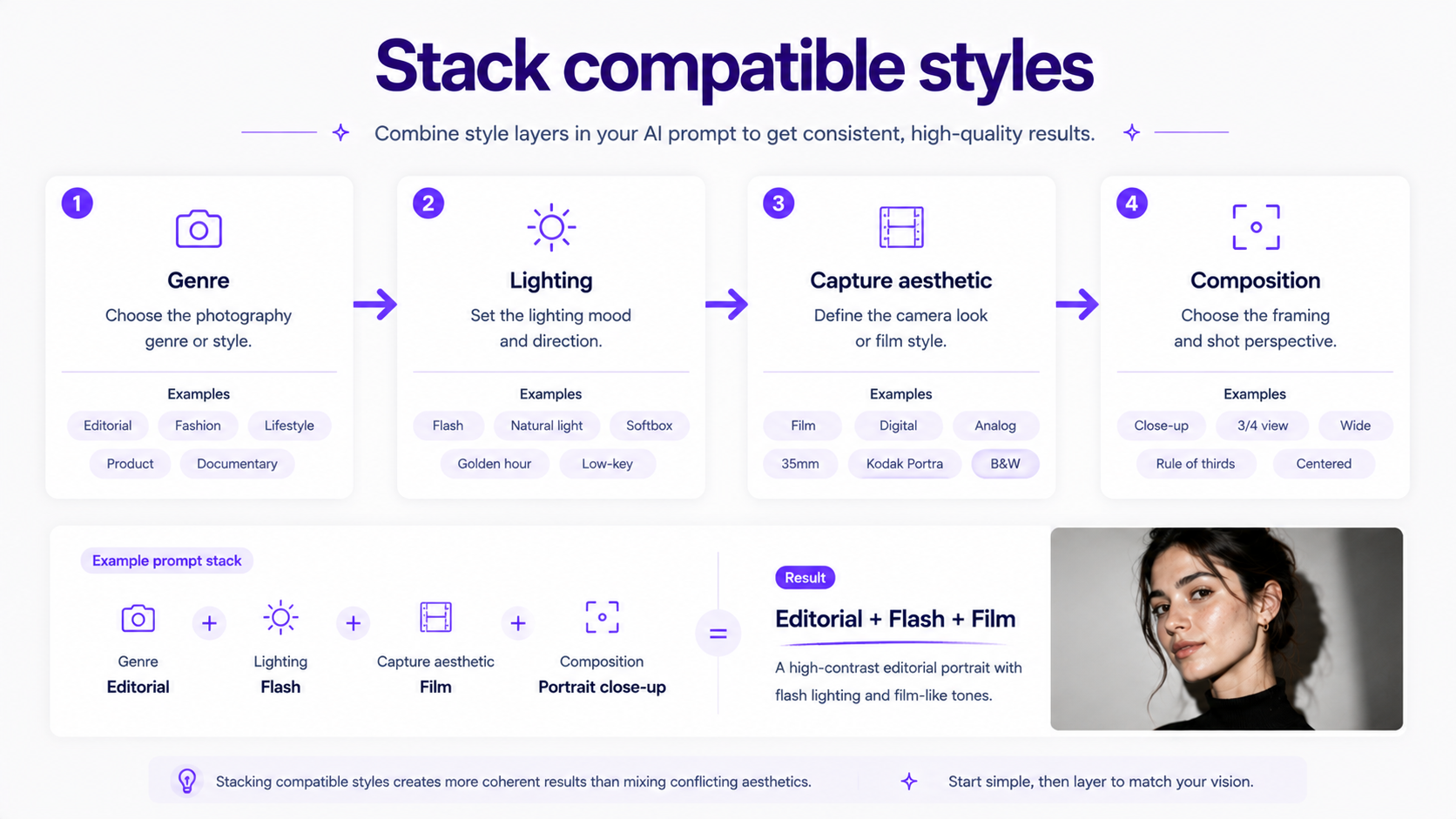
Genres (fashion, documentary, product, food) and treatments (high-key, low-key, flash, golden hour, film) can combine. Prefer multi-part direction over 'beautiful professional photo.'
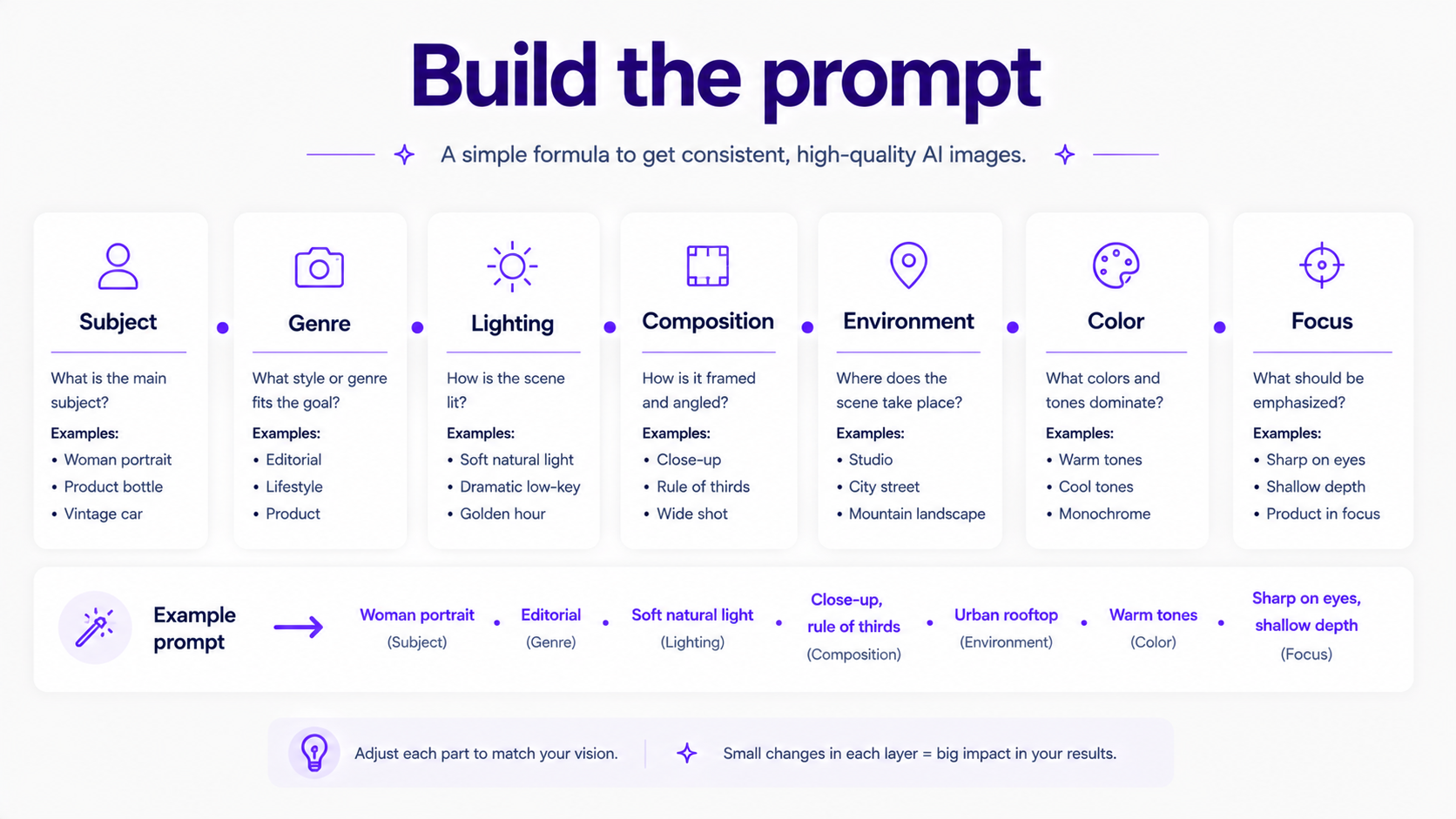
A Simple AI Photography Prompt Formula
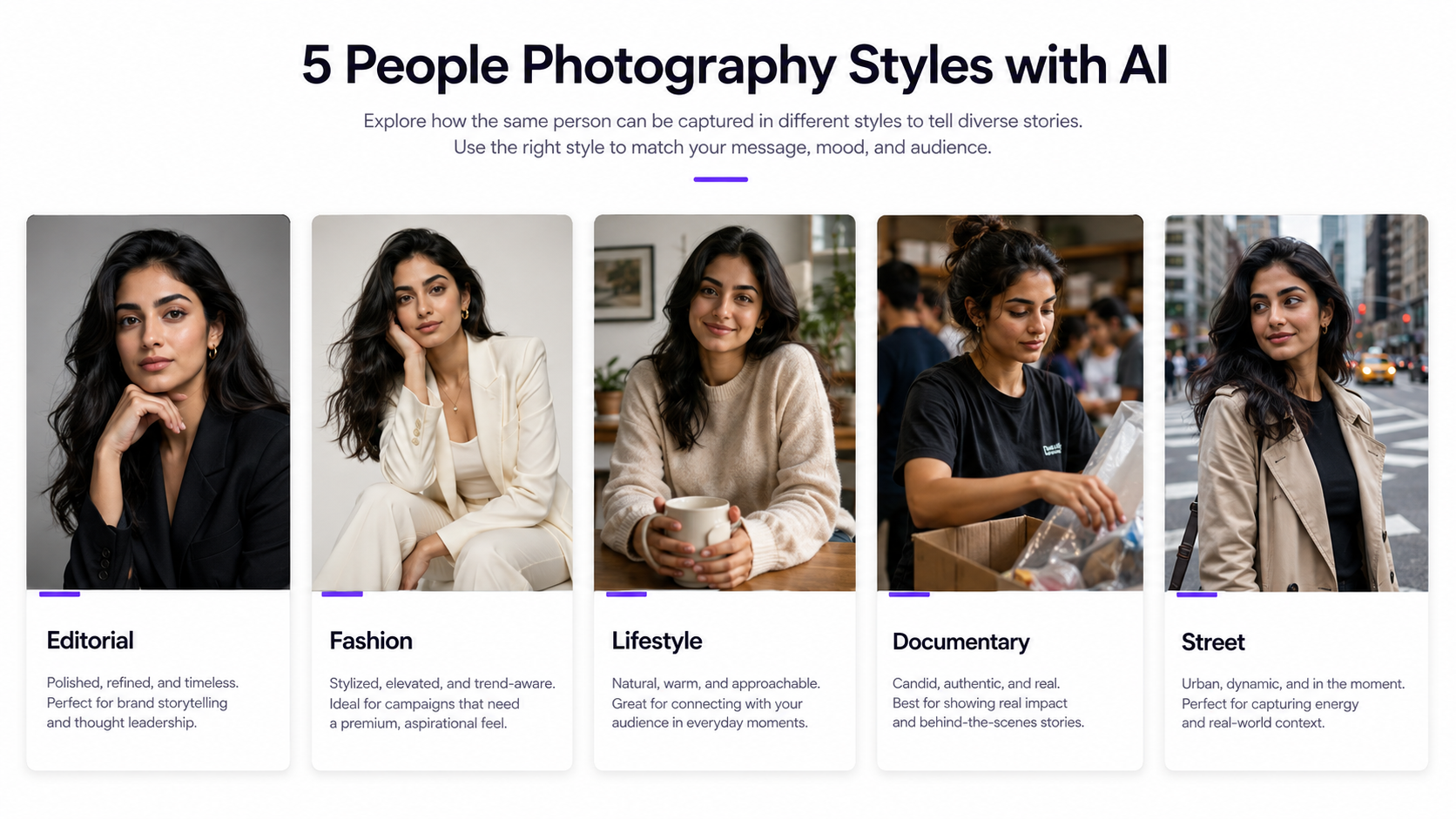
1. Editorial Photography
Storytelling and art direction—more narrative than plain commercial. Intentional crops, sophisticated styling, controlled light. Best for fashion, beauty, restaurants, lifestyle brands, magazines, campaigns.
2. Fashion Photography
Garment and silhouette stay central. Specify catalog, lookbook, street, or high fashion. Best for clothing brands, ecommerce, editorials, accessories.
3. Lifestyle Photography
Lived-in, believable scenes that show products in everyday life. Soft daylight, relaxed posing, environmental context. Best for ecommerce, home, travel, skincare, food, social.
4. Documentary Photography
Observational visual language—not real evidence. Available light, imperfect framing, ordinary environments. Best for conceptual storytelling and less-polished brand narratives. Do not present as documentation of real events.
5. Street Photography
Public-space energy: candid posture, urban detail, reflections, movement. Best for fashion campaigns, travel, youth brands, sneakers, editorial portraits.
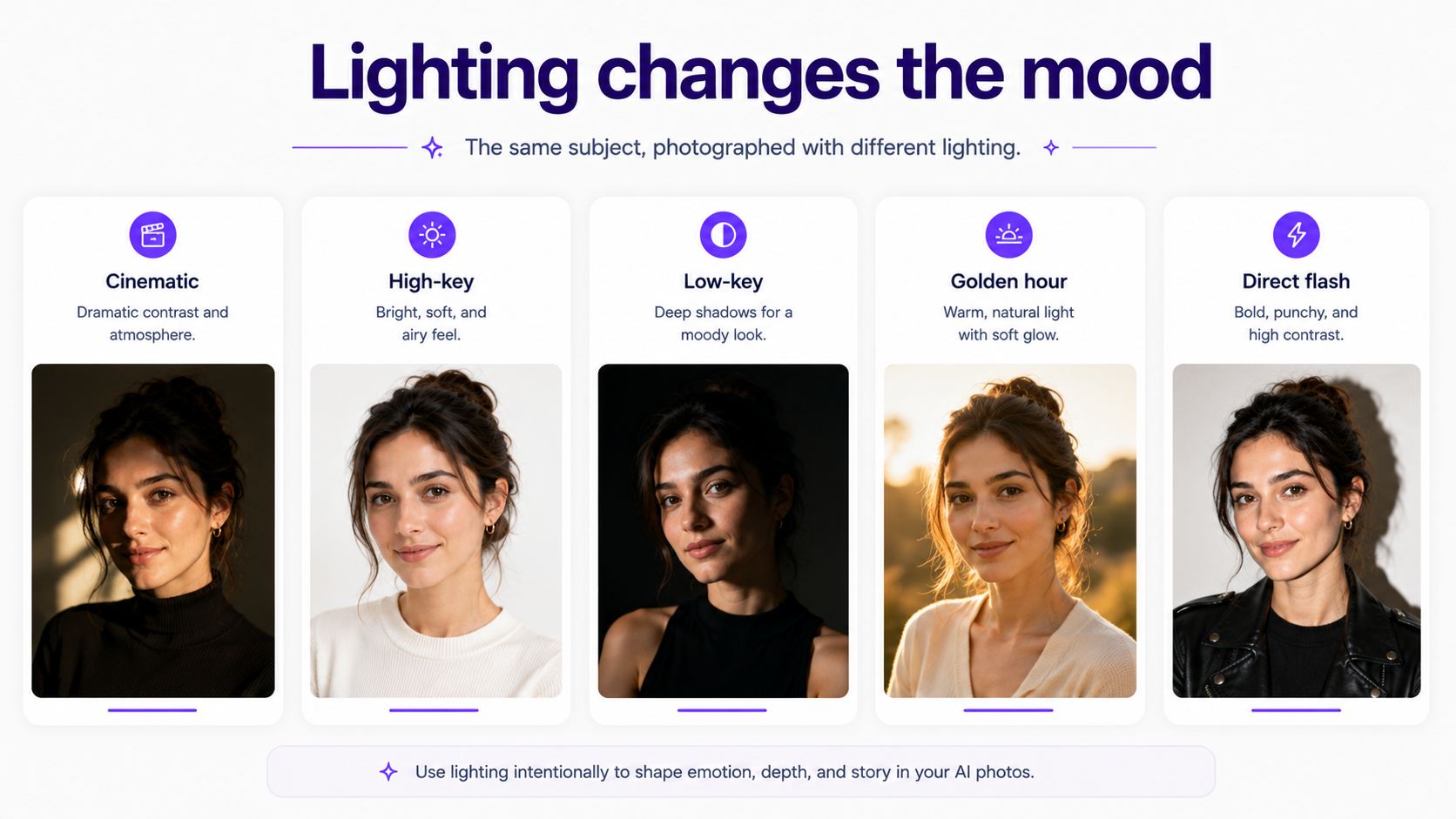
6. Cinematic Photography
Film-like depth, motivated light, narrative staging, controlled color. Explain what is cinematic—do not rely on the word alone. Best for campaigns, travel, automotive, fashion, dramatic ads.
7. High-Key Photography
Bright exposure, soft shadows, light backgrounds—clean and commercial. Best for beauty, skincare, ecommerce, wellness, corporate, food.
8. Low-Key Photography
Intentional darkness, selective highlights, deep shadows. Best for luxury products, perfume, watches, jewelry, dramatic portraits, premium ads.
9. Golden Hour Photography
Low warm sun after sunrise/before sunset: long shadows, soft rim light. Best for travel, lifestyle, fashion, outdoor, weddings, hospitality.
10. Direct Flash Photography
Hard frontal light near camera axis—embraced, not hidden. Best for nightlife, fashion, streetwear, parties, Y2K, raw editorial.
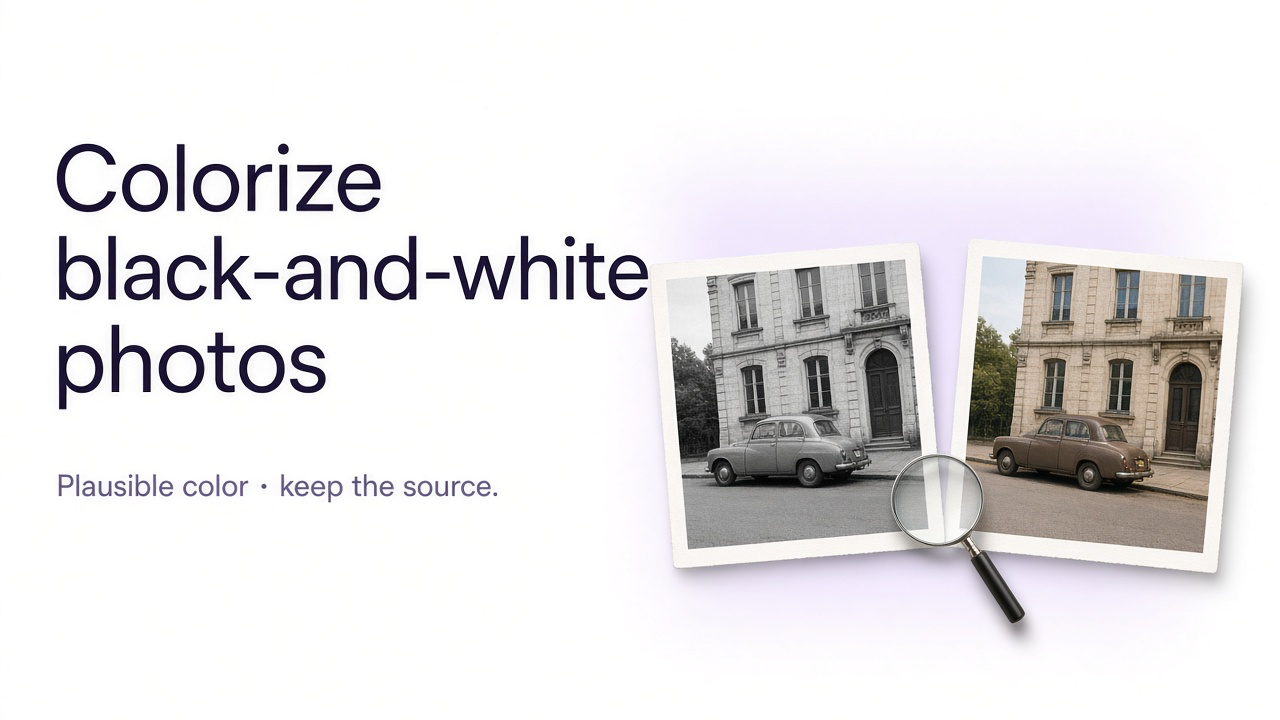
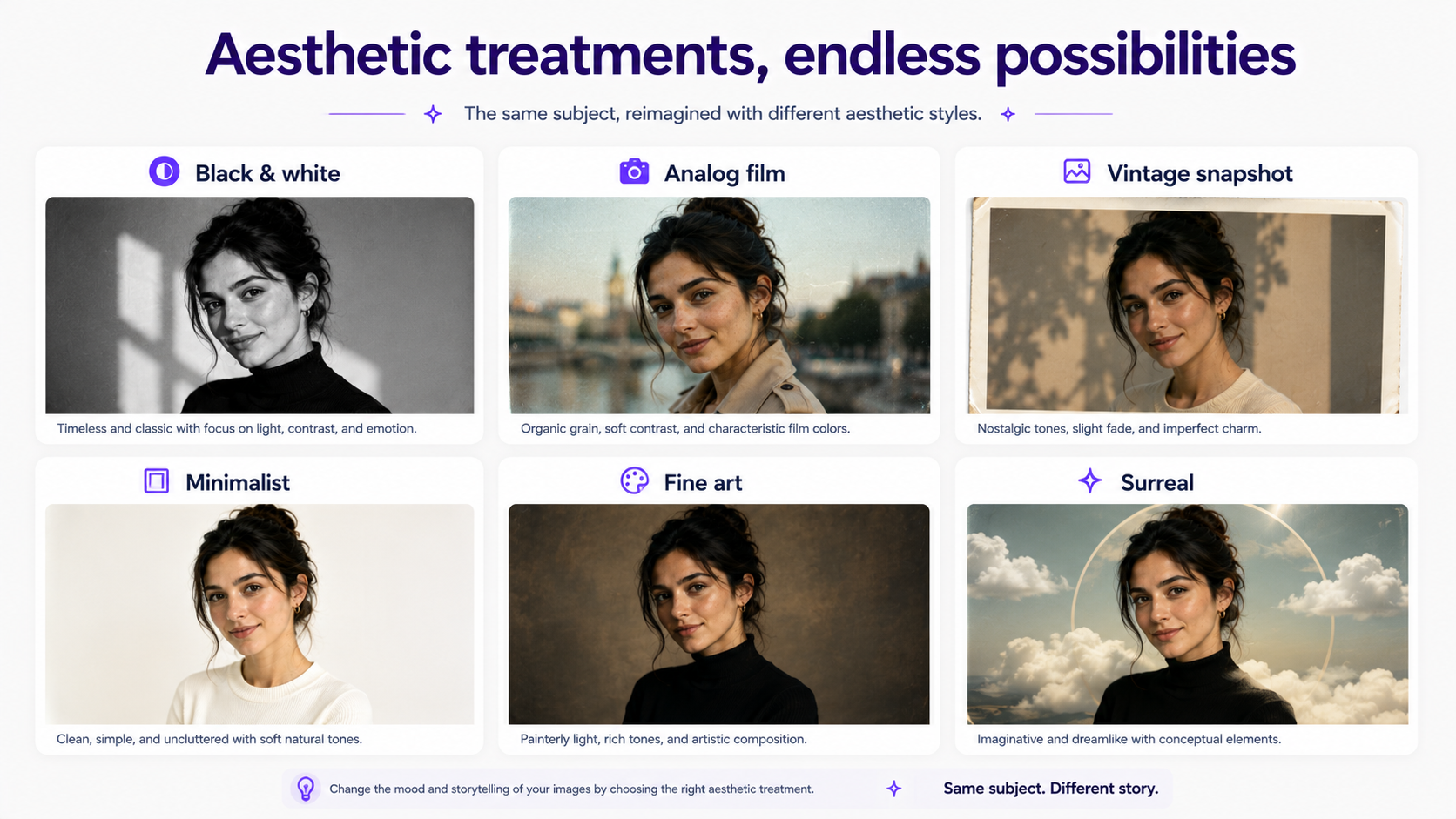
11. Black-and-White Photography
Design for tonal relationships—not just grayscale. Emphasize light, form, texture, contrast. Best for portraits, fashion, street, architecture, luxury, fine art.
12. Analog Film Photography
Fine grain, softer highlight rolloff, modest color variation, less clinical sharpness. Best for lifestyle, fashion, travel, weddings, youth, nostalgic branding.
13. Vintage Snapshot Photography
Consumer-camera imperfections: flash falloff, color cast, imperfect focus. Best for Y2K, youth, music, parties, nostalgic social.
14. Minimalist Photography
Large negative space, simple geometry, limited props, one focal point. Best for products, tech, SaaS, jewelry, website heroes.
15. Fine-Art Photography
Concept over commercial documentation—pair with a clear artistic idea. Best for creative portraits, album art, conceptual campaigns, exhibitions.
16. Surreal Photography
Photographic realism plus impossible scale or relationships. Best for ads, fashion editorials, fragrance, entertainment, attention-grabbing social.
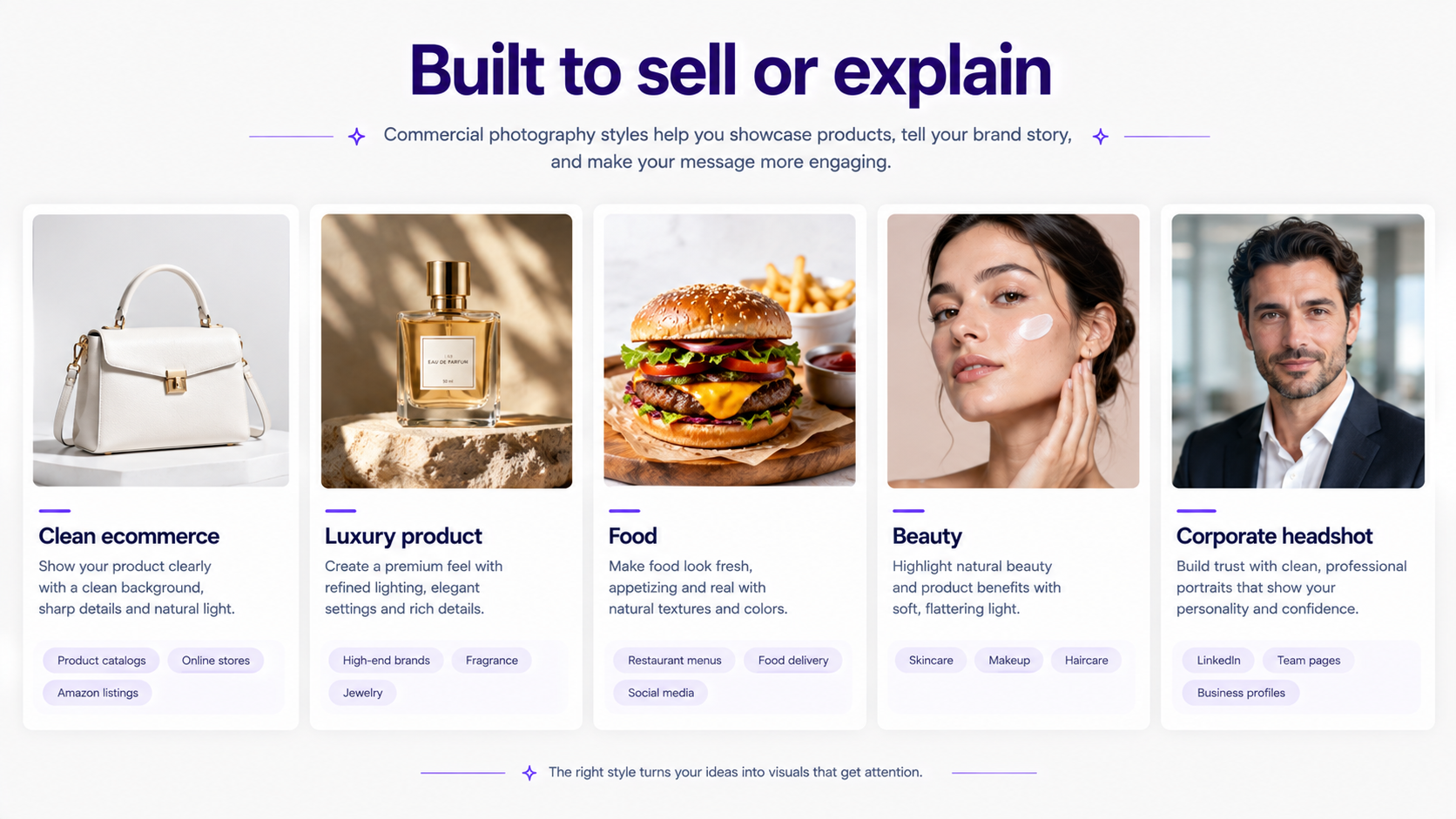
17. Clean Ecommerce Product Photography
Clarify silhouette, color, proportions, materials with minimal ambiguity. Best for listings, marketplaces, catalogs, feeds.
18. Luxury Product Photography
Mood and material rendering over full functional display. Best for perfume, skincare, jewelry, watches, premium campaigns.
19. Food Photography
Texture and freshness without plastic gloss. Best for restaurants, delivery, menus, packaged food, hospitality.
20. Beauty Photography
Face, makeup, hair—preserve pores and identity. Best for cosmetics, skincare, hair, editorial beauty.
21. Corporate Headshot Photography
Clarity and approachability over elaborate art direction. Best for LinkedIn, team pages, press kits, directories.
22. Architecture and Interior Photography
Perspective, geometry, materials, balanced window light. Prefer structural consistency. Best for real estate concepts, hotels, furniture, hospitality.
23. Macro Photography
Extreme close-ups with believable shallow focus. Best for jewelry, watches, cosmetics, food texture, craftsmanship, product details.
24. Sports and Action Photography
Motion, timing, energy. Best for sportswear, fitness, outdoor, athletic campaigns, action social.
25. Travel Photography
Specific place details beat generic sunsets. Best for hotels, tourism, luggage, airlines, destination content.
Which Style Should You Choose?
Ecommerce: clean product → lifestyle → luxury ads. Fashion: catalog / editorial / street / flash-film. Portraits: corporate, lifestyle, editorial, beauty, or low-key. Ads: luxury, editorial, cinematic, surreal, minimalist, high/low-key. Social: lifestyle, flash, film, snapshot, street, food, travel.
How to Combine Styles
Camera Terms, Subject Preservation, and Mistakes
Describe visible effects (compressed portrait, shallow depth, wide environment, macro) rather than magical camera model lists. Preserve people and products explicitly when changing style only. Avoid stacking contradictory styles, overusing 'cinematic,' confusing style with quality words, hiding errors with grain/darkness, or keyword piles like ultra-HDR + flawless + 16K.
Where GenImagePro Fits
GenImagePro explores photography directions from an existing image—clean ecommerce, luxury, minimalist, lifestyle, macro, seasonal, editorial—or move a portrait between corporate, beauty, fashion, cinematic, flash, and lifestyle while keeping the subject recognizable. Separating subject from style helps campaign consistency.
Prompt Checklist
Subject + what must stay unchanged? Genre? Lighting? Composition? Environment? Capture character? Color? Focus?
The Most Important Rule
If a style keyword fails, break it apart—describe stone, side light, glass reflections, and negative space instead of only 'luxury'; describe wardrobe, pose, crop, and narrative light instead of only 'editorial.'
FAQ
How do I specify a photography style in an AI prompt?
Name the main direction, then describe composition, lighting, background, color, texture, perspective, and depth of field.
Can I combine multiple photography styles?
Yes—combine compatible traits. Avoid contradictory stacks.
What is best for portraits vs products?
Portraits: corporate, lifestyle, editorial, beauty, or low-key. Products: clean ecommerce, lifestyle, luxury, minimalist, or macro.
What is editorial vs cinematic photography?
Editorial is narrative magazine-like art direction. Cinematic uses film-like motivated light, depth, atmosphere, and controlled color—describe those traits.
What is high-key vs low-key?
High-key: bright, soft shadows, light backgrounds. Low-key: intentional darkness with selective subject lighting.
How do I get a film look?
Describe fine grain, modest sharpness, gentle highlight rolloff, subtle color variation, and natural contrast.
Can AI change style without changing the person or product?
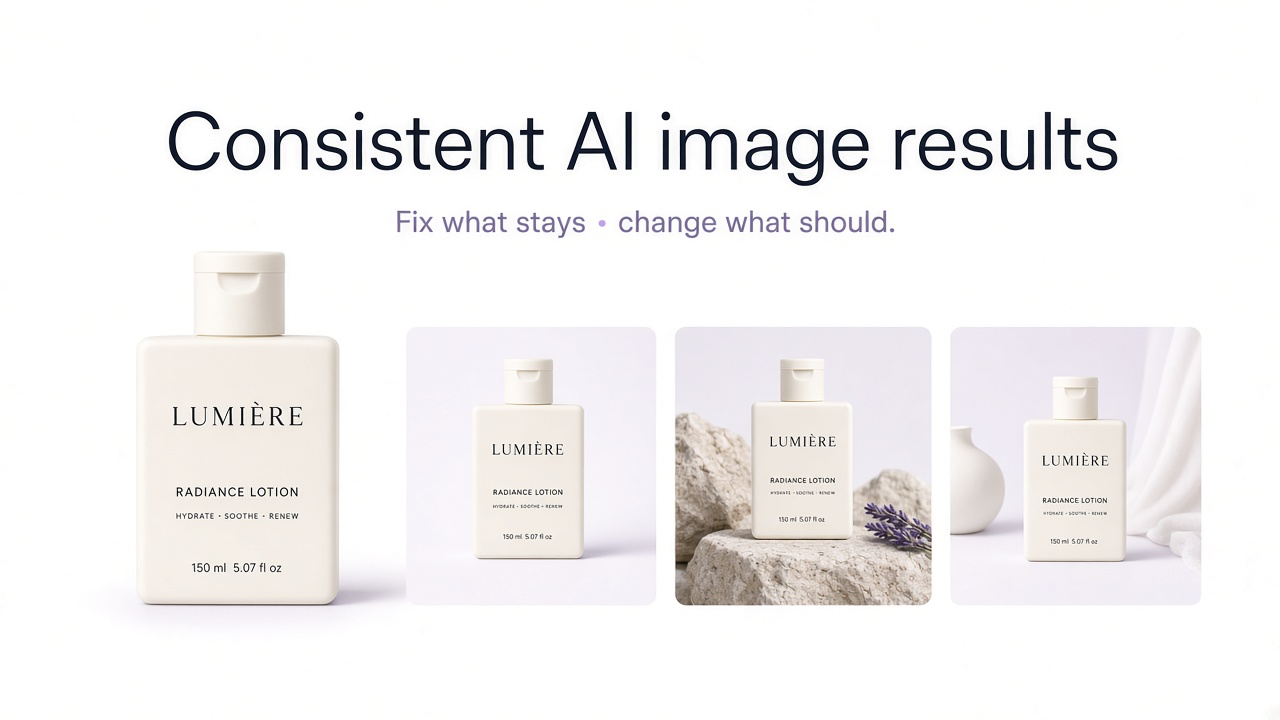
Yes—preserve identity or product geometry/packaging while changing only lighting, background, composition, and treatment.
Can GenImagePro apply different photography styles to one image?
Yes. GenImagePro is built for image-to-image: upload a source photo and explore new lighting, backgrounds, and campaign styles while preserving important subject details.