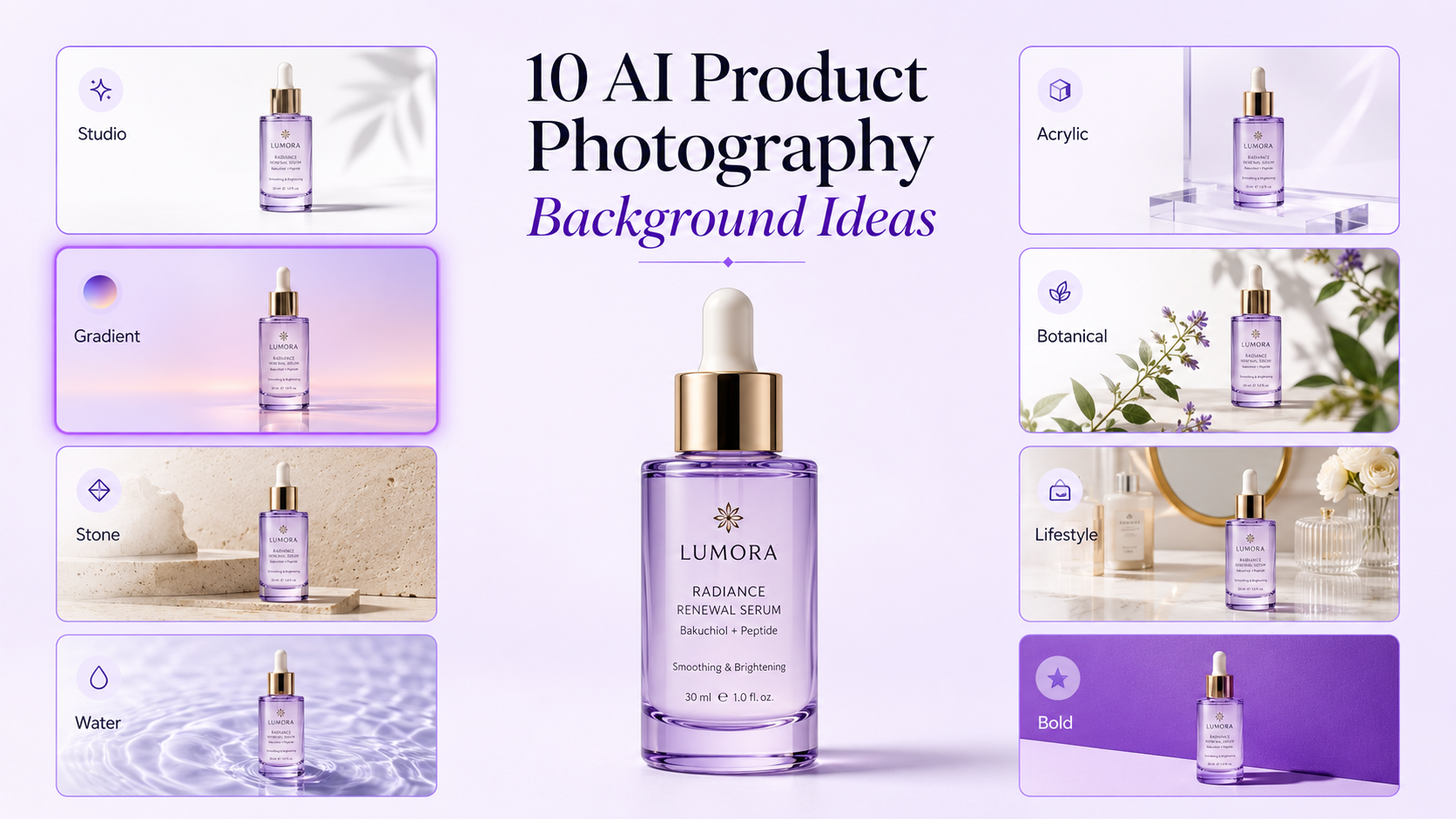
Black Friday is November 27, 2026. Here is how to prepare offers, product visuals, advertising, landing pages, and customer messages before the busiest holiday shopping weekend.
Black Friday 2026 is closer than you think
Black Friday falls on Friday, November 27, 2026, followed by Cyber Monday on November 30. If you sell to U.S. customers, your campaign needs more than a discount code. It needs a compelling offer, accurate inventory, a store that works under pressure, and creative assets that explain why each product is worth buying.
The opportunity is substantial: Shopify reported $14.6 billion in global merchant sales during Black Friday–Cyber Monday 2025. That figure represents Shopify merchant sales worldwide, not the entire U.S. retail market. The more useful lesson for an individual brand is that shoppers have abundant choices—and campaigns need to be easy to understand and easy to shop.
1. Choose an offer customers can understand in seconds
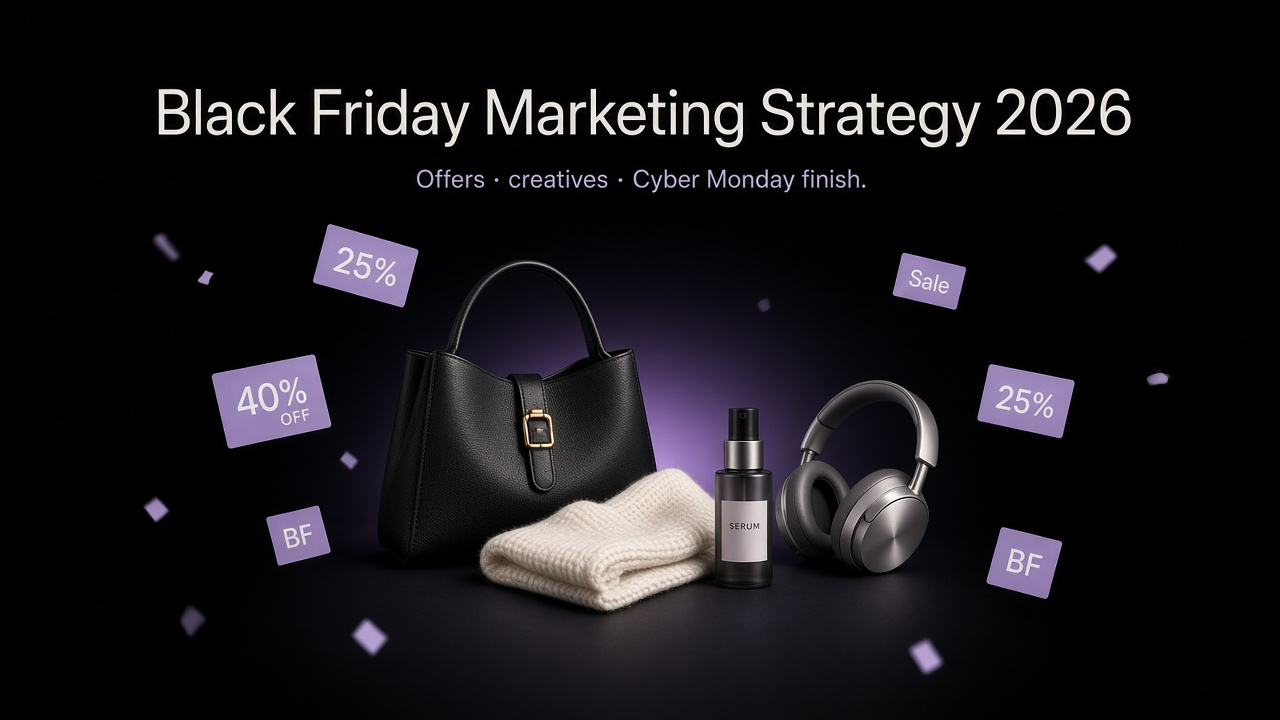
Decide what the customer gets, which products qualify, and when the promotion ends. A clear “25% off select winter essentials” may be easier to understand than several overlapping promotions. Match the offer to your gross margin, fulfillment costs, returns, and available inventory rather than copying a competitor’s discount.
Feature a small number of high-demand products instead of discounting everything by default.
Consider bundles, gifts with purchase, or a free-shipping threshold when a blanket discount would erode margin.
Put exclusions, coupon requirements, and delivery cutoffs where customers can see them before checkout.
Verify that every advertised price and savings claim matches the live store.

2. Build the campaign around products worth promoting
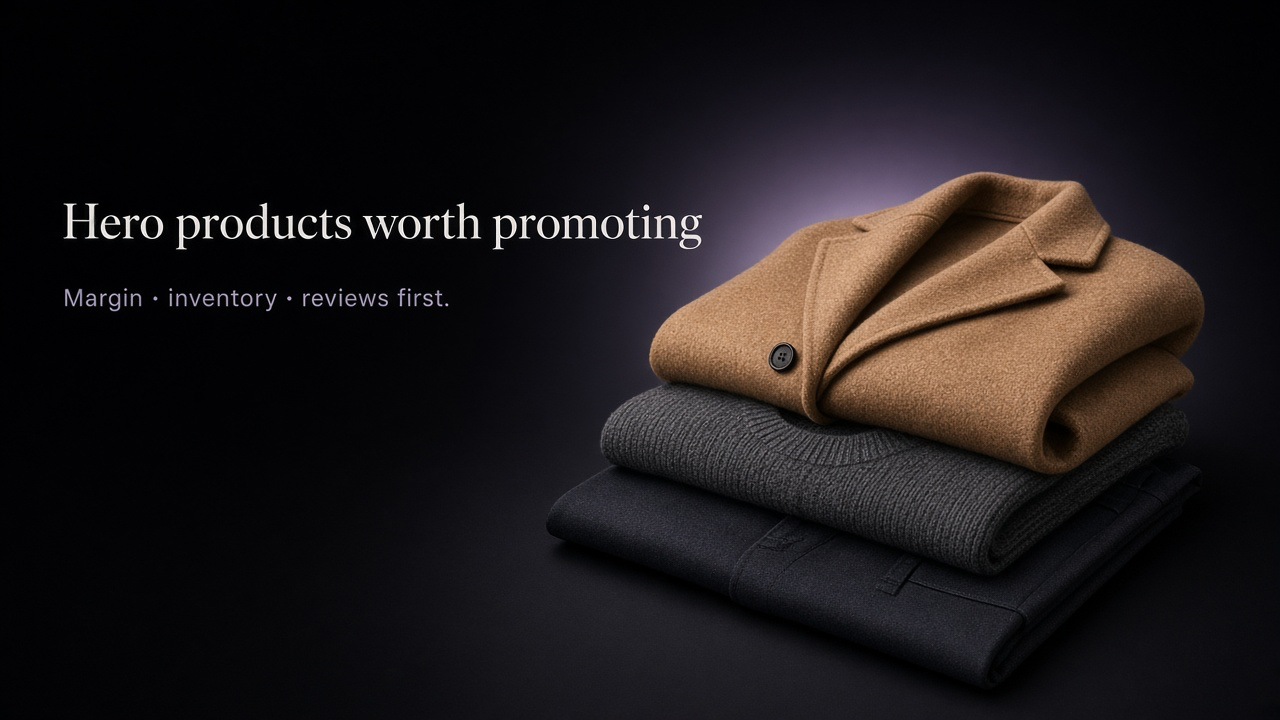
Start with bestsellers, healthy-margin items, products with strong reviews, and merchandise you can actually fulfill. For each hero item, check contribution margin after the promotional discount, payment fees, expected shipping subsidy, returns, and advertising costs. An attractive revenue number is not a winning campaign if the order loses money.
Organize products into a few shopper-friendly groups: gifts under $50, premium gifts, winter essentials, or customer favorites. Use category names that fit your actual catalog, and make sure featured items remain in stock. Prepare substitutions or a waitlist for products at risk of selling out.
3. Produce a complete Black Friday visual campaign
The most time-consuming part of a seasonal campaign is often the creative production. You need product-page imagery, homepage hero banners, email headers, vertical social ads, product detail crops, and sometimes short video. These should feel like one campaign while serving different customer questions.
Build a small creative system: one visual direction, a consistent palette, and a set of distinct advertising concepts. For example, a beauty brand can test a premium gifting image, an ingredient-and-texture story, a product-in-use scene, and a straightforward offer-focused ad. Those are different messages—not the same photo with four background colors.
Create genuinely different concepts
Product clarity: clean close-up showing exactly what is included.
Lifestyle relevance: show the product in a believable real-world situation.
Holiday gifting: demonstrate the packaging and recipient occasion.
Craft and quality: focus on textures, materials, and details.
Value and bundle: show several products together so the offer is instantly legible.
A materials-focused concept puts craft and quality in the foreground. Close-ups of metal, fabric, or finish help shoppers judge whether the product feels worth the sale price.

Lifestyle frames answer a different question: where does this product belong in someone’s day? Keep the scene believable and the product recognizable so the ad still sells the real item.

Then test a lighting or composition concept that is clearly different from your default packshot. The goal is a new creative idea to compare in ads—not a minor color swap of the same image.

GenImagePro can help turn an existing product photo into multiple campaign directions and create supporting image or video assets. Preserve brand consistency, product shape, colors, material properties, and accurate packaging; review every generated image before publishing. Never use AI visuals to depict a product feature or included accessory that the customer will not actually receive.
4. Prepare creatives for Meta, Google, TikTok, and email
Each channel has a different job. On Meta, test messages and concepts: a gifting hook, a product benefit, customer-use imagery, and a direct offer. For TikTok and Reels, prioritize a clear first-second hook and short vertical demonstrations. On Google Shopping and Performance Max, keep product information, feeds, and destination pages accurate while preparing a suitable range of image and video formats. Email should communicate the offer immediately and lead to the correct collection or product page.
Google advises uploading new Performance Max holiday assets at least three days before a sale and ideally one to two weeks ahead. For a November 27 launch, aim to finish uploads around November 13–20 rather than doing everything on Thanksgiving. Review the current platform requirements in your ad accounts before exporting final files.
For Meta, TikTok, and Reels, design for the first second on a phone: one clear product, strong contrast, and space for a short hook. Do not rely on tiny details that disappear in a feed.

Email headers need a different layout job. Keep the offer readable at a glance and leave clean negative space for the headline, benefit line, and primary CTA that send people to the right collection.

5. Make the landing page easy to shop
Your advertisement should lead to a page that fulfills its promise. If the ad shows a specific bundle, land customers on that bundle or its relevant collection—not a generic homepage that makes them search again. Put the offer, eligible products, price, delivery expectation, and primary call to action high on the page.
Test mobile page load speed and checkout using a real phone.
Display sale pricing consistently in ads, product cards, carts, and checkout.
Show shipping fees, delivery windows, return policy, and stock status clearly.
Verify product variants, discount codes, payment methods, and analytics events.
Avoid urgency counters or “almost sold out” messaging unless the claims are accurate.

6. Schedule email and SMS without overwhelming shoppers
A useful sequence begins with a preview, followed by a launch announcement, a product-focused message, and a final reminder. Segment where possible: previous customers may want early access, while new visitors may need benefits, reviews, and shipping reassurance. Do not send every customer the same message at the same frequency.
Preview: tell subscribers what kinds of products will be included, without promising unconfirmed prices.
Launch: communicate the live offer with one primary call to action.
Mid-event: highlight a bestseller, bundle, or category with genuine customer value.
Final reminder: accurately state when the offer ends.
Abandoned cart: remind customers of saved items only where consent and applicable rules allow.

7. Follow this November 2026 campaign calendar
| Dates | Priority | Deliverable |
|---|---|---|
| Nov 6–10 | Offer and merchandising | Confirm discounts, hero products, inventory, landing-page plan |
| Nov 11–16 | Creative production | Complete images, videos, email assets, and ad copy |
| Nov 17–22 | Testing and previews | Review ads, tracking, mobile checkout, and early-access messaging |
| Nov 23–26 | Final checks and early access | Confirm pricing and stock; launch only offers that are ready |
| Nov 27 | Black Friday | Monitor orders, spend, margin, and broken customer journeys |
| Nov 28–29 | Weekend optimization | Refresh underperforming messages and watch inventory |
| Nov 30 | Cyber Monday | Run a clear closing offer and verify all final deadlines |
A practical example schedule, not a requirement to launch ads on a particular date.
This is a practical example schedule, not a requirement to launch ads on a particular date. Brands with established campaigns may have started much earlier; businesses starting now should prioritize getting the offer, landing page, and a small number of strong creatives right rather than launching dozens of unfinished ads.
8. Measure profit, not just traffic
Track sessions and orders, but make decisions using conversion rate, average order value, advertising cost, contribution margin, and return rate. Return on ad spend (ROAS) is useful but does not tell you whether the discounted order is profitable. Segment results by product, creative concept, channel, and new-versus-returning customers whenever data volume permits.
Watch for traffic spikes without corresponding add-to-cart activity: check relevance, product page clarity, and load speed.
Watch for carts without purchases: verify shipping, taxes, payment issues, and surprise fees.
Watch for high ROAS but weak profit: account for discounts, shipping subsidies, and returns.
Pause ads for products that are sold out or cannot be fulfilled on the stated timeline.
9. Treat Cyber Monday as a new creative moment
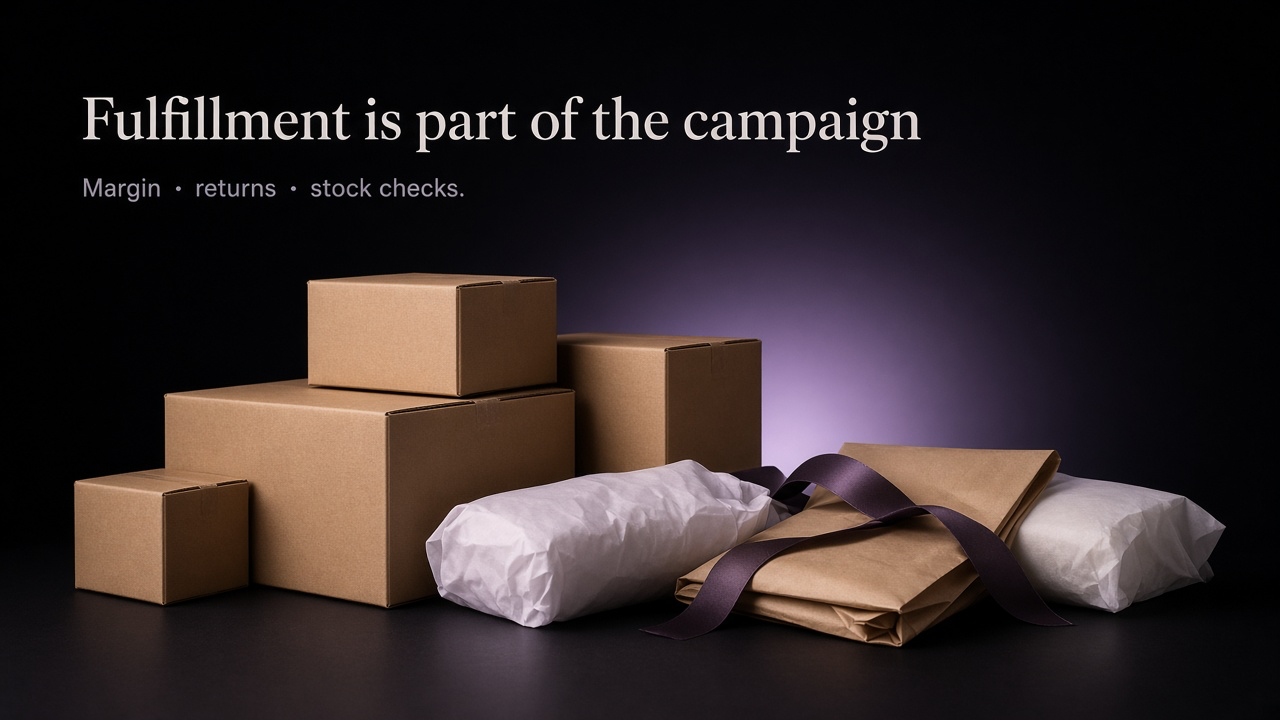
Cyber Monday falls on November 30, 2026. Use the weekend to learn which creative concepts and products generated profitable purchases, then adapt the strongest messages for the final day. You may keep the same discount, feature a different bundle, or emphasize last-chance availability—but only claim an offer is ending if it really is.
For example, a home goods brand could move from a lifestyle-led Friday campaign to a Monday product-and-bundle presentation. A fashion brand could shift from an editorial collection image to a closer look at its bestselling coat. The goal is not to restart your entire ad strategy; it is to give shoppers a timely reason to act.

Your Black Friday preparation checklist
Before launch, confirm that your offer is profitable, the advertised products are in stock, every ad links to a relevant page, the store works on mobile, your creative formats are ready, and your customer messages are scheduled. Then give yourself enough time to monitor orders and fix issues during the sale itself.
If you already have strong product photography, you do not need to organize a new seasonal photoshoot for every concept. Use GenImagePro to explore product-focused campaign images, lifestyle scenes, premium gifting visuals, and video directions from your existing assets, then review the results for product accuracy and brand fit before publishing.
FAQ
When is Black Friday 2026 in the United States?
Black Friday is Friday, November 27, 2026. Cyber Monday is Monday, November 30, 2026.
When should I start preparing Black Friday ads?
Begin as early as possible. For Google Performance Max holiday assets, Google recommends uploading them at least three days before the sale and ideally one to two weeks ahead. Creative planning, inventory checks, and landing page tests should start earlier.
What should a small business prioritize if it is preparing late?
Prioritize a profitable, clear offer; accurate featured-product inventory; a working mobile landing page and checkout; and a manageable set of high-quality ad and email assets.
Can AI help make Black Friday marketing images?
Yes. AI visual creation tools can help develop product-focused campaign concepts, lifestyle scenes, and supporting image or video assets. Review outputs to ensure they accurately depict the product and do not mislead customers.
Sources: Black Friday 2026 in the United States; Shopify merchants generate record-breaking $14.6 billion in Black Friday Cyber Monday sales; Get the most out of Performance Max automation and creative; Best practices for Performance Max creative assets.