
Your first Marketplace sale does not begin with a clever ad. It begins with a buyer who can quickly answer four questions: Is this the item I need? What condition is it really in? Is the price fair? Can I collect or receive it without hassle?
Facebook Marketplace is particularly useful for local secondhand selling. It is not a guaranteed storefront or a guaranteed delivery channel: which listing formats, shipping features, payment options, and selling tools you see can differ by location, category, and account eligibility. This US-focused guide shows how to make a trustworthy listing—and how to improve it when messages do not turn into sales.
How to list an item on Facebook Marketplace
Your first listing: seven practical steps
Open Marketplace and choose to sell
In Facebook, open Marketplace and select the selling or create-new-listing action available on your account. Choose the appropriate item type, such as Item for Sale. Menu labels and eligibility can differ across mobile and desktop.
Photograph the actual item
Capture the front, back, sides, scale, identifying details, accessories and every visible flaw. Use a genuine photograph as the lead image for secondhand goods.
Write a searchable, specific title
Include product type, brand or model when known, size or capacity, and a distinguishing feature. Example: “Vintage walnut 6-drawer dresser, 54-inch, good condition.”
Describe condition and what is included
State age if known, working status, damage, dimensions, measurements, missing parts, pickup requirements and whether the item comes from a smoke-free home only if true.
Choose price and location
Compare similar active local listings and, where possible, actual sold prices from relevant secondhand platforms. Leave negotiation room only if you intend to negotiate.
Publish and answer questions
Select the correct category and available delivery option, publish, then answer legitimate buyer questions promptly and consistently.
Complete a safe handoff
Confirm public pickup arrangements or eligible shipping steps, inspect payment independently, and mark the listing sold only after the transaction is complete.
What sells well on Facebook Marketplace?
There is no comprehensive official public US leaderboard of completed Marketplace sales by product category. Current resale guides consistently discuss furniture, home decor, electronics, clothing, appliances, baby and kids’ products, tools, and outdoor gear as important categories; demand and selling speed vary dramatically by city, condition, season, and price. Shopify’s guide to selling on Facebook identifies many of these categories: https://www.shopify.com/uk/blog/most-profitable-products-to-sell-on-facebook . A 2026 category discussion also cautions against confusing listings or general resale demand with verified Marketplace transactions: https://ecommerce.co/blog/what-sells-best-on-facebook-marketplace .
| Category | Example item | What the photos must prove |
|---|---|---|
| Furniture | Vintage walnut dresser | Dimensions, finish, drawer condition, scratches |
| Clothing | Secondhand leather jacket | Exact fit measurements, lining, wear, tags |
| Electronics | Used gaming console | Working status, ports, serial/identifiers handled safely, included accessories |
| Home decor | Vintage green glass lamp | Scale, glass condition, shade, cord/plug |
| Baby and kids | Compact stroller | Model, fabric wear, wheels, straps, recall status |
| Appliances | Washer or espresso machine | Model plate, operation, damage, pickup access |
| Tools and outdoor | Cordless drill or road bike | Wear, functional parts, batteries/charger or frame details |
| Vehicles and parts | Used bicycle rack or wheels | Fitment numbers, tread/condition, included components |
Examples are illustrative, not a ranked list of sales volume.
Eight listing examples: show buyers what they actually need to see
1. Furniture: a vintage walnut dresser
A buyer considering a dresser needs to know whether it fits their room and whether its drawers work. Lead with a straight, well-lit full-item shot. Add dimensions, open-drawer images, close-ups of veneer chips and a photograph of its back or underside when relevant. An attractive room scene is useful for context, but it should never erase scratches or exaggerate scale.

2. Clothing: a worn-in leather jacket
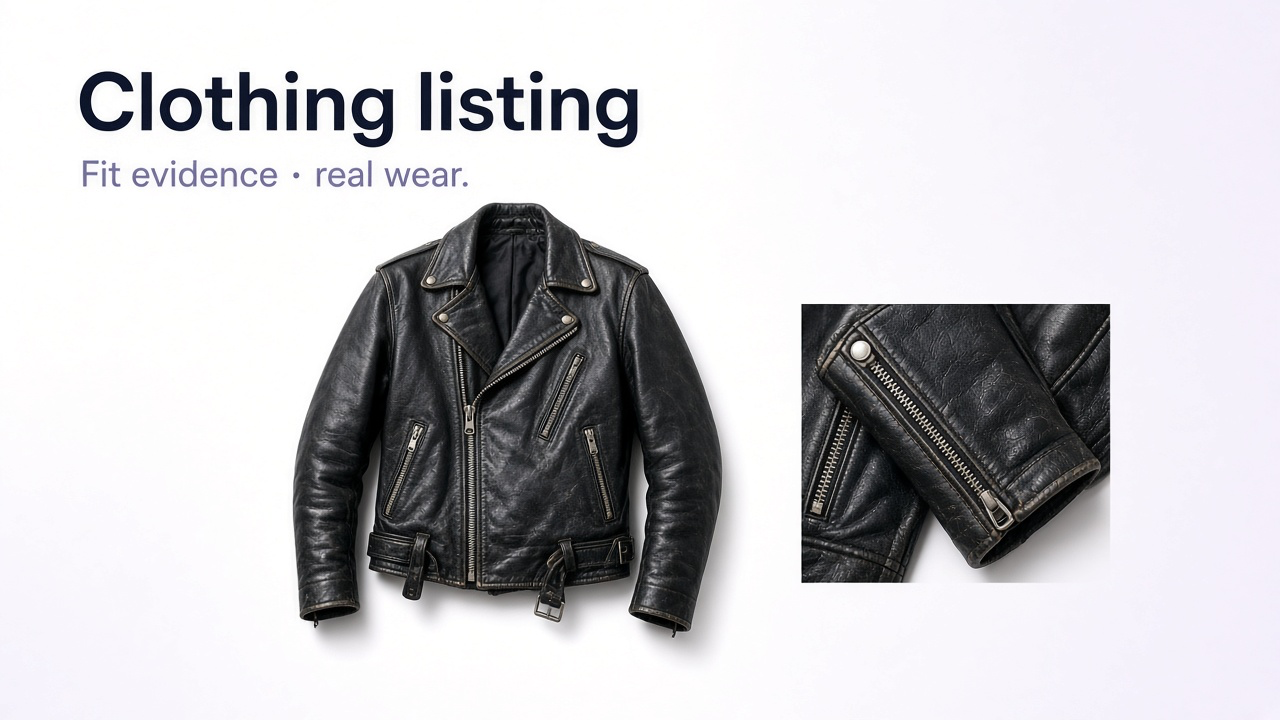
Clothing sellers need clear images of front and back, label, fabric and construction, cuffs, zipper, stains, and measured chest and length. A styled image can help people imagine the piece, but an AI-generated try-on cannot reliably establish how this exact used jacket fits a real person. Keep authentic item photos as the primary evidence.
3. Electronics: a used gaming console
For electronics, polished styling is less important than evidence. Show the device powered on if it works, ports and controller, model number where safe, scratches and exactly which cables come with it. Never fabricate a screen that implies functionality you have not tested.

4. Home decor: a vintage green glass lamp
A lamp or mirror needs scale and material accuracy. Photograph the light on and off if safe, the plug, the shade, and any chips or repairs. One atmospheric image may create interest, but a detail image helps the buyer make a decision.

5. Baby gear: a compact stroller
Parents need exact model and condition information, including wheels, brakes, harness, folding mechanism, fabric wear and safety labels. Check recalls and manufacturer instructions before listing. Do not sell recalled or prohibited items, and do not use AI images to conceal defects or imply a safety certification.

6. Appliances: a working washer
For large appliances, share the manufacturer/model label, age if known, dimensions, hookups, condition, and whether the buyer must disconnect or move it. If practical, a short real video of the machine running communicates more than an AI-generated animation would.

7. Tools: a cordless drill kit
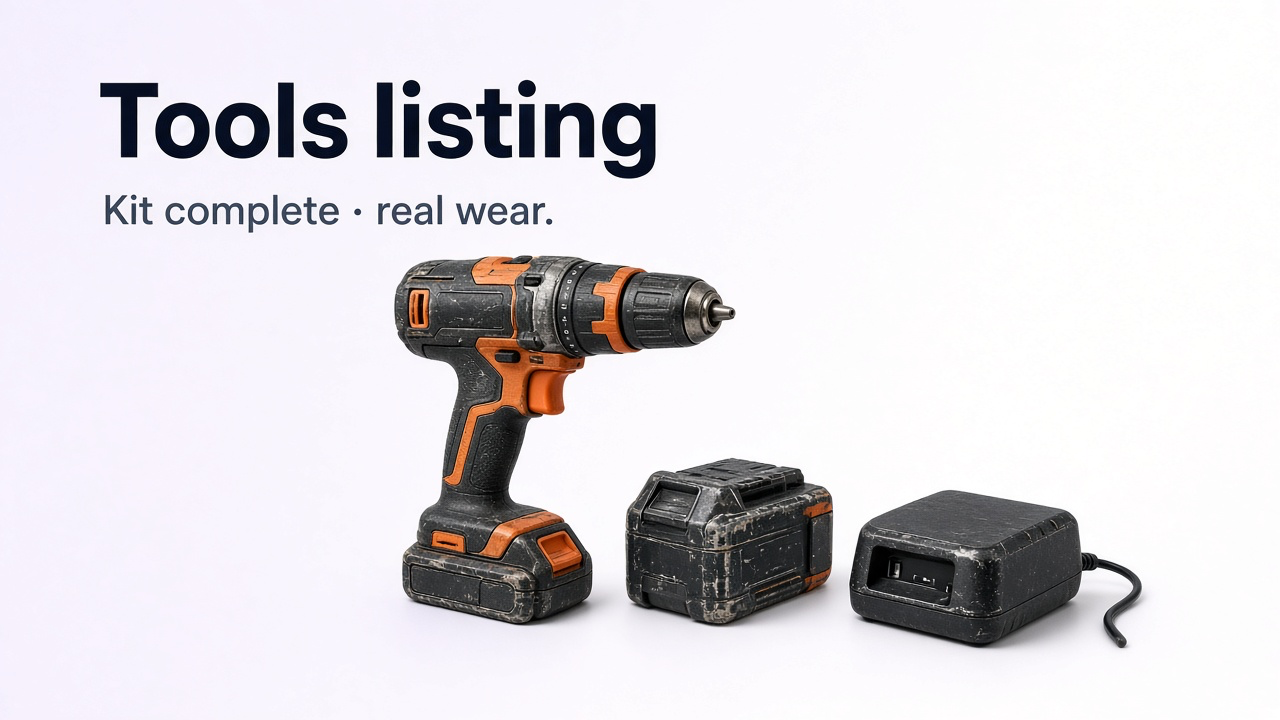
A drill listing should show exact model, battery, charger, chuck, tool wear and a safe demonstration of whether it works. Photograph real wear rather than disguising it with dramatic lighting.
8. Vehicles and accessories: a used bike rack
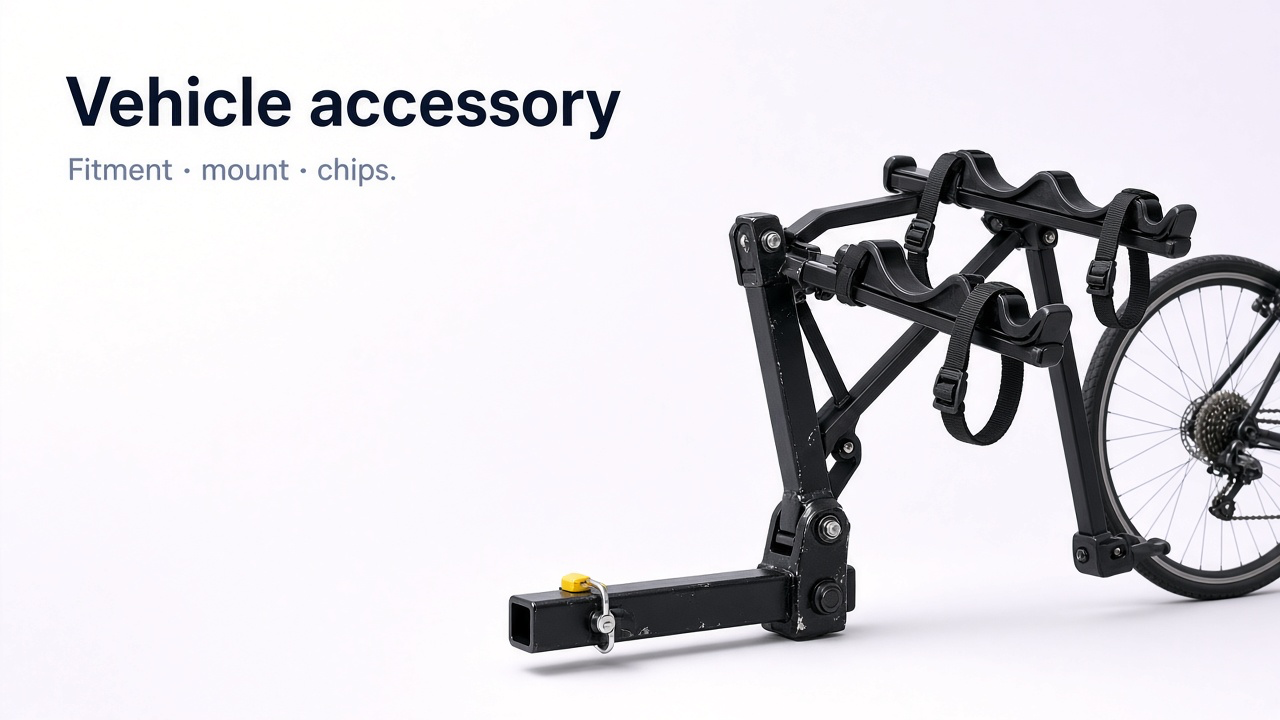
Automotive and cycling accessories often depend on exact compatibility. Provide close-ups of model markings, mounting points, missing hardware and any rust or cracks. Do not imply that an attachment fits a vehicle unless you have verified fitment.
How to price items and get more responses
Search for comparable items near your pickup location. Compare condition, exact model, age, accessories, and how long similar listings have remained active. An asking price is not proof of a sold price. If buyers message but stop replying, investigate total cost, pickup distance, availability, and whether condition was described clearly before changing your photos again.
Marketplace selling fees, pickup, and shipping
For ordinary local pickup transactions arranged directly between individuals, Meta generally does not charge a Marketplace transaction fee. Shipping or platform checkout features may be available only for eligible sellers and categories, and fees can change: review the current fee shown in your account before publishing or accepting a shipped order. Do not assume every US seller can activate in-platform shipping or that locally arranged payments are covered by Purchase Protection.
How to avoid scams as a Marketplace seller
Keep early communication on Facebook/Messenger where possible. Be suspicious of requests for verification codes, fake payment confirmation emails, overpayment or refund stories, unusual courier arrangements, and pressure to click third-party links. Never treat an emailed screenshot as proof of payment. Independently confirm receipt in the actual payment service before releasing the item, and consider a well-lit public meetup or police-station exchange zone for portable goods. Meta safety guidance: https://mydigitalworld.fb.com/ssa/lesson/strategies-for-avoiding-scams/ and https://www.meta.com/safety/topics/safety-basics/tools/scams/ .
Can you use AI to improve Facebook Marketplace photos?
Yes—for carefully limited visual edits or clearly labeled inspiration images. GenImagePro can help improve exposure, refine framing, or develop a separate contextual concept from seller-owned reference photos. But a secondhand listing must never suggest a different physical condition, missing accessory, color, size, actual fit, functional result, or inspection history. Preserve the unaltered originals in your listing. Check Marketplace’s current policies and any applicable disclosure requirements before posting synthetic or substantially edited images.

A simple photo checklist before you publish
Six-photo trustworthy listing checklist
Hero photo
Entire actual item, sharp, evenly lit, realistic color.
Opposite angle
Back or second side showing form and scale.
Condition close-up
Scratches, stains, chips, discoloration or wear.
Proof and identifiers
Brand/model tag, dimensions, accessories and safe identifying details.
Function or mechanism
Real video or photo of drawers, ports, power-on or moving parts when relevant.
Optional context
An honest in-room or styled context photo with clear distinction from an AI illustration if applicable.
Frequently asked questions
Facebook Marketplace selling FAQs
How do I sell something on Facebook Marketplace for the first time?
Open Marketplace, use the Sell/Create Listing action, choose an item category, upload real photos, provide an accurate title/condition/price/location, publish and arrange delivery or pickup through available options.
What sells best on Facebook Marketplace?
Furniture and home goods, electronics, clothing, appliances, baby gear and tools are frequently cited strong categories. Meta does not provide a definitive public category-by-category US completed-sales ranking.
Does Facebook Marketplace charge a fee?
Ordinary local person-to-person pickup transactions generally have no Marketplace selling fee. Eligible checkout and shipping offerings may have fees; check current account-specific terms.
How do I sell faster on Facebook Marketplace?
Use specific titles and genuine detail photos, price against comparable local items, disclose flaws, make pickup easy and answer relevant messages promptly. There is no guaranteed sale time.
Can I use AI-enhanced photos in a Marketplace listing?
You should check current Marketplace policies first. Do not alter how the actual item looks or conceal its condition. Retain genuine product photos and clearly distinguish any conceptual imagery.
Is Facebook Marketplace safe for sellers?
There are risks, including fake payment messages, verification-code scams and unsafe meetups. Verify payments independently and use safe public locations for practical in-person exchanges.
Can I ship items instead of meeting buyers?
Some sellers and categories may be eligible for shipping or checkout. Availability varies by account and region. Only offer shipping and protection terms actually available to you.
Why am I getting views but no messages?
Views alone do not establish intent. Check whether people can judge size, condition and price, whether pickup is inconvenient and whether your title attracts the right buyers.