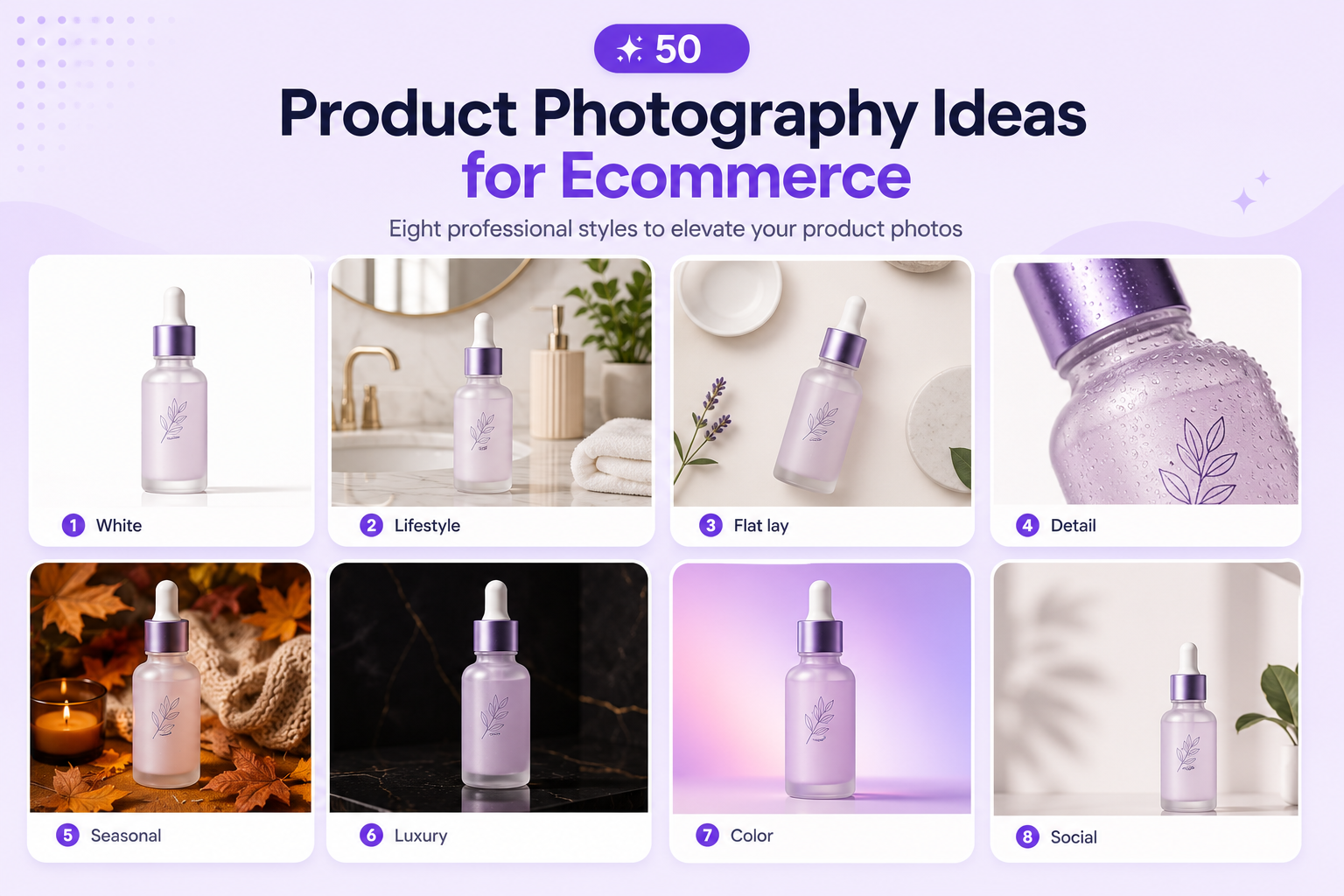
Product photography ideas work best when each photo answers one question a buyer has: what it looks like, how big it is, what it is made of, how it is used, and why it is worth the price. The 50 ideas below are grouped by that job, and each one gives you the setup, so you can shoot it at home, in a studio or with AI from one product photo.
| Idea group | What it shows | Best channel | Difficulty at home |
|---|---|---|---|
| Clean white (1–6) | The exact product | Product page, marketplaces | Easy |
| Detail close-ups (7–12) | Material, quality, features | Product page gallery | Easy |
| Scale and size (13–16) | How big it is | Product page, marketplaces | Easy |
| Lifestyle scenes (17–24) | The product in real life | Product page, social, email | Medium |
| Flat lays (25–29) | Sets, bundles, mood | Instagram, Pinterest, email | Easy |
| Creative ideas (30–39) | Attention and mood | Ads, social, hero banners | Medium to hard |
| Luxury and editorial (40–44) | Premium price and brand | Hero banners, ads, lookbooks | Medium |
| Seasonal and promo (45–47) | Timely offers | Sales, holidays, launches | Medium |
| Social and ad formats (48–50) | Space for text and sizes | Stories, Reels, carousels, banners | Easy |
Clean Product Photography Ideas

1. Pure white background
How to shoot it: a white sweep (a bent sheet of paper or foam board), two soft lights or a large window at 45 degrees, camera at product height. Keep a soft contact shadow under the product so it does not look pasted in. Best for: the main image on marketplaces and product pages.
2. Off-white or light grey studio
How to shoot it: the same setup with a cream, stone or light grey paper. The warmer tone feels calmer than pure white and still lets the product lead. Best for: home goods, skincare, candles and brands that want a softer look.
3. Front-facing packshot
How to shoot it: camera straight on, centred, lens at the middle of the product so vertical lines stay straight. Make sure the label is sharp and readable. Best for: bottles, boxes, jars and anything sold by its label.
4. Three-quarter angle
How to shoot it: turn the product 30 to 45 degrees and shoot slightly above. This shows the front and one side in the same frame and gives the product depth. Best for: the second image in a gallery, shoes, bags, electronics, furniture.
5. Side, back and top views
How to shoot it: keep the light and camera height fixed and only turn the product, so the set looks consistent. Shoot the back when it has ingredients, ports, pockets or instructions. Best for: technical products and anything with details hidden from the front.
6. Transparent cutout
How to shoot it: shoot on white with even light, then remove the background and export a PNG. Best for: banners, comparison charts, email designs and marketplace layouts that need the product on any colour. A background remover does this in seconds.
Detail and Close-Up Product Photography Ideas
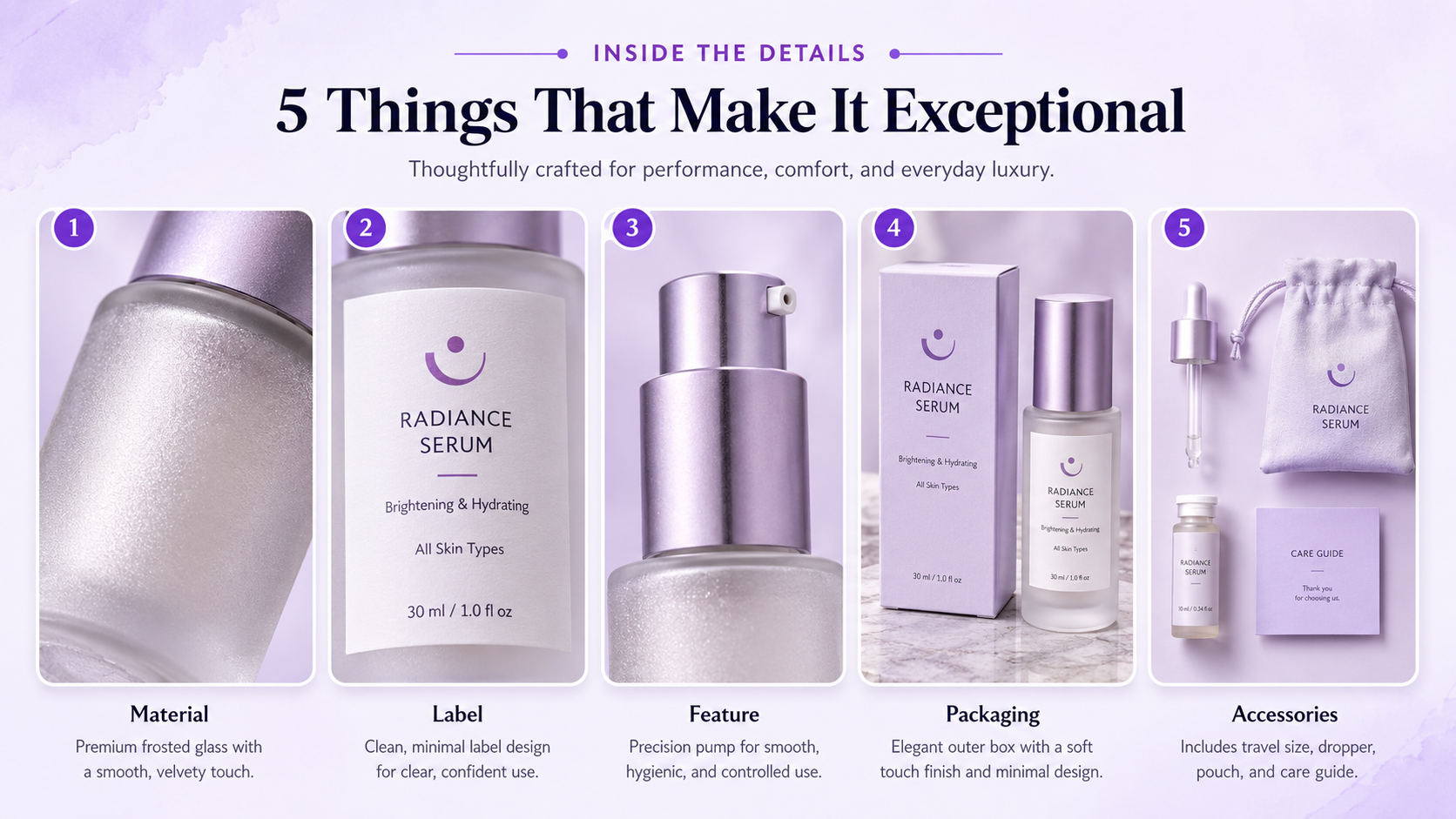
7. Material macro
How to shoot it: get close (macro mode on a phone works), light from the side at a low angle so the texture throws small shadows. Best for: fabric weave, leather grain, wood, brushed metal, knit and ceramic glaze.
8. Label and logo detail
How to shoot it: straight on, soft even light, no glare across the text. Tilt the product slightly if a glossy label reflects the light. Best for: ingredients, certifications, engraving and brand marks that build trust.
9. Feature in action
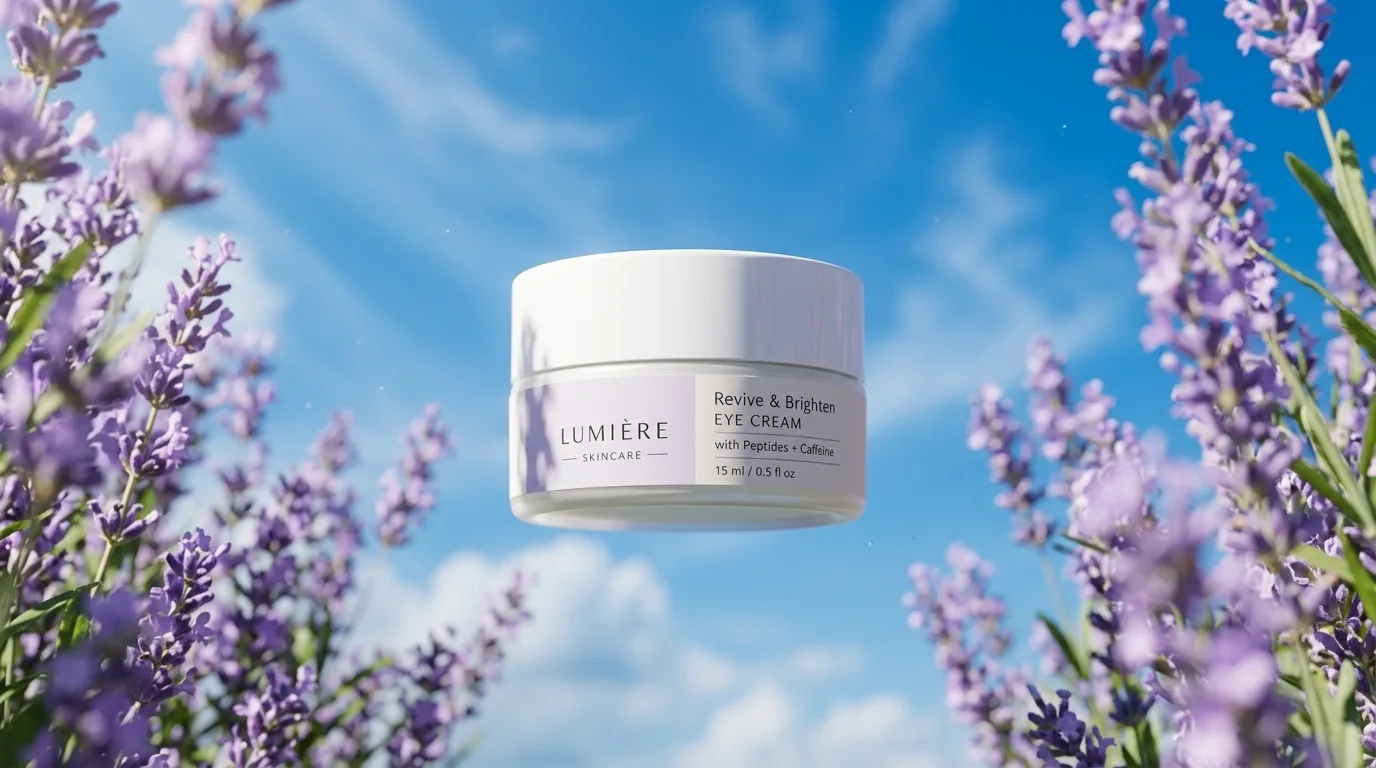
How to shoot it: show the one feature people pay for: a zip half open, a lid flipped, a strap adjusted, a button pressed. One feature per photo. Best for: bags, gadgets, kitchen tools, packaging with a clever closure.
10. Open and closed
How to shoot it: two photos from the same camera position, one closed and one open, so they work side by side. Best for: cases, compacts, boxes, organizers and anything with storage inside.
11. Texture swatch
How to shoot it: a smear of cream, a drop of serum or a stroke of paint on glass or stone, lit from behind or the side so it glows. Best for: beauty, paint, food spreads and anything where texture sells. See more skincare product photography ideas.
12. What is in the box
How to shoot it: from above, every included item laid out in a grid with equal gaps, the main product largest. Best for: electronics, kits, gift sets and anything with accessories.
Scale and Size Product Photography Ideas

13. Product in hand
How to shoot it: a relaxed hand holding the product near the bottom or side so nothing important is covered. Natural light from a window. Best for: small products, beauty, phones accessories, food and drinks.
14. Next to a familiar object
How to shoot it: place the product beside something everyone knows the size of: a phone, a mug, a notebook, a pen. Same light, same surface. Best for: products that look bigger or smaller than they are in photos.
15. Size line-up
How to shoot it: every size or variant in one row, equal spacing, same camera height, front facing. Best for: bottles in several sizes, sets of bowls, clothing colours, candles.
16. Capacity shot
How to shoot it: show what fits inside: a laptop in the bag, food in the container, shoes in the organizer. Shoot slightly from above. Best for: bags, storage, luggage and organizers.
Lifestyle Product Photography Ideas

17. Where it is used
How to shoot it: put the product in its real room: skincare on a bathroom shelf, a mug on a kitchen counter, a lamp on a side table. Keep the background slightly out of focus. Best for: the third or fourth image on a product page. Our lifestyle product photography guide goes deeper.
18. Morning light
How to shoot it: a window with soft early light, one or two props (a cup, a folded towel), warm white tones. Best for: coffee, skincare, wellness, breakfast food.
19. Evening mood
How to shoot it: a warm lamp as the only light, soft textiles, darker background. Best for: candles, tea, sleep products, fragrance.
20. Desk scene
How to shoot it: from above or at 45 degrees, with a laptop corner, a notebook and the product in the middle. Best for: stationery, tech accessories, headphones, planners.
21. Kitchen counter
How to shoot it: stone or wood counter, natural light from the side, one real ingredient or utensil beside the product. Best for: food, cookware, appliances, cleaning products.
22. Bathroom vanity
How to shoot it: a marble or tiled surface, a mirror or sink edge in the background, soft bright light. Best for: skincare, haircare, perfume, towels. More ideas in our perfume product photography ideas.
23. Outdoors
How to shoot it: shoot in open shade, not direct midday sun, on grass, sand, a bench or a rock. Best for: outdoor gear, water bottles, sunglasses, sports products and summer launches.
24. Product on a person
How to shoot it: a model wearing or using the product, cropped so the product stays the focus. Best for: jewelry, bags, clothing, watches and eyewear. For clothing, see our ecommerce clothing photography guide.
Flat Lay Product Photography Ideas

25. Minimal flat lay
How to shoot it: camera directly above, the product plus two small props on paper or linen, soft even light. Best for: Instagram posts, Pinterest and email headers. Full setup in our flat lay photography guide.
26. Bundle or collection
How to shoot it: every product in the set from above, the hero product largest or in the centre, labels facing the camera. Best for: gift sets, kits and "complete the routine" offers.
27. Ingredient flat lay
How to shoot it: surround the product with the real ingredients in it: citrus slices, coffee beans, herbs, flowers. Only use ingredients that are actually in the product. Best for: food, drinks, skincare and wellness.
28. Colour-blocked flat lay
How to shoot it: a solid coloured paper that matches or contrasts the packaging, with props in the same colour family. Best for: bright brands, cosmetics and social ads.
29. Knolling
How to shoot it: every part laid out at right angles in a tidy grid, equal gaps, from above. Best for: tools, tech, travel kits and anything with many parts.
Creative Product Photography Ideas

30. Water splash
How to shoot it: a fast shutter (1/1000s or faster), a backlight behind the splash, and water thrown or dropped beside the product. Shoot many frames and pick the best. Best for: drinks, skincare and anything "fresh".
31. Floating product
How to shoot it: hang the product on a clear fishing line or hold it on a stick and remove the support in editing. Add a soft shadow below so it looks lifted, not cut out. Best for: shoes, bottles, tech and ad banners.
32. Hard shadow
How to shoot it: one bare light or direct sun from a low side angle for long, sharp shadows. Best for: fashion accessories, perfume and minimal brands.
33. Leaf or window shadows
How to shoot it: put a plant, a blind or a cut-out card between the light and the product so patterned shadows fall across it. Best for: skincare, candles, summer campaigns.
34. Colour gels
How to shoot it: cover one light with a coloured gel (or a coloured phone screen at close range) and keep a second light white for the product. Best for: tech, nightlife drinks and bold ads.
35. Mirror reflection
How to shoot it: stand the product on a mirror or a glossy black acrylic sheet, camera low, so a clean reflection appears below. Best for: perfume, watches, jewelry and cosmetics.
36. Ice and frost
How to shoot it: real or acrylic ice cubes around the product, a dark background, light from behind so the ice glows. Spray water on the bottle for drops. Best for: drinks, cooling skincare, summer launches.
37. Sand and stone
How to shoot it: a bed of sand or a few rough stones under the product, warm side light. Best for: sunscreen, natural skincare, sandals and travel products.
38. Flowers and petals
How to shoot it: a few fresh flowers or loose petals around the base, not covering the label, soft light. Best for: fragrance, beauty, gifts and spring and Valentine's campaigns.
39. Motion and pour
How to shoot it: capture a pour, a spray mist or powder falling, with a fast shutter and a dark background. Best for: drinks, sauces, sprays and powders.
Luxury and Editorial Product Photography Ideas
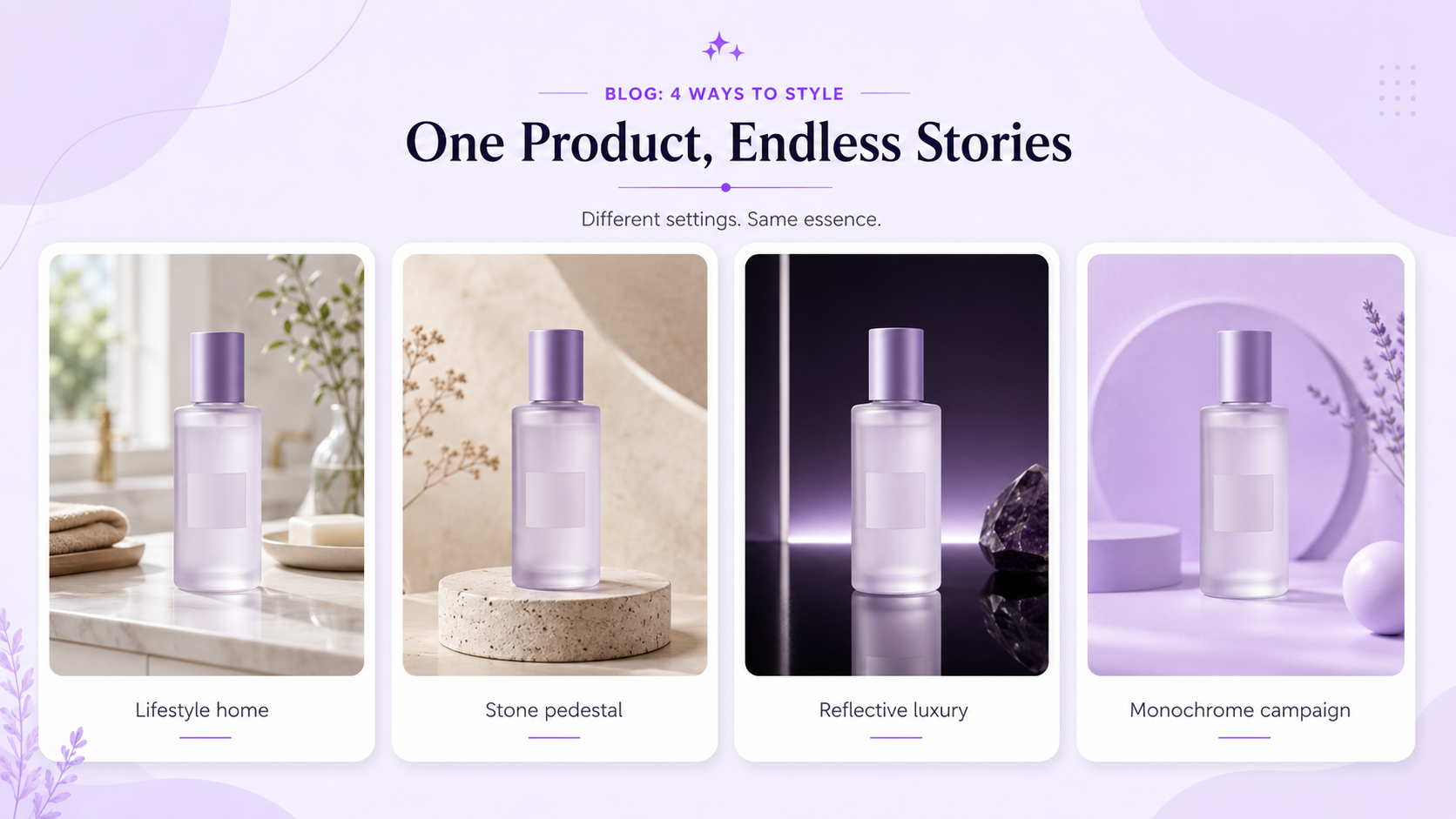
40. Stone pedestal
How to shoot it: a travertine, marble or concrete block under the product, one soft light from the side, lots of empty space. Best for: skincare, perfume, jewelry and home decor.
41. Dark and moody
How to shoot it: a black or deep-coloured background, one light with a narrow beam on the product, the rest in shadow. Best for: watches, spirits, fragrance and premium tech.
42. Geometric shapes
How to shoot it: the product on or between simple blocks, arches and cylinders in one colour. Best for: cosmetics, shoes and modern brands.
43. Silk, velvet or linen
How to shoot it: drape the fabric in soft folds under and behind the product, light from the side to show the texture. Best for: jewelry, fragrance and gifts. More in our product photography backgrounds guide.
44. One-colour scene
How to shoot it: background, props and surface all in tones of the same colour as the packaging. Best for: brands with a strong colour and campaign hero images.
Seasonal and Promotional Product Photography Ideas

45. Holiday gift
How to shoot it: the product next to wrapping paper, a ribbon and warm out-of-focus lights in the background. Keep the product unwrapped and fully visible. Best for: Christmas, Black Friday and gift guides.
46. Season scenes
How to shoot it: the same product in four settings: spring flowers, summer sand and sun, autumn leaves and wood, winter knit and snow texture. Best for: a full year of social posts. See our seasonal campaign calendar.
47. Launch hero
How to shoot it: the product large on one side, a clean background and wide empty space on the other side for the name and date. Best for: launch emails, banners and pre-order pages.

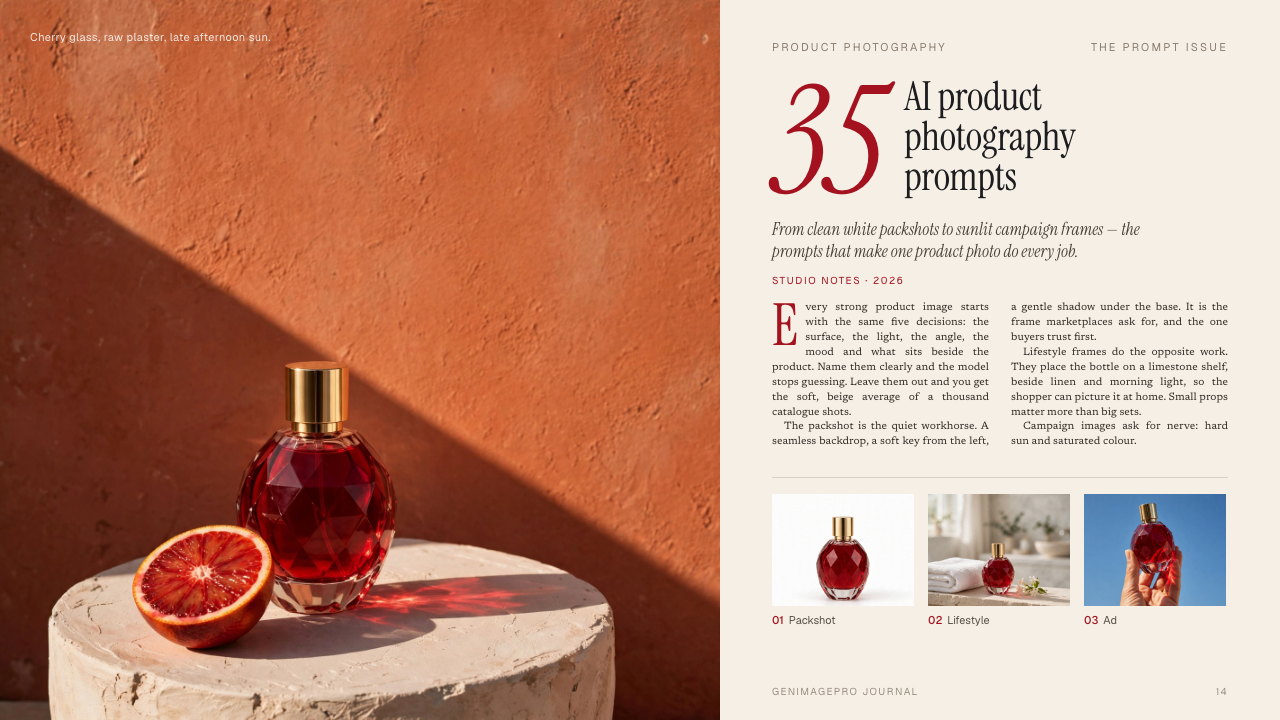
48. Vertical story shot (9:16)
How to shoot it: the product large in the middle third, empty space at the top and bottom for text and buttons. Best for: Instagram and Facebook Stories, Reels covers and TikTok.
How to shoot it: product on the right third, soft background, two thirds of the frame left clear for the headline. Best for: website hero banners and email headers.
50. Carousel set
How to shoot it: five to six images with the same light and background: main shot, close-up, in use, in hand, lifestyle, offer. Best for: Instagram carousels, Facebook ads and marketplace galleries.
Best Product Photography Examples: What They Have in Common
The product images that sell best follow the same few rules, whatever the product or price.
What strong product photos share
The product fills most of the frame
On marketplaces the main photo is small on screen, so the product should take up most of the image.
One light direction
All shadows fall the same way, which makes the scene look real.
Accurate colour
The colour matches what the buyer receives. Wrong colour is one of the most common reasons for returns.
One idea per photo
A close-up shows the material, a lifestyle shot shows the use. Not both at once.
The same look across the store
Same background family, crop and light on every product, so the catalog looks like one brand.
Cheap Product Photoshoot Ideas at Home
You do not need a studio. Most of the ideas above need only a window, a phone and a few things from a craft store.
A product photography kit for under $30
A large window
Your main light. Shoot when the sun is not hitting the glass directly.
White foam board
One sheet as a bounce to fill shadows, one bent into a sweep as the background.
Coloured paper
For colour-blocked flat lays and creative backgrounds.
Tape and clear fishing line
For holding and floating products.
A phone on a small tripod
Keeps every angle the same across the set.
For a full walk-through, read how to take product photos at home.
How to Create These Product Photography Ideas With AI
If you have one clear photo of your product, you can create most of these ideas without building each set. With the GenImagePro product photoshoot, the process is a workflow, not a single edit:
From one product photo to a full set of ideas
Upload one product photo
A clear photo with even light works best. The photoshoot reads the product type, shape and material.
Get ideas for your product
You get shot ideas made for that product: clean white, in hand, in use, flat lay, floating, on a pedestal and more.
Set the scene and light
Choose surfaces like marble, silk, sand, ice or flowers and light like window, hard sun or leaf shadows.
Create every size
Turn each result into 1:1, 4:5 and 9:16, upscale it, or make a video from it.
Save the flow
Run the same set of ideas on your next product in one click, so the whole catalog matches.
Common Product Photography Mistakes
Avoid these
Too many props
If the eye goes to the props first, remove half of them.
Mixed light
A window and a warm ceiling light together give two colours of shadow. Turn off room lights.
Inconsistent crops
Different margins and angles across products make a store look messy.
One image for every channel
Make a square, a 4:5 and a 9:16 version instead of cropping later.
Edited too far
A photo that looks better than the real product leads to returns and bad reviews.
Final Tips
Start with the three images every product needs: a clean white main shot, a close-up and the product in use. Then add one creative or lifestyle idea for each channel you sell on. Keep the light and background consistent across your store, and reuse the same setup for every new product.
FAQ
What are good product photography ideas?
Start with a clean white main photo, a close-up of the material and the product in use. Then add one idea per channel: a flat lay for Instagram, a hard-shadow or splash shot for ads and a vertical shot for stories. Other strong ideas are the product in hand, a stone pedestal, a mirror reflection and seasonal scenes.
What product photos does an online store need?
Every product needs three photos to start: a clean white main photo, a close-up of the material and the product in use. For a full gallery, shoot five to six images with the same light and background: main shot, close-up, in use, in hand, lifestyle and offer. Keep the same background, crop and light across the whole store.
What are good product photography ideas for beginners?
Start with a white background shot by a window, a three-quarter angle, a close-up of the material, the product in hand and a simple flat lay. All five need only a phone, a window and white foam board.
What do the best product photography examples have in common?
They follow five rules: the product fills most of the frame, all shadows fall in one direction, the colour matches what the buyer receives, each photo shows one idea, and the whole store uses the same background, crop and light. Wrong colour is one of the most common reasons for returns.
What are creative product photography ideas?
Water splashes, floating products, hard shadows, leaf shadows, colour gels, mirror reflections, ice, sand, flowers and pours. They work best for ads, social media and hero banners.
What should the main product photo be?
The full product on a white or very light background, filling most of the frame, with accurate colour and a soft shadow. Many marketplaces require a white background for the main image.
How can I do a cheap product photoshoot?
Use a large window as your light, white foam board as a background and bounce, and your phone on a small tripod. Coloured paper and a few props cover most creative ideas.
Can AI create product photography ideas from one photo?
Yes. Upload one clear product photo and AI can place it in lifestyle, flat lay, creative and seasonal scenes. Always check that the label, colour and shape match the real product.
What is the best light for product photography?
Soft window light from the side for most products, a backlight for glass and liquids, and a single hard light for dramatic shadows.



Social Media and Ad Product Photography Ideas